
Now Reading: Making the unprecedented EU Space Act effective for all
-
01
Making the unprecedented EU Space Act effective for all


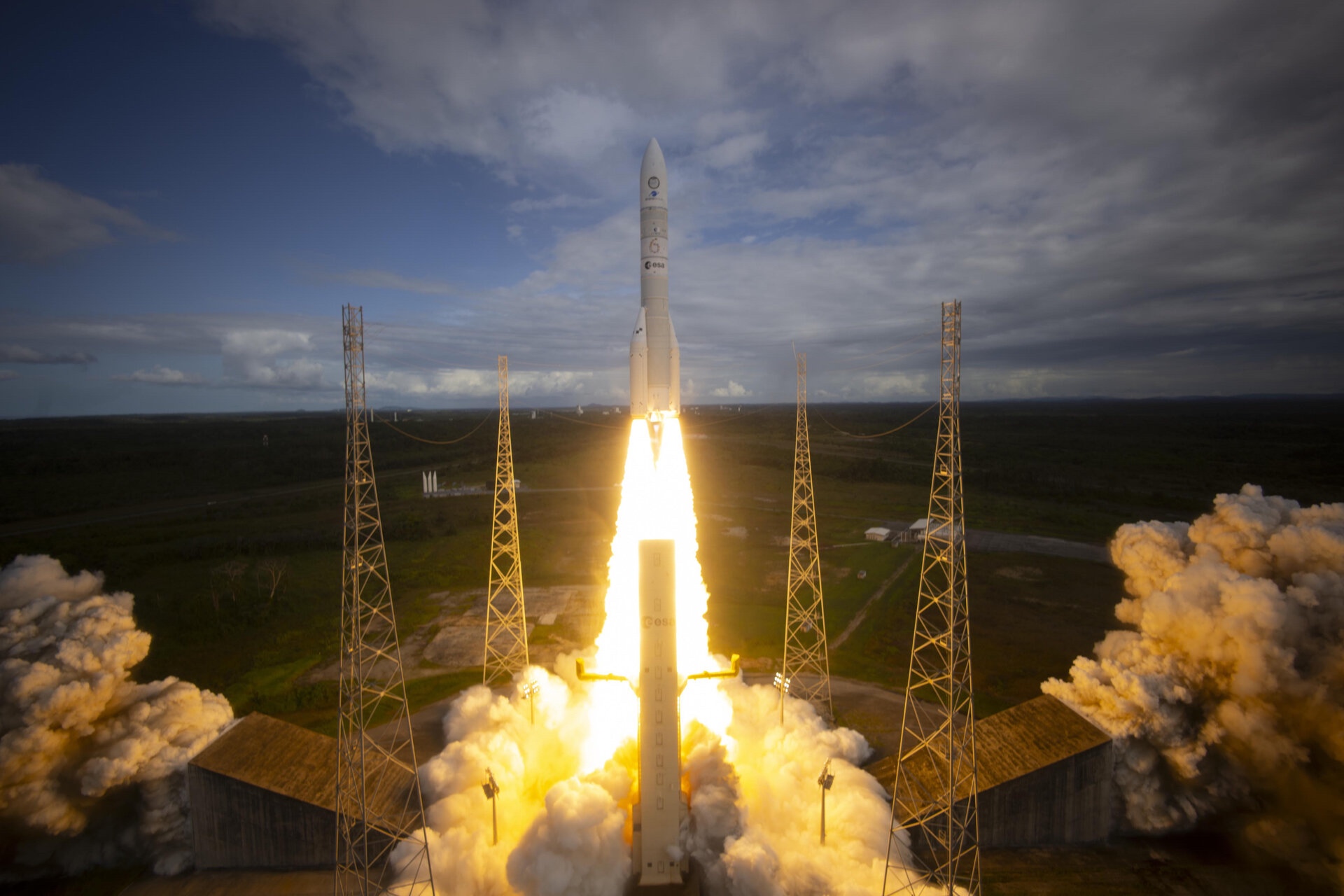

The EU Space Act was formally proposed by the European Commission (EC) on June 25, 2025. While it doesn’t aim to codify all European Union (EU) space activities, it does address several key issues that EU officials have determined are increasingly important to the continent’s concerns: safety, through tracking space objects and mitigating space debris; resilience, by strengthening cybersecurity requirements for European space infrastructure; and sustainability, in requiring space operators to reduce environmental impacts of their activities.
The act will apply to EU and non-EU operators providing space services in Europe. That brings both advantages and challenges. While a regulatory framework can help promote consistent compliance with industry-wide sustainability standards and streamline operators’ administrative burden, regulations also need to be practical and effective for customers as well as operators.
Space operators bring valuable, practical knowledge of how space systems are actually designed and operated, so they are needed to ensure that the rules are technically sound and will be economically viable. Considering a few guidelines will help:
First, modifying satellite design and building new satellites is an involved and lengthy process, so the act’s implementation timeline needs to be realistic. The EC hasn’t yet defined details like specific thresholds for proposed design requirements. Those will only become available after a thorough and time-consuming process. But satellite manufacturers and operators need that data to make informed decisions about potential design modifications. A rushed release could result in unreasonable or poorly justified requirements not backed by scientific evidence.
The amount of time between the act’s intended enforcement date, currently set for 2028, and the target implementation date of Jan. 1, 2030, is too short to properly address new changes and provisions. It is more practical to delay by as much as five years following the final publication of the “implementing acts” that will lay out the overall Space Act’s technical details. The EC should also consider extending the transition period and/or allowing for case-by-case exceptions for systems already in advanced stages of development.
Second, the act should align with standards and best practices developed by recognized international organizations like the Inter-Agency Space Debris Coordination Committee and the International Organization for Standardization. Technical requirements and associated thresholds should be based on peer-reviewed scientific studies. Compliance certification methods must be agreed-upon and universally recognized by these international forums. This approach will promote global regulatory harmonization, because many national frameworks already refer to these organizations for their own space regulations.
Third, requirements for things like space debris mitigation should be based on well-established and recognized methods. For instance, thresholds for issues like collision probability estimates must be clearly justified and involve consultation with recognized subject-matter experts. With no internationally recognized guidelines for accurately predicting a satellite’s visual magnitude prior to deployment, a more effective approach would be focusing on coordinated operations between satellite operators, radio and optical telescope facilities and the broader astronomical community.
Beyond industry, some EU member governments are also expressing reservations about many of the act’s requirements. Some argue that space policy and law should be the domain of each national government, in effect countering the act’s greater intent. A breadth of issues ranging from environmental regulations to extra administrative burden to operating authority across different member countries have generated a call to make the act’s language more broadly workable. Danish Higher Education and Science Minister Christina Egelund has even called it “both an opportunity and a challenge.”
Even with the current debate, the EU Space Act is a bold move toward addressing a growing global issue. It may well impact space operators worldwide, following the pattern set by other groundbreaking initiatives like the EU’s General Data Protection Regulation, EU Artificial Intelligence Act, Digital Services Act and Digital Markets Act.
Here at the beginning of an unprecedented new space age, industry and governments can act in a way that provides global opportunity and advancement while respecting the security and well-being of all.
Mario Neri is director of Spectrum Strategy and Innovation and a policy expert at Telesat.
SpaceNews is committed to publishing our community’s diverse perspectives. Whether you’re an academic, executive, engineer or even just a concerned citizen of the cosmos, send your arguments and viewpoints to opinion (at) spacenews.com to be considered for publication online or in our next magazine. If you have something to submit, read some of our recent opinion articles and our submission guidelines to get a sense of what we’re looking for. The perspectives shared in these opinion articles are solely those of the authors and do not necessarily represent their employers or professional affiliations.










Related Posts
Stay Informed With the Latest & Most Important News
Previous Post
Next Post



Advertisement
-
 01Two Black Holes Observed Circling Each Other for the First Time
 -
 02From Polymerization-Enabled Folding and Assembly to Chemical Evolution: Key Processes for Emergence of Functional Polymers in the Origin of Life
 -
 03Astronomy 101: From the Sun and Moon to Wormholes and Warp Drive, Key Theories, Discoveries, and Facts about the Universe (The Adams 101 Series)
 -
 04True Anomaly hires former York Space executive as chief operating officer
 -
 05Φsat-2 begins science phase for AI Earth images
 -
 06Hurricane forecasters are losing 3 key satellites ahead of peak storm season − a meteorologist explains why it matters
 -
 07Binary star systems are complex astronomical objects − a new AI approach could pin down their properties quickly