
Now Reading: China’s Tianwen-3 Mars sample return mission moves into spacecraft construction phase
-
01
China’s Tianwen-3 Mars sample return mission moves into spacecraft construction phase

China’s Tianwen-3 Mars sample return mission moves into spacecraft construction phase

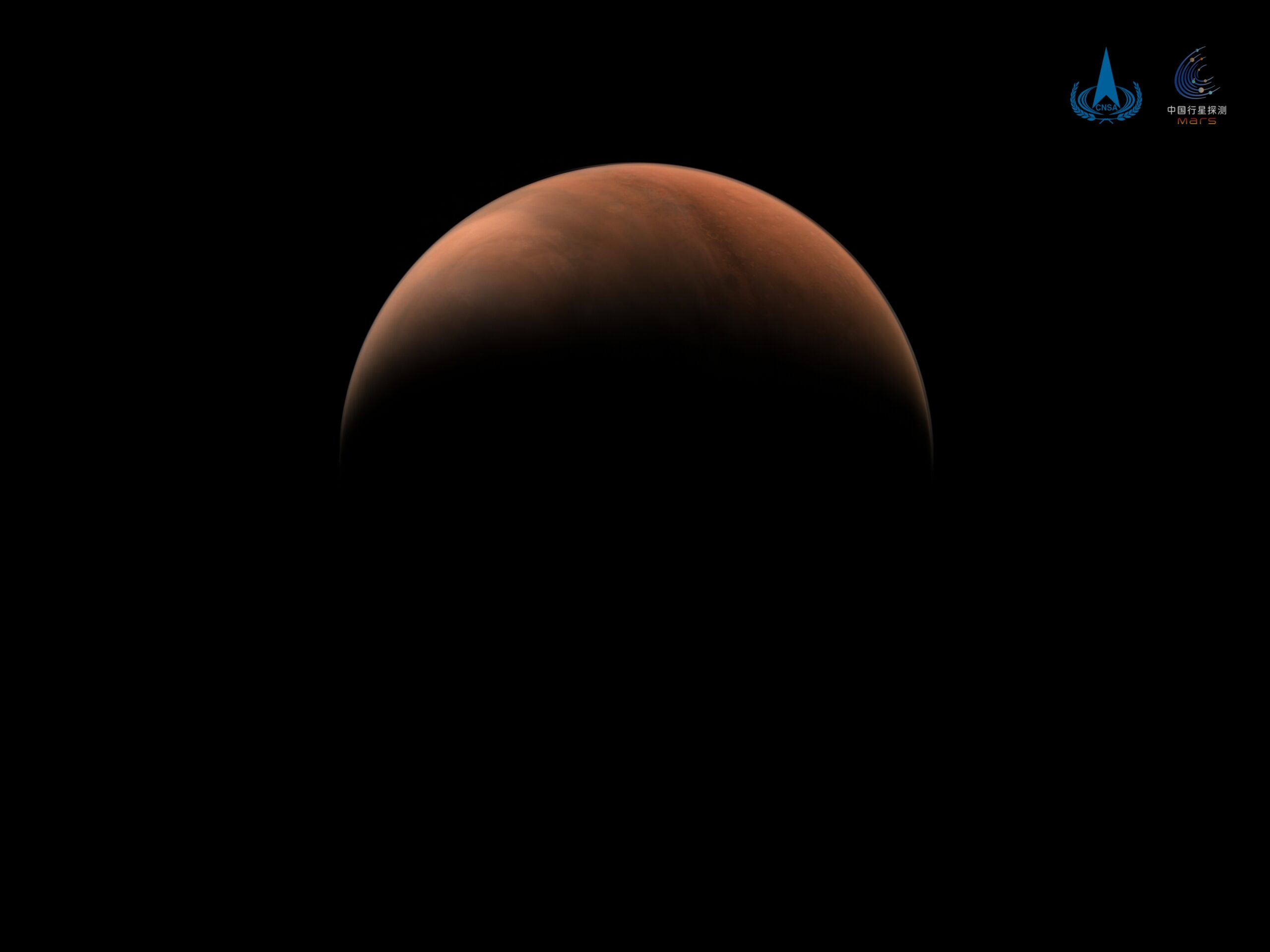
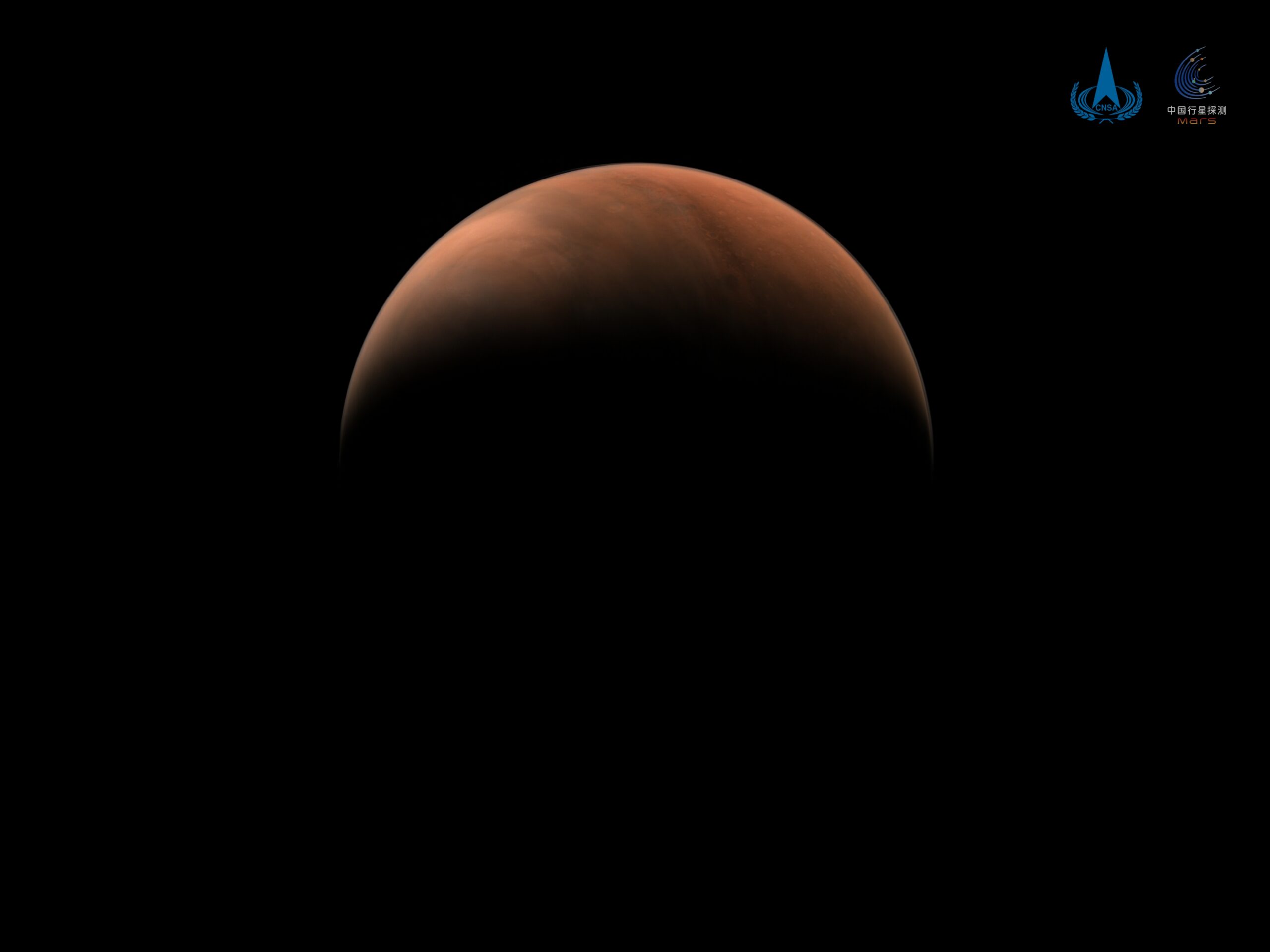
ESPOO, Finland — China’s Tianwen-3 Mars sample return mission is entering flight hardware development, targeting a late 2028 launch to seek out biosignatures on the Red Planet.
The mission has achieved breakthroughs in key technologies, Liu Jizhong, chief designer of the Tianwen-3 mission, told the press in Beijing March 12.
Requisite technologies include Mars surface sampling and sealing, takeoff and ascent from the Martian surface, rendezvous and docking in orbit around Mars, and planetary protection systems. The engineering team will now advance to the flight model development phase within 2026, Liu said.
The multi-spacecraft mission will use two separate launches from Earth in late 2028 during a short, optimal Mars launch window. Two Long March 5 rockets will separately carry a lander and ascent vehicle stack, and the Mars orbiter and Earth return spacecraft combination respectively. After landing and collecting samples on the surface, the ascent vehicle will launch them into Mars orbit for rendezvous with the orbiter before returning to Earth, aiming to deliver no less than 500 grams of Martian samples to Earth in 2031. The mission will also carry a drone to assist with sample collection alongside the lander’s drill and scoop systems.
Tianwen-3 will be the first ever mission to attempt to collect samples from Mars and deliver them to Earth. Returning samples to Earth would allow scientists to analyze Martian material with laboratory instruments far more capable than those that can be sent to Mars. The primary scientific goal is the detection of potential biosignatures, with further objectives including studying Martian geology and atmosphere and understanding planetary habitability. The mission is also open to international cooperation.
Liu provided the rare mission update during China’s annual “Two Sessions” political meetings, where he serves as a deputy to the National People’s Congress (NPC). The NPC is set to approve a new Five-Year Plan which will set the country’s agenda for the period 2026-2030, including for the space sector.
The update suggests the mission remains on track, despite its complexity. Meanwhile, NASA’s Mars Sample Return (MSR) program was effectively canceled when it was not funded in a fiscal year 2026 appropriations bill enacted in January, though a Senate Commerce Committee NASA authorization bill calls for the creation of a new MSR effort.
“The Tianwen-3 mission represents a highly challenging, innovative and pioneering major space endeavor,” Liu said, according to a Xinhua report. “It is expected to achieve humanity’s first Mars sample return mission, thus significantly advancing the integrated development of space science, space technology and space applications.”
Chinese researchers have published a range of papers related to the Tianwen-3 mission, including studies of atmospheric conditions, dust storms and the prospects of habitability at candidate landing sites.
Utopia Planitia—the area within which the Zhurong Tianwen-1 rover landed in 2021—Amazonis Planitia, and Chryse Planitia have earlier been noted as preselected landing zones. These were selected based on science potential and engineering constraints, including an altitude of at least 3 kilometers below the global average to ensure greater atmospheric density to assist deceleration, and a latitude of from 17° to 30° North, for reasons of solar illumination and surface and atmospheric conditions.
The mission science group then selected 86 candidate sites representing diverse geological environments, including ancient coastlines and water systems, canyons, and sites containing clay minerals that could preserve organic molecules and microfossils. Noted top candidates include Ma’adim Vallis, McLaughlin Crater and Oxia Planum.
Tianwen-3 is the third mission in the series, the first having sent an orbiter around Mars and a rover on the surface. Tianwen-2, which launched in May 2025, is a combined near-Earth asteroid sample return and main belt comet mission. Tianwen-4, set to launch around 2030, will study the Jupiter system before entering orbit around the Galilean moon Callisto.
Liu stated March 12 that Tianwen-2 has traveled approximately 700 million kilometers and will reach the asteroid 469219 Kamoʻoalewa (2016 HO3) “this year.” Unofficial information indicates an arrival in early July, followed by orbiting and sampling. Officials recently stated that the spacecraft is expected to deliver samples to Earth by the end of November 2027.










Related Posts
Stay Informed With the Latest & Most Important News
Previous Post
Next Post



Advertisement
-
 01Two Black Holes Observed Circling Each Other for the First Time
 -
 02From Polymerization-Enabled Folding and Assembly to Chemical Evolution: Key Processes for Emergence of Functional Polymers in the Origin of Life
 -
 03Astronomy 101: From the Sun and Moon to Wormholes and Warp Drive, Key Theories, Discoveries, and Facts about the Universe (The Adams 101 Series)
 -
 04True Anomaly hires former York Space executive as chief operating officer
 -
 05Φsat-2 begins science phase for AI Earth images
 -
 06Hurricane forecasters are losing 3 key satellites ahead of peak storm season − a meteorologist explains why it matters
 -
 07Binary star systems are complex astronomical objects − a new AI approach could pin down their properties quickly