
Now Reading: Phosphorus Spikes In Ancient Oceans Linked To Major Mass Extinctions
-
01
Phosphorus Spikes In Ancient Oceans Linked To Major Mass Extinctions


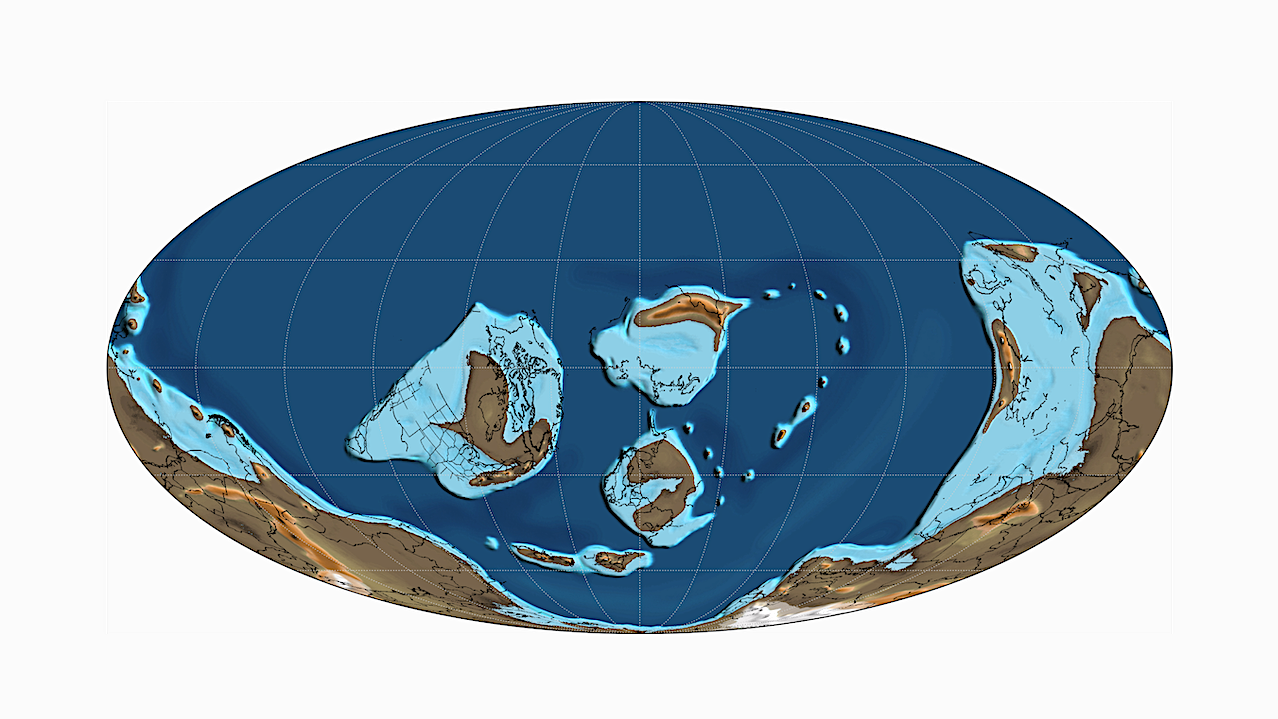

An international collaboration involving researchers from the University of Western Australia, the University of Ottawa and several partner institutions specializing in geosciences has identified direct geological evidence linking sharp spikes in ocean phosphorus to environmental disruptions associated with two of the largest mass extinctions in the history of life on Earth. This new study provides the first direct geochemical evidence for a mechanism long theorized but never before measured.
Extinctions 400 million years in the making
The Late Ordovician Mass Extinction (roughly 445 million years ago) and the Late Devonian Mass Extinction (roughly 372 million years ago) wiped out approximately 85% and 80% of marine species, respectively. Scientists had long suspected that pulses of phosphorus flooding ancient oceans may have triggered episodes of anoxia, a dangerous depletion of oxygen in seawater, helping set off cascading biological collapses. Until now, that hypothesis lacked direct geochemical proof.
“Anticosti Island, located in the Gulf of St. Lawrence in Canada, is one of the rare places in the world where Late Ordovician carbonate rocks are so well preserved and accessible,” says André Desrochers, Adjunct Professor in the Department of Earth and Environmental Sciences at the University of Ottawa. “The outcrops there gave us sedimentary archives of exceptional precision for reconstructing ocean conditions during the Ordovician.”

Sampling the Ordovician-Silurian boundary at Gamache Bay, Eastern Anticosti Island – Photo credit: André Desrochers
New geochemical tool detects ancient ocean chemistry
The team applied an innovative technique called carbonate-associated phosphate (CAP), sampling rocks from seven globally distributed sites, including Anticosti Island in Quebec, to directly measure fluctuations in phosphorus levels in ancient seawater. The results reveal short but intense phosphorus spikes that occurred in global synchrony during critical intervals of both extinctions.
“What is striking is the global coherence of these signals,” explains Professor Desrochers. “Rocks formed on different continents, in very different marine environments, all tell the same story at the same moment in time.”
Lessons from the deep past
According to the model proposed by the research team, these influxes of phosphorus could have boosted biological productivity in the oceans, leading to increased oxygen consumption, the expansion of ocean anoxia, and global cooling through carbon burial, a chain of events with major consequences for marine biodiversity.
The study also indicates that phosphorus was not acting alone: climate cooling and sea-level change were also part of the crises, especially during the first Late Ordovician extinction pulse.
“This study reminds us that disruptions to nutrient cycles can have devastating consequences for marine ecosystems,” concludes Professor Desrochers. “In a context of accelerating climate change and increasing agricultural nutrient runoff into the world’s oceans, these lessons from the deep past are more relevant than ever.”
Although today’s climate forcing differs from these ancient cooling events, the researchers suggest that a better understanding of these ancient mechanisms could help anticipate the risks posed by current anthropogenic nutrient loading in the modern ocean.
The study, titled “Recurring marine phosphorus spikes during major palaeozoic mass extinctions and climate change”, (open access) was published in Nature Communications. It was conducted by a multidisciplinary team comprising Matthew S. Dodd, Chao Li, Zihu Zhang, Aleksey Y. Sadekov, André Desrochers, Olle Hints, Detian Yan, Xiangrong Yang, Annette D. George, Maya Elrick, David White, Wenkun Qie, Bo Chen, Andrew S. Merdith & Benjamin J. W. Mills.
Astrobiology, Astrogeology, Oceanography,










Related Posts
Stay Informed With the Latest & Most Important News
Previous Post
Next Post

.png)
Advertisement
-
 01Two Black Holes Observed Circling Each Other for the First Time
 -
 02From Polymerization-Enabled Folding and Assembly to Chemical Evolution: Key Processes for Emergence of Functional Polymers in the Origin of Life
 -
 03Astronomy 101: From the Sun and Moon to Wormholes and Warp Drive, Key Theories, Discoveries, and Facts about the Universe (The Adams 101 Series)
 -
 04True Anomaly hires former York Space executive as chief operating officer
 -
 05Φsat-2 begins science phase for AI Earth images
 -
 06Hurricane forecasters are losing 3 key satellites ahead of peak storm season − a meteorologist explains why it matters
 -
 07Binary star systems are complex astronomical objects − a new AI approach could pin down their properties quickly