
As a true milestone on the path to autonomous space systems, a research team at Julius-Maximilians-Universität Würzburg (JMU) has successfully tested an AI-based attitude controller for satellites directly in orbit—a

Hot Posts851- Page
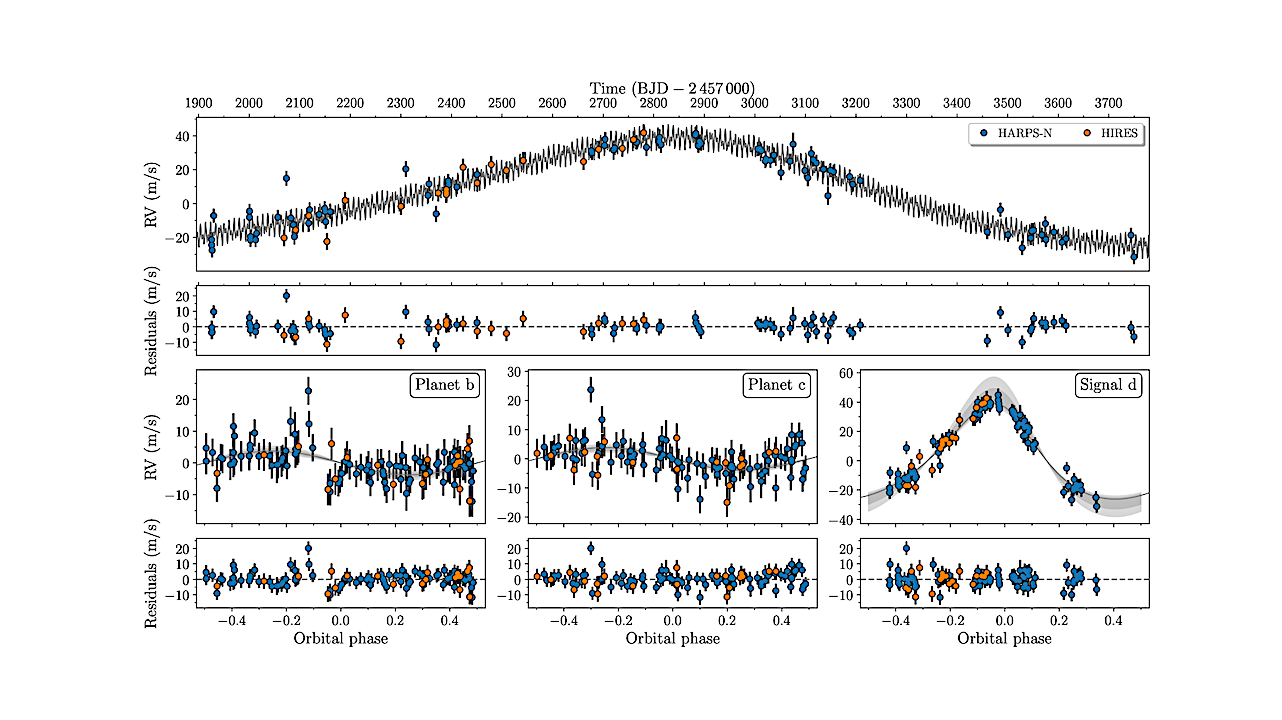
RVs of TOI-1438. Top: The HARPS-N (blue) and HIRES (orange) RV time series with the best-fitting three Keplerian model in grey with residuals shown in the panel below. Lower: The

Applications 29/11/2025 48 views 0 likes Thanks to the EU-funded Recovery and Resilience Facility, and through collaboration between the Greek government, the private satellite company ICEYE and the European Space

NASA/Adeline Morgan Santa Claus (NASA engineer Guy Naylor) poses with NASA’s Artemis II Orion spacecraft and SLS (Space Launch System) rocket in the Vehicle Assembly Building at NASA’s Kennedy Space
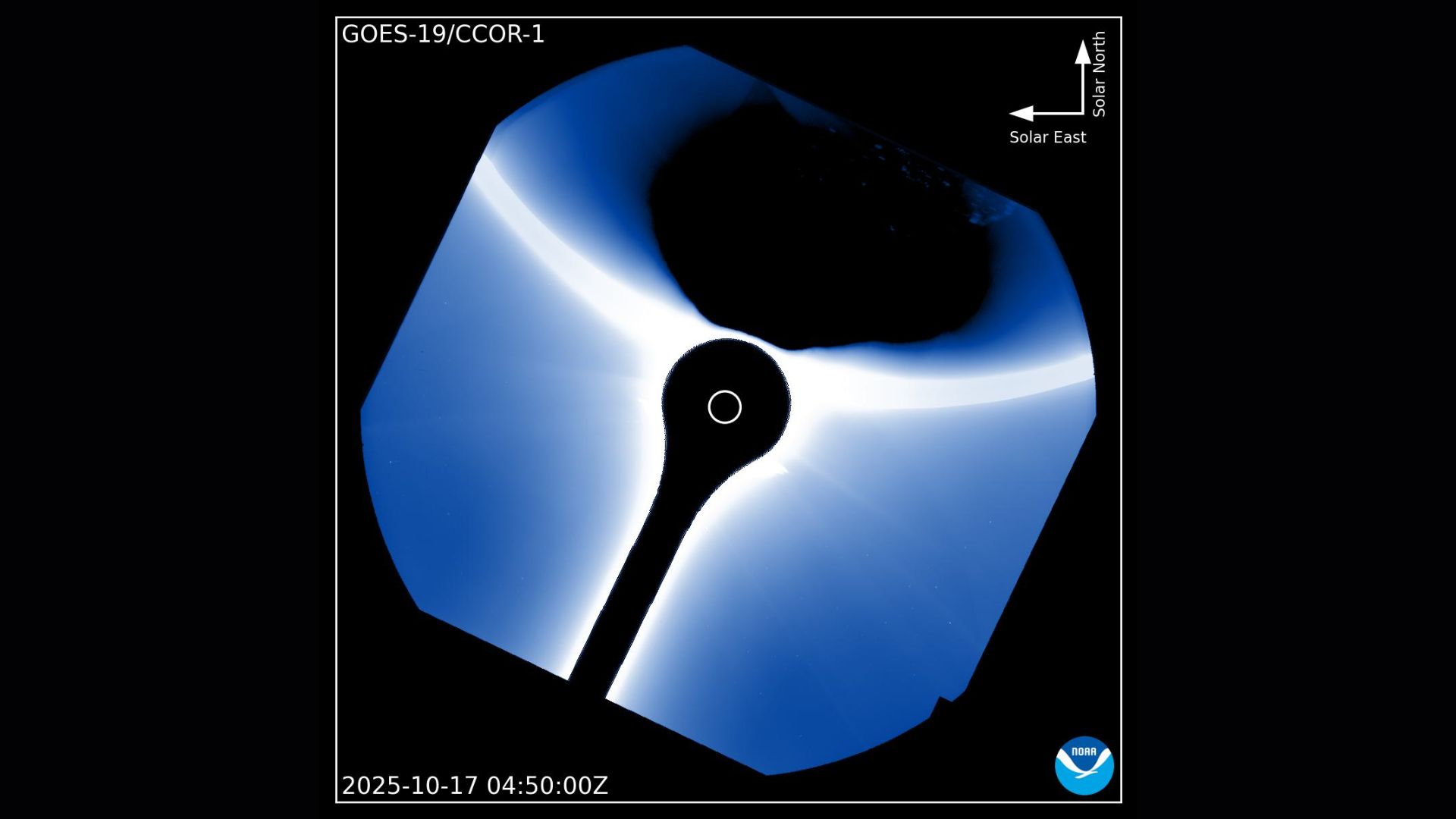
When the U.S. National Oceanic and Atmospheric Administration’s (NOAA) weather satellite GOES-19 turns its gaze toward the sun, scientists don’t expect to see our home planet. But there it was
An international team of researchers has just revealed the existence of three Earth-sized planets in the binary stellar system TOI-2267 located about 190 light-years away. This discovery, published in Astronomy
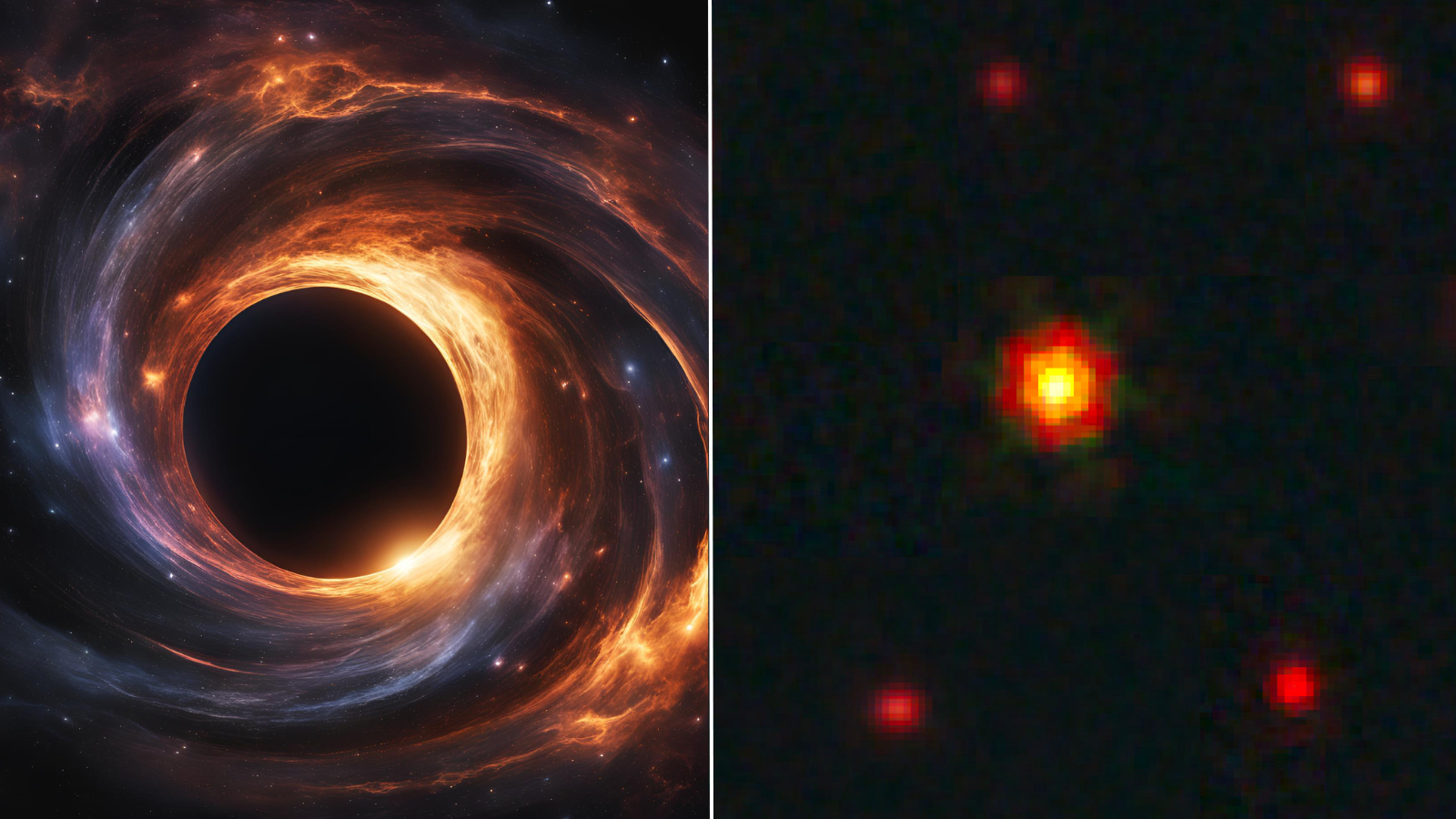
Using the James Webb Space Telescope, astronomers have discovered a ravenous supermassive black hole that existed during a period of the cosmos called “cosmic noon” that occurred around 4 billion

A surprise strong (G3) geomagnetic storm lit up skies across the Northern Hemisphere overnight (Nov. 5-6), treating skywatchers to dazzling auroras from Canada to northern North America. Geomagnetic conditions have
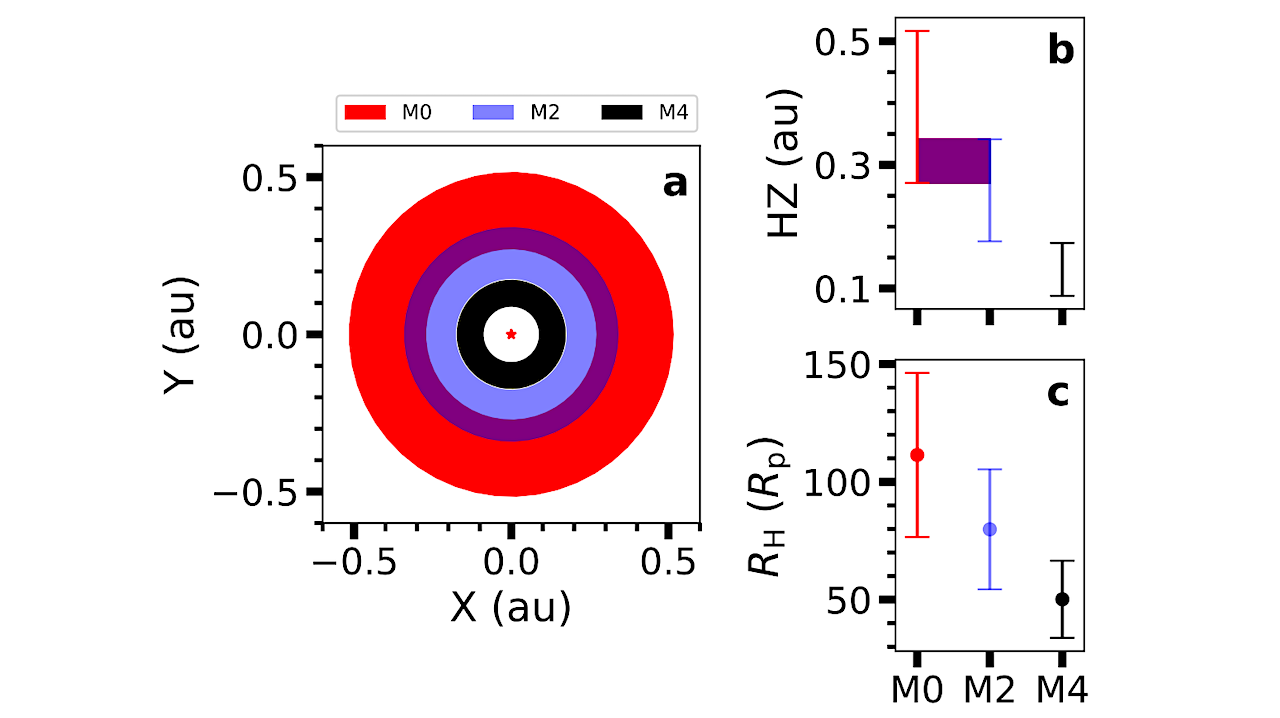
HZs and Hill Radii of M0, M2, and M4 stars. (a) Top-down and (b) edge-on views of the HZs around M0 (red), M2 (blue), and M4 (black) dwarfs along with
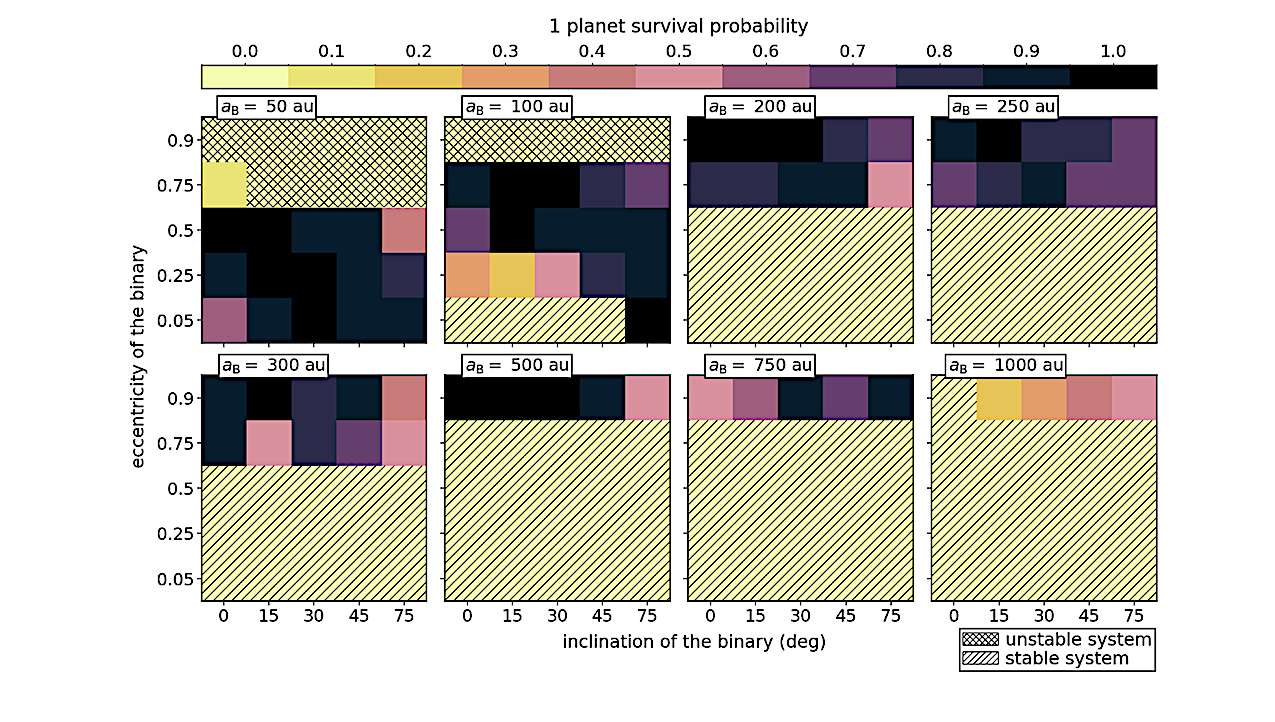
Survival probability of a single planet in a binary system that initially hosted three planets, across various orbital configurations. Each panel corresponds to a specific value of the binary’s semi-major

Advertisement
Popular Now
-
 01Two Black Holes Observed Circling Each Other for the First Time
 -
 02From Polymerization-Enabled Folding and Assembly to Chemical Evolution: Key Processes for Emergence of Functional Polymers in the Origin of Life
 -
 03Astronomy 101: From the Sun and Moon to Wormholes and Warp Drive, Key Theories, Discoveries, and Facts about the Universe (The Adams 101 Series)
 -
 04True Anomaly hires former York Space executive as chief operating officer
 -
 05Φsat-2 begins science phase for AI Earth images
 -
 06Hurricane forecasters are losing 3 key satellites ahead of peak storm season − a meteorologist explains why it matters
 -
 07Binary star systems are complex astronomical objects − a new AI approach could pin down their properties quickly
Scroll to Top