
Now Reading: 1st human missions to Mars should hunt for signs of life, report says
-
01
1st human missions to Mars should hunt for signs of life, report says


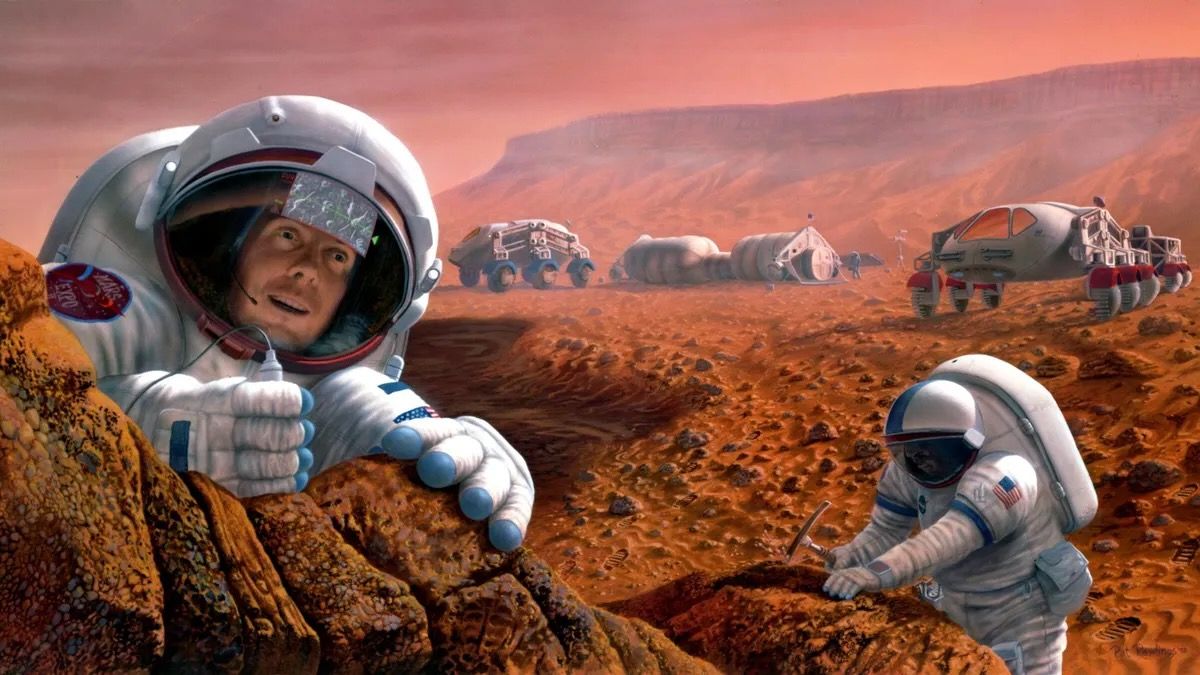
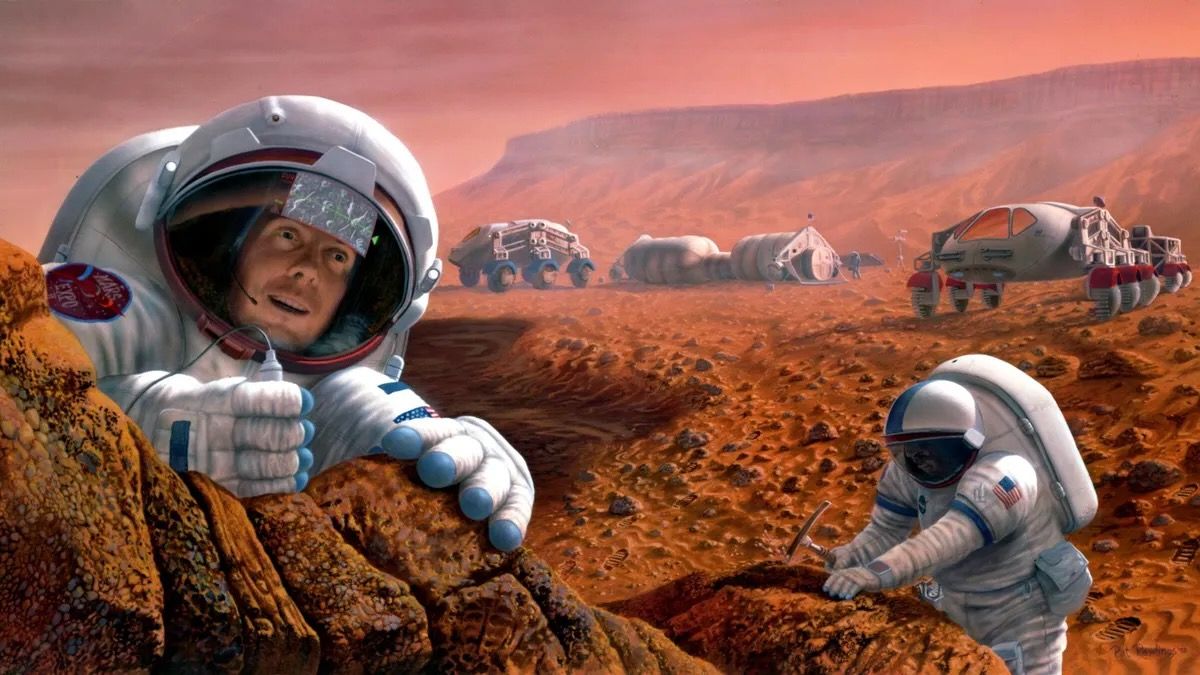
The first astronauts to set foot on Mars should hunt for signs of past or present Red Planet life.
That’s the overarching conclusion of an in-depth report about human Mars exploration from the U.S. National Academies of Sciences, Engineering and Medicine that came out today (Dec. 9).
The National Academies prepared the report for NASA, which wants to send astronauts to the Red Planet as soon as the mid-2030s. The document offers recommendations for how the agency can maximize the science gains of its planned crewed Mars campaign.
Those recommendations are extensive and detailed. For example, the report lays out 11 science objectives that such a campaign should pursue, with the search for signs of life (as well as indications of “indigenous prebiotic chemistry” and a broad assessment of habitability) at the top of the list.
The other 10 objectives, listed in order of descending priority, are:
- Characterize Mars’ water and carbon dioxide cycles
- Map Martian geology in detail
- Determine how the Martian environment affects the physical and psychological health of astronaut explorers
- Figure out what starts and drives Martian dust storms
- Determine the availability and accessibility of Martian resources that could “support permanent habitation”
- Discover if exposure to the Martian environment affects DNA and reproduction
- Learn about the population dynamics of microbes on Mars, and if microbial species from Earth could adversely affect astronauts’ health and performance on the Red Planet
- Determine how Martian dust affects astronauts and their hardware
- Learn how the Martian environment affects a transplanted ecosystem of Earth microbes, plants and animals
- Gain a better understanding of the Martian radiation environment and how it may affect crewmembers and their missions
“A Science Strategy for the Human Exploration of Mars” also proposes four possible three-mission campaigns, the top-ranked of which could achieve all 11 of the above objectives.
That campaign would send all three missions to “a low- to mid-latitude site with near-surface glacier ice and diverse geology,” the report states. “The search for prebiotic chemistry and life would focus on near-surface niche environments, such as geologically recent transiently habitable zones, and/or ice, including layered ice.”
Another possible campaign would target the deep subsurface, establishing a powerful drilling operation that could get 1.2 to 3 miles (2 to 5 kilometers) beneath the red dirt, where pockets of liquid water are thought to exist.
Both of those proposed campaigns would feature an initial 30-sol crewed surface mission, an uncrewed cargo delivery flight and then a 300-sol astronaut mission on the surface. (One sol, or Martian day, is slightly longer than an Earth day — about 24 hours and 40 minutes.) So would a third proposed campaign, though a fourth would launch three crewed 30-sol missions to three different sites on the Red Planet.
There is some commonality across all the proposed campaigns. For example, according to the report, no matter how NASA’s crewed Mars plans take shape, the agency should aim to build a science lab on the Red Planet’s surface, haul Mars samples home from every astronaut mission and set up a recurring “Mars Human-Agent Teaming Summit” to maximize and coordinate the efforts of robotic missions, astronauts and artificial intelligence.
In addition, the report notes, a concerted search for Mars life will be constrained by current “planetary protection” guidelines, which aim to minimize the chances that our exploration efforts contaminate other worlds with Earth microbes or bring alien life to our shores.
Therefore, the document states, “NASA should continue to collaborate on the evolution of planetary protection guidelines, with the goal of enabling human explorers to perform research in regions that could possibly support, or even harbor, life.”










Related Posts

Stay Informed With the Latest & Most Important News
Previous Post
Next Post




Advertisement
-
 01Two Black Holes Observed Circling Each Other for the First Time
 -
 02From Polymerization-Enabled Folding and Assembly to Chemical Evolution: Key Processes for Emergence of Functional Polymers in the Origin of Life
 -
 03Astronomy 101: From the Sun and Moon to Wormholes and Warp Drive, Key Theories, Discoveries, and Facts about the Universe (The Adams 101 Series)
 -
 04True Anomaly hires former York Space executive as chief operating officer
 -
 05Φsat-2 begins science phase for AI Earth images
 -
 06Hurricane forecasters are losing 3 key satellites ahead of peak storm season − a meteorologist explains why it matters
 -
 07Binary star systems are complex astronomical objects − a new AI approach could pin down their properties quickly