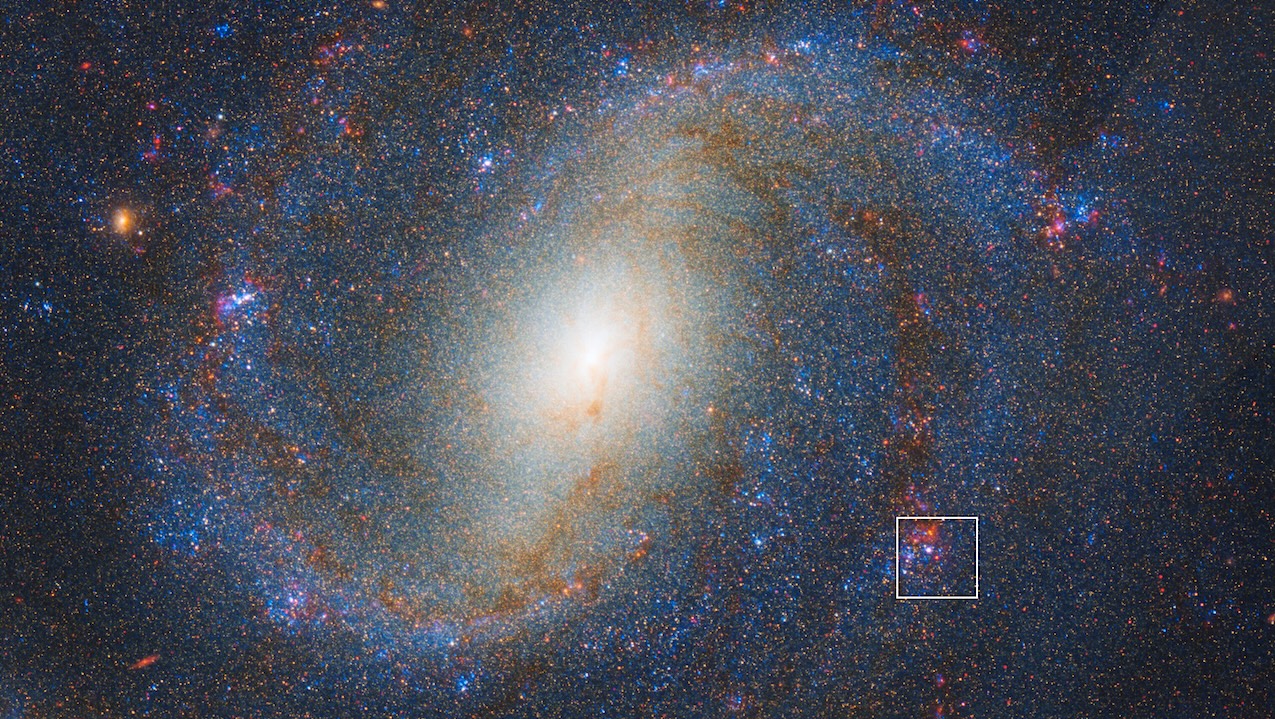
The main image at left shows a combined Webb and Hubble view of spiral galaxy NGC 1637, with the region of interest Credit: NASA, ESA, CSA, STScI, C. Kilpatrick (Northwestern),

The main image at left shows a combined Webb and Hubble view of spiral galaxy NGC 1637, with the region of interest Credit: NASA, ESA, CSA, STScI, C. Kilpatrick (Northwestern),
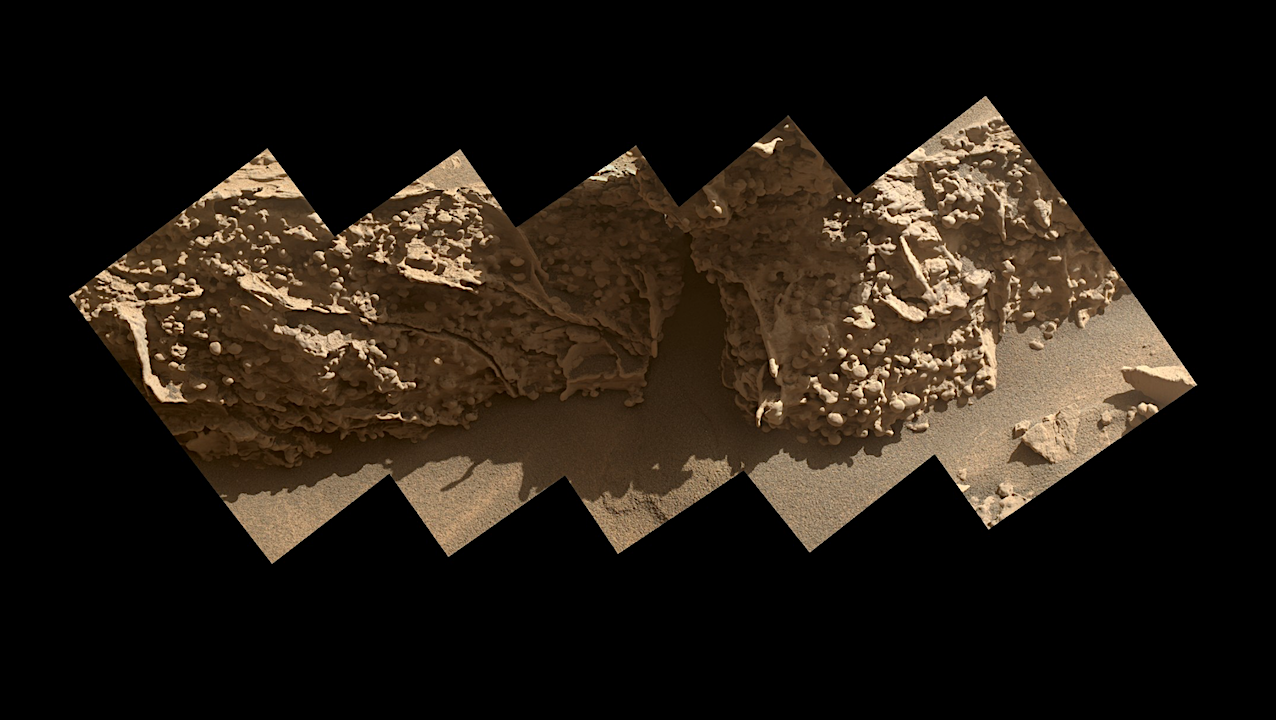
These bumpy nodules were formed by minerals left behind as groundwater was drying out on Mars billions of years ago. NASA’s Curiosity rover captured images of these pea-size features while
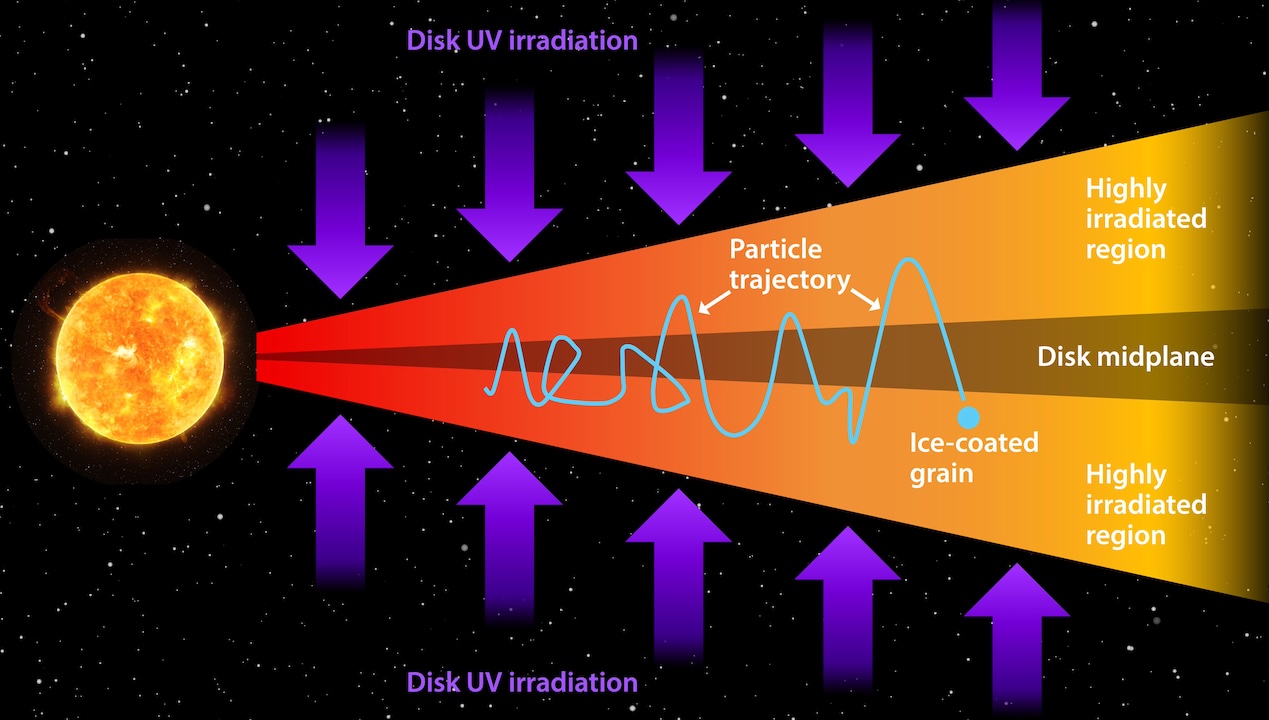
New research conducted by SwRI, Aix-Marseille University and the Institute for Advanced Studies demonstrated how complex organic molecules (COMs) could have formed in the protoplanetary disk represented here. Interstellar ultraviolet
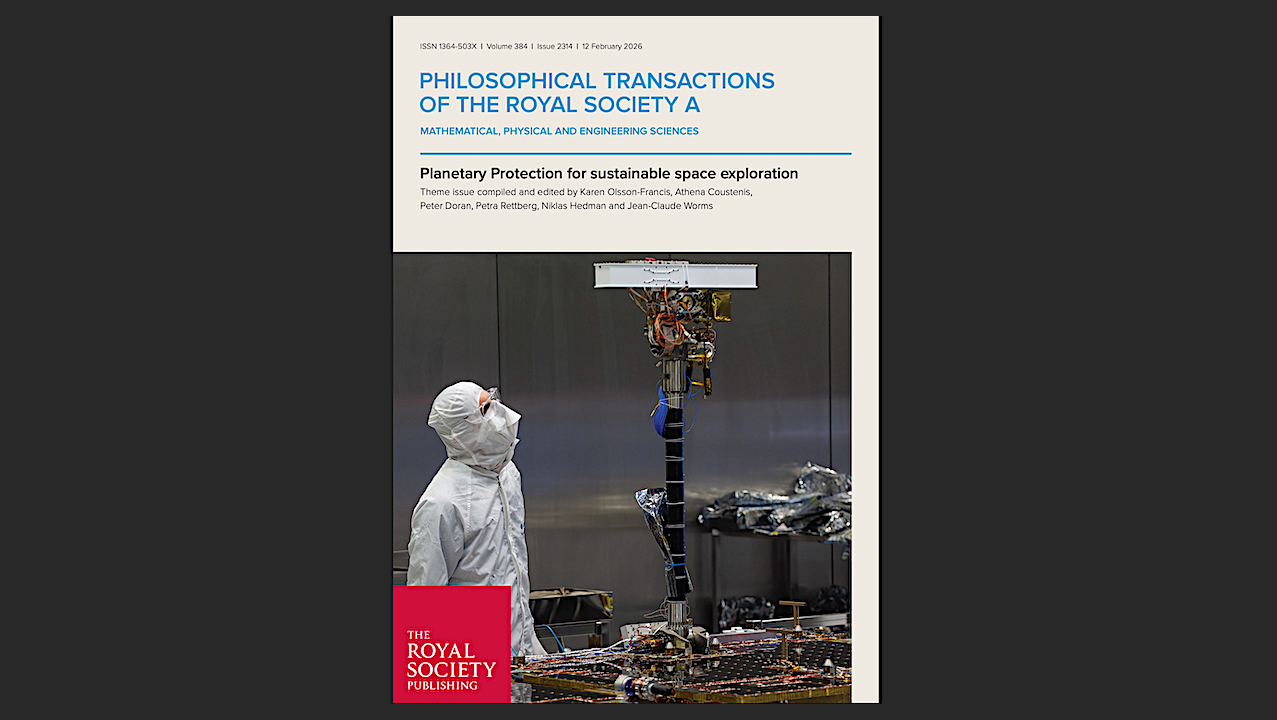
Planetary Protection For Sustainable Space Exploration – – Philosophical Transactions A Theme Issue: (open access) The Royal Society Royal Society Publishing has recently published an OPEN ACCESS theme issue of

Source: Vladislav Egorov (3D model), Jaagup Metsalu (render) – Estonian Museum of Natural History – Wikipedia CC BY-SA 4.0 File:Estonian Museum of Natural History – trilobite – Hydrocephalus.png A UT
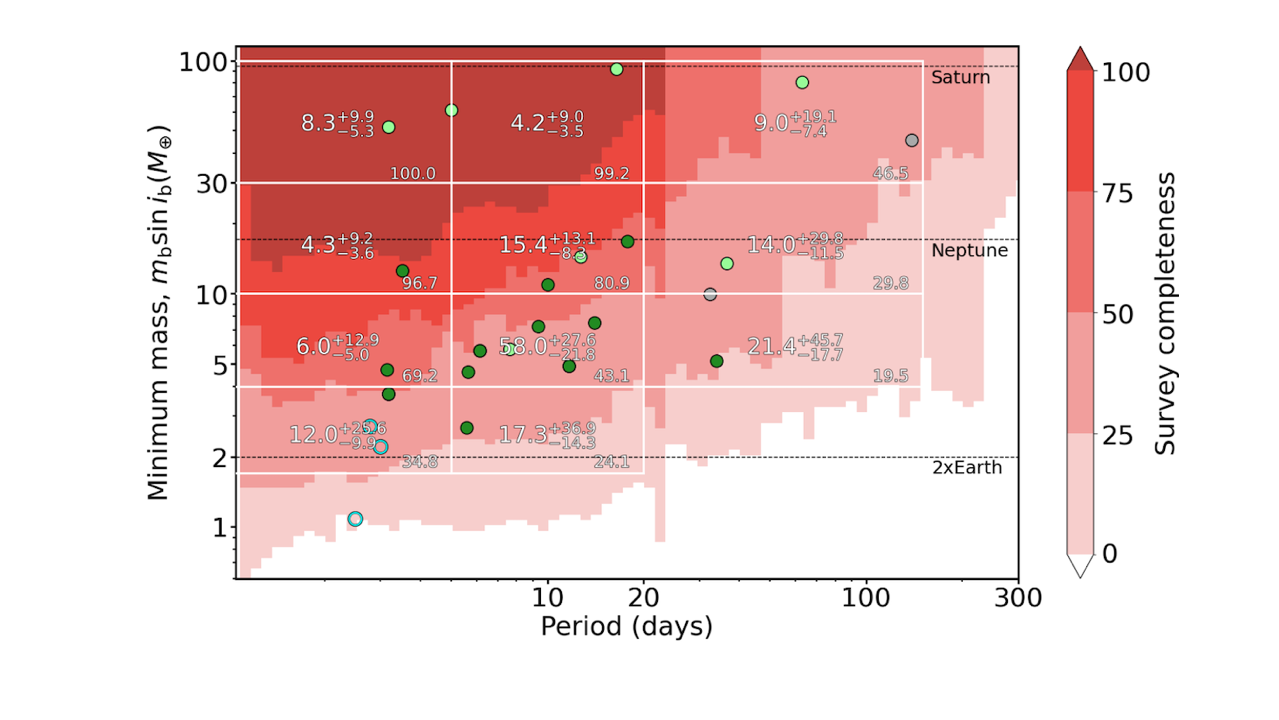
Completeness and planet abundance plot for the DMPP radial velocity survey of 24 targets with sub-basal activity, as a function of minimum mass and orbital period. The red contours indicate
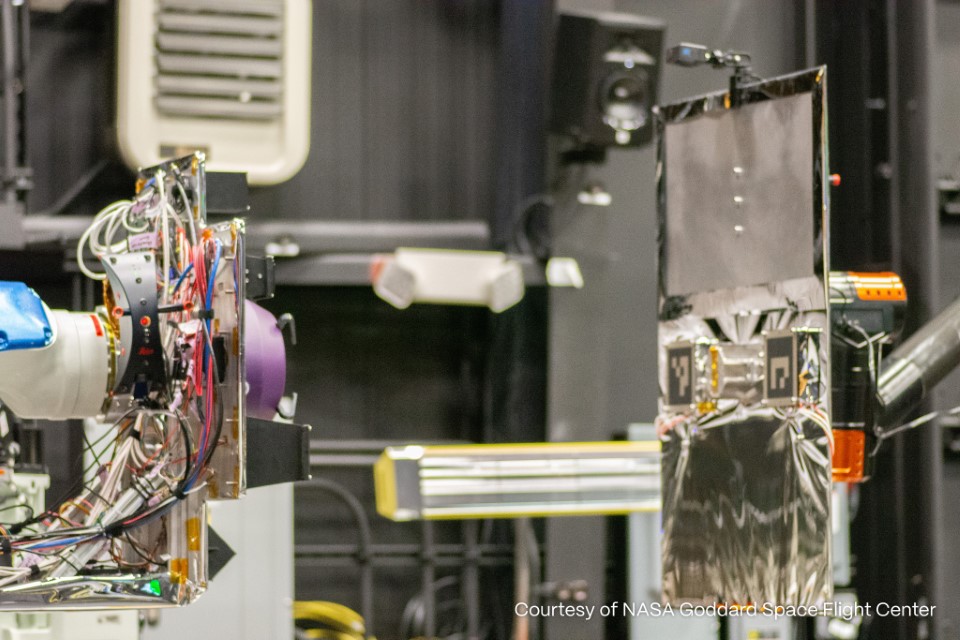
WASHINGTON — As it plans for a future in which satellites can be refueled in orbit, the U.S. Space Force has taken a step that signals intent without yet committing
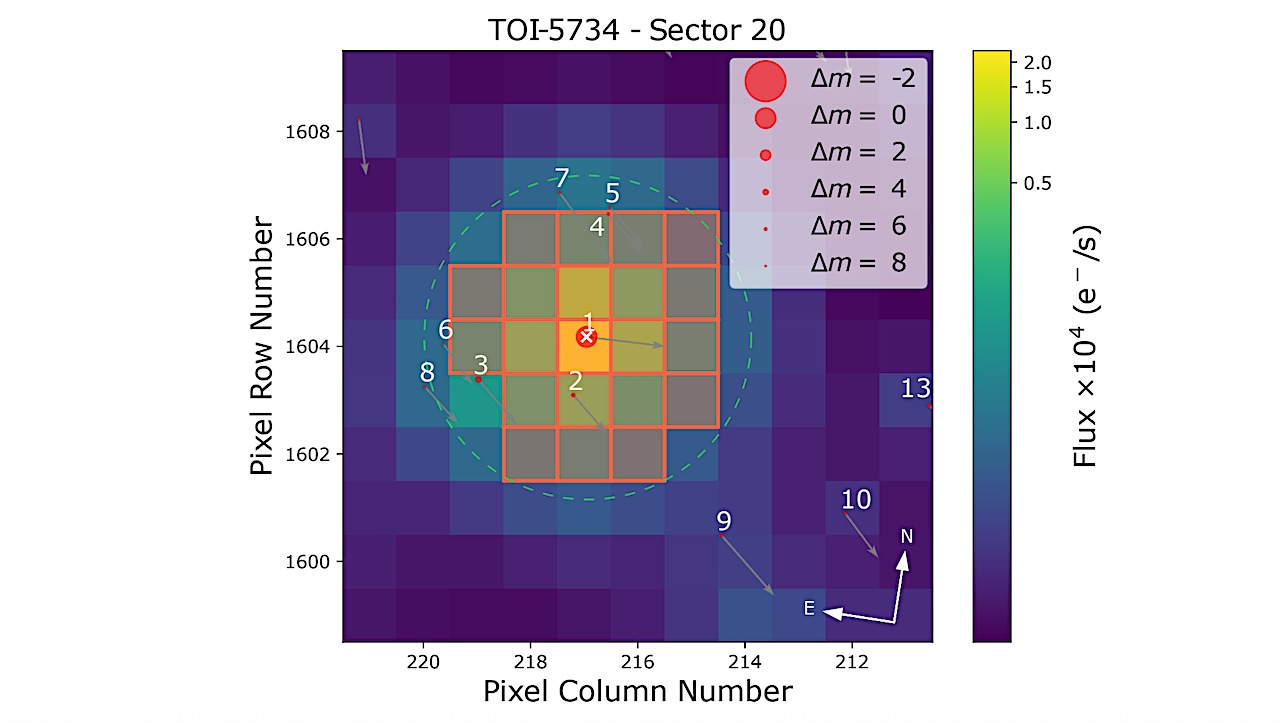
TESS target pixel file of Sector 20 of TOI-5734, which is marked with ‘1’. The other sources, extracted from the Gaia DR3 catalogue, have numbered circles of sizes proportional to
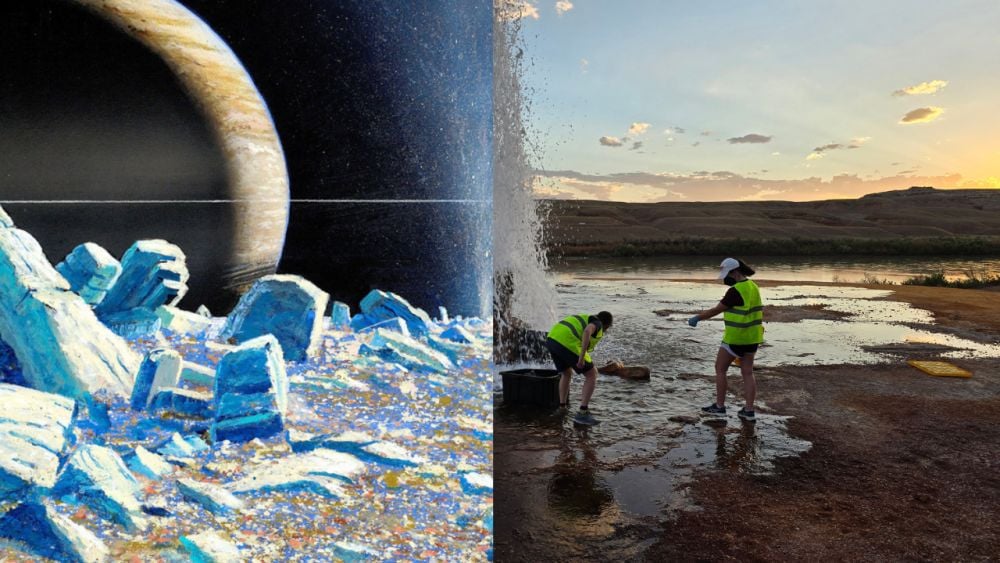
One way of studying and understanding distant, hard-to-reach locations elsewhere in the Solar System is to find analogues of them here on Earth. For example, deserts and lava fields are
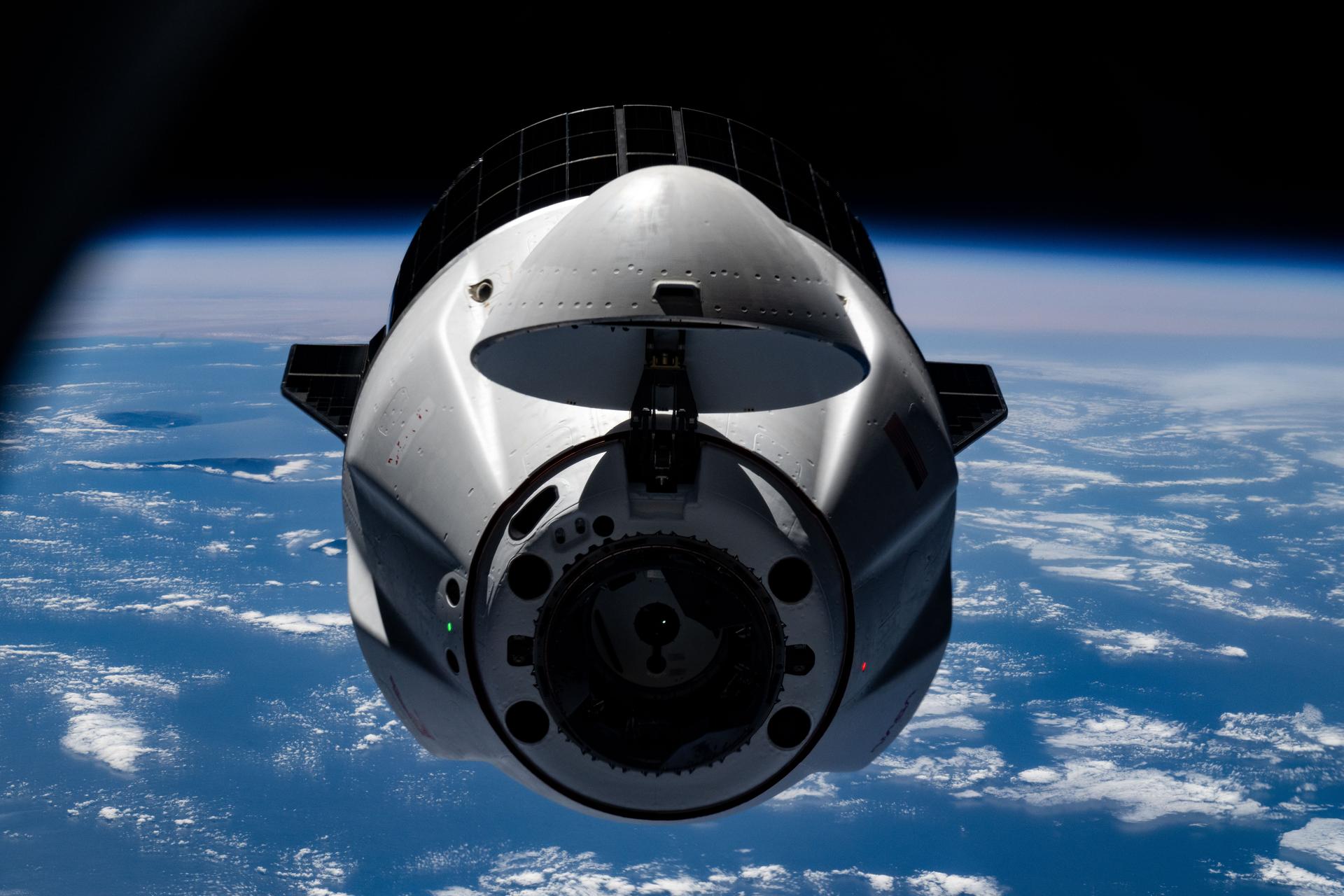
A SpaceX Dragon cargo spacecraft, carrying more than 5,000 pounds of science, supplies, and hardware for NASA’s SpaceX CRS-33 mission, approaches the International Space Station on Aug. 25, 2025, for