
Now Reading: NASA exoplanet-hunting spacecraft hears a red giant star ‘singing’ to its partner black hole
-
01
NASA exoplanet-hunting spacecraft hears a red giant star ‘singing’ to its partner black hole

NASA exoplanet-hunting spacecraft hears a red giant star ‘singing’ to its partner black hole

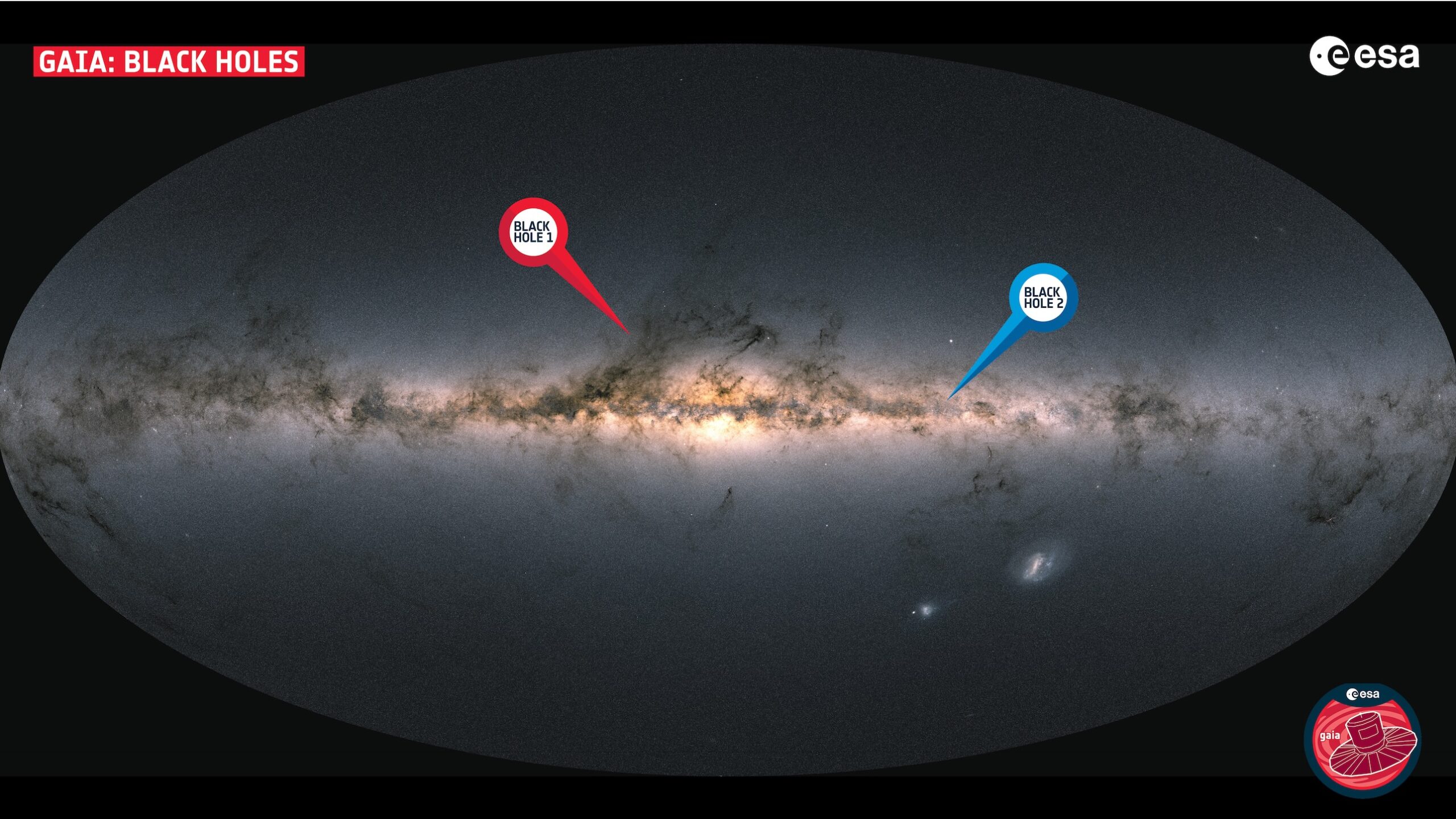
Using NASA’s Transiting Exoplanet Survey Satellite (TESS), astronomers have listened to the cosmic song a red giant star croons to its black hole companion. The song, related to the starquake studied by TESS, revealed the turbulent history of this red giant, hinting that it once collided and merged with another star.
The rapidly spinning red giant star, a phase stellar bodies around the size of the sun enter when they exhaust their fuel for nuclear fusion, dwells in the binary system Gaia BH2. Located around 3,800 light-years away in the constellation Centaurus, this system was discovered by the European Space Agency (ESA) star mapping spacecraft Gaia in 2023.
“Just like seismologists use earthquakes to study Earth’s interior, we can use stellar oscillations to understand what’s happening inside distant stars,” team leader Daniel Hey, a scientist at the University of Hawaii Institute for Astronomy (IfA), said in a statement. “These vibrations told us something unexpected about this star’s history.”
Red giant star is younger than it looks
Hey and colleagues were surprised when they took a close look at the composition of this red giant star, finding it to be packed with heavy elements, or “alpha-rich.” This is something common to more ancient stars. However, the starquakes observed by TESS suggest that the star is only 5 billion years old.
For context, our 4.6 billion-year-old star, the sun, will only reach its red giant phase when it runs out of hydrogen in its core in around 5 billion years.
“Young, alpha-rich stars are quite rare and puzzling,” Hey continued. “The combination of youth and ancient chemistry suggests this star didn’t evolve in isolation. It likely acquired extra mass from a companion, either through a merger or by absorbing material when the black hole formed.”
This isn’t the only puzzle surrounding this red giant, either.
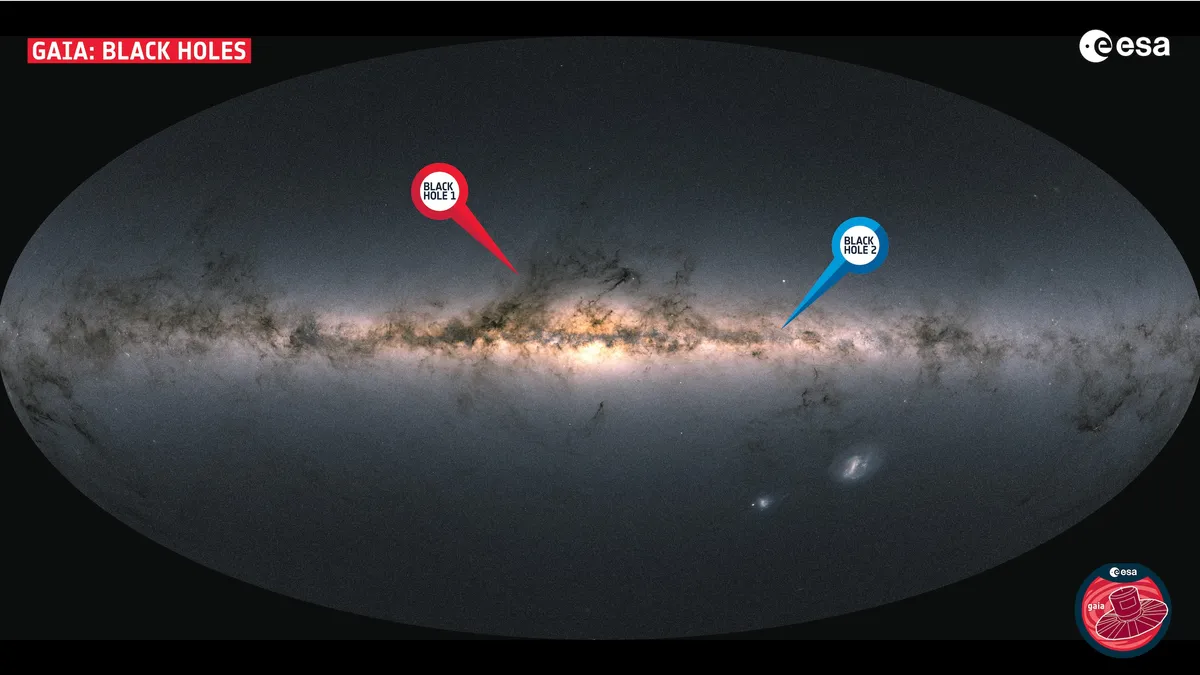
Observing the red giant using ground-based instruments, scientists found that it is rotating once every 398 Earth days, which is much faster than isolated red giants of similar ages normally spin. That rapid spin hints at the fact that it may have merged with another star in its distant history, or that it once interacted with the massive star that died to birth its black hole companion.
“If this rotation is real, it can’t be explained by the star’s birth spin alone,” team member Joel Ong, a NASA Hubble Fellow at IfA, said in the statement. “The star must have been spun up through tidal interactions with its companion, which further supports the idea that this system has a complex history.”
The same team also investigated another black hole system discovered by Gaia, designated Gaia BH3, located just 2,000 light-years from Earth. Gaia BH3 has a companion star that may be even more strange than the red giant of Gaia BH2.
This star is light in elements heavier than hydrogen and helium, which astronomers call “metals.” Usually, metal-poor stars show clear oscillations, but they are absent in the metal-poor star of Gaia BH3.
The stellar motion of both Gaia BH2 and Gaia BH3 could reveal more about binary systems with black holes that are not actively feeding on their stellar companions.
The team will continue to observe Gaia BH2 with Gaia, hoping to catch a better look at its starquakes, which could help confirm a past merger with another star.
The team’s research was published on Nov. 13 in The Astronomical Journal.










Related Posts

Stay Informed With the Latest & Most Important News
Previous Post
Next Post

Advertisement
-
 01Two Black Holes Observed Circling Each Other for the First Time
 -
 02From Polymerization-Enabled Folding and Assembly to Chemical Evolution: Key Processes for Emergence of Functional Polymers in the Origin of Life
 -
 03Astronomy 101: From the Sun and Moon to Wormholes and Warp Drive, Key Theories, Discoveries, and Facts about the Universe (The Adams 101 Series)
 -
 04True Anomaly hires former York Space executive as chief operating officer
 -
 05Φsat-2 begins science phase for AI Earth images
 -
 06Hurricane forecasters are losing 3 key satellites ahead of peak storm season − a meteorologist explains why it matters
 -
 07Binary star systems are complex astronomical objects − a new AI approach could pin down their properties quickly