
Now Reading: Leading the integration of commercial and military capabilities in space
-
01
Leading the integration of commercial and military capabilities in space



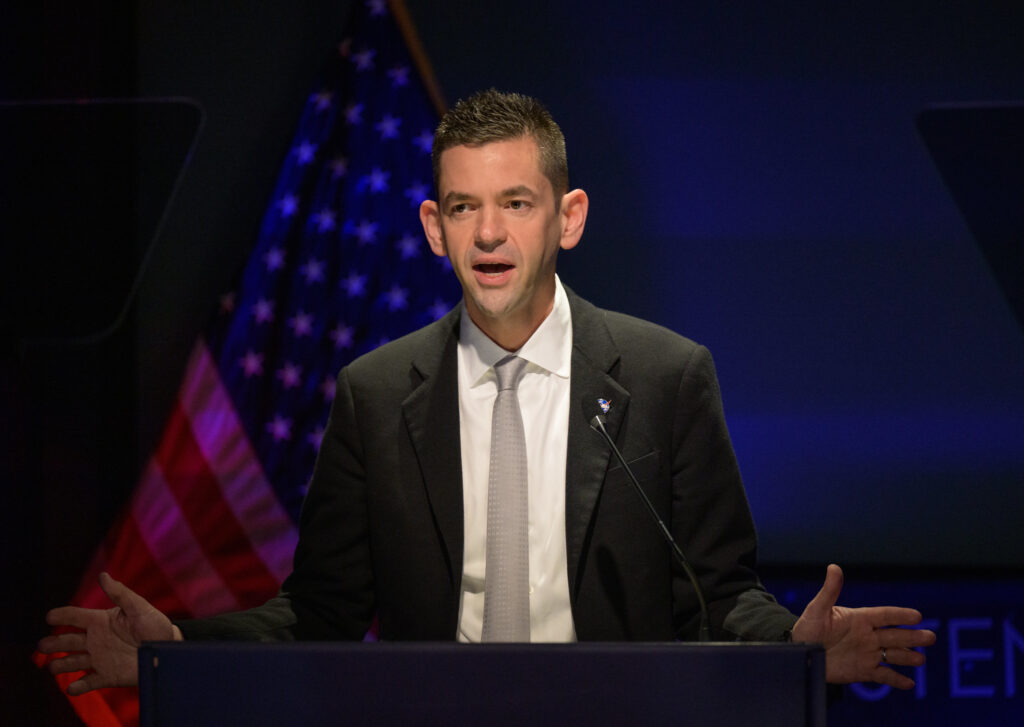
Each year, SpaceNews selects the people, programs and technologies that have most influenced the direction of the space industry in the past year. Started in 2017, our annual celebration recognizes outsized achievements in a business in which no ambition feels unattainable. This year’s winners of the 8th annual SpaceNews Icon Awards were announced and celebrated at a Dec. 2 ceremony hosted at the Johns Hopkins University Bloomberg Center in Washington, D.C. Congratulations to all of the winners and finalists.
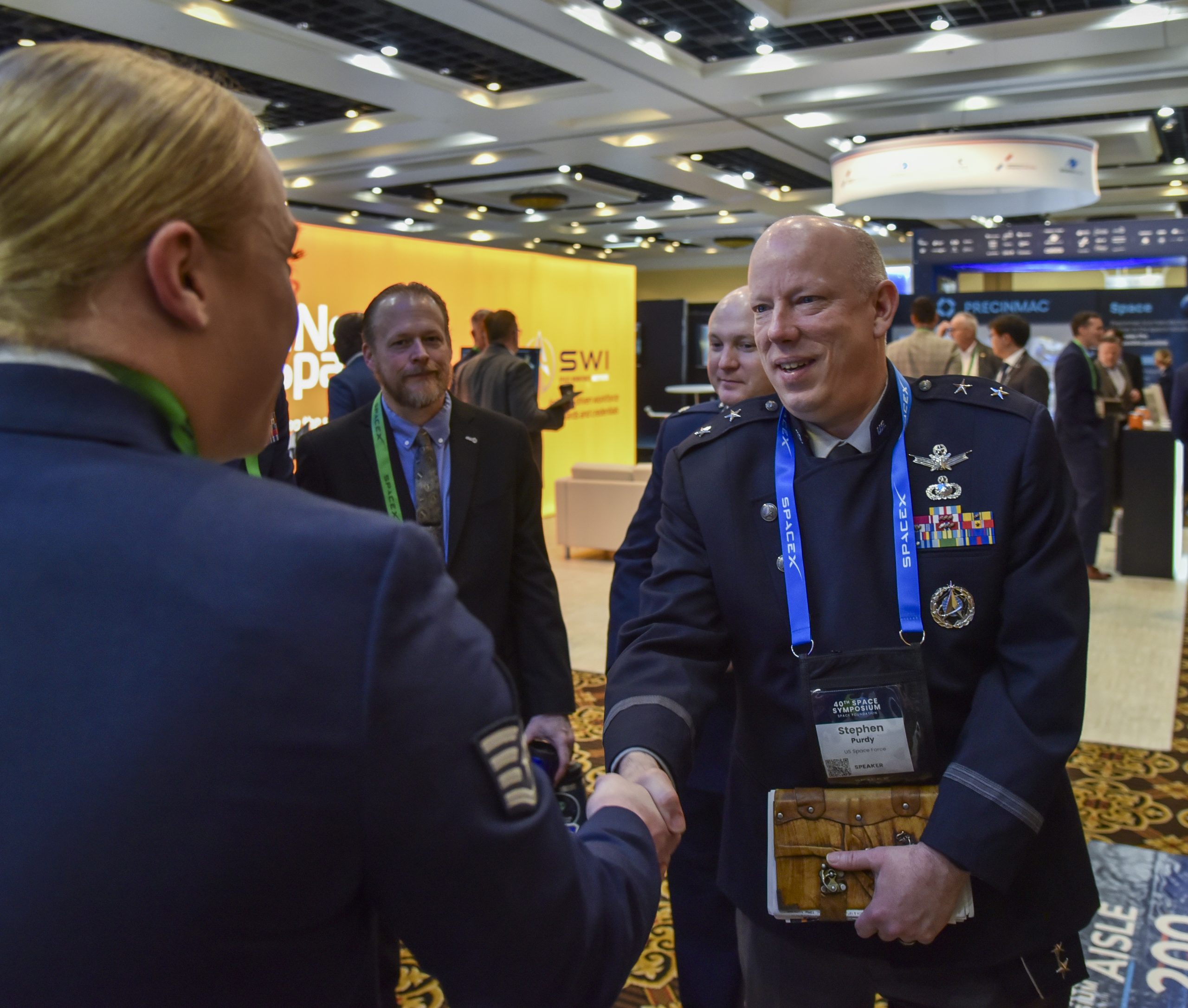
In the high-stakes race to stay ahead of China in space technology, Maj. Gen. Stephen Purdy has taken a role as one of the Space Force’s boldest reformers — an innovator in uniform who’s making the Pentagon think more like a startup.
As acting assistant secretary of the Air Force for space acquisition and integration, Purdy has been at the forefront of a quiet effort to rewire how the military buys satellites, launches rockets and partners with private industry. His approach is simple but perhaps radical for the defense world: tap into the agility and creativity of commercial companies to outpace adversaries and deliver cutting-edge capabilities faster than traditional procurement ever could.
Purdy’s impact is most visible in two landmark efforts: the National Security Space Launch (NSSL) Phase 3 program and the next-generation space domain awareness constellation known as RG-XX.
For NSSL, Purdy championed a dual-lane acquisition model that split missions into two categories — one for commercially routine payloads and another for the most sensitive, risk-averse missions. The two-track structure opened the door for new competitors — like Blue Origin, Rocket Lab and Stoke Space — to attempt to challenge the dominance of SpaceX and United Launch Alliance.
If NSSL Phase 3 redefined how the Pentagon buys launch services, the RG-XX program is about reimagining how to acquire satellites for space domain awareness in geosynchronous orbit to keep watch over objects of interest.
Purdy led a top-to-bottom review that broke from the government’s billion-dollar, single-prime contractor model. Instead, he established a pool of commercial vendors, enabling the Space Force to buy satellites off the production line.
His push to include on-orbit refueling as a core requirement signaled that the Space Force shouldn’t just buy hardware but also a logistics infrastructure to extend the lives of satellites.
“I’m always impatient and I want more,” Purdy said recently, describing his vision for a new kind of partnership between the Pentagon and the venture capital community.
“Every dollar that the venture capital investment community spends in that area is a dollar I don’t have to spend from the Space Force budget.”
That attitude — embracing outside investment as a strategic advantage — has made Purdy a bridge between two worlds that rarely speak the same language. He’s pressed for better dialogue between government program managers and investors, encouraging VCs to understand military needs and align their portfolios accordingly.
Purdy is also urging the Space Force to leverage commercial services such as weather monitoring and space domain awareness, not just to save money, but to move faster and stay at the technological frontier.
It’s a mindset that is starting to reshape the Space Force’s acquisition culture from the inside out.
This article first appeared in the December 2025 issue of SpaceNews Magazine.










Related Posts

Stay Informed With the Latest & Most Important News
Previous Post
Next Post






Advertisement
-
 01Two Black Holes Observed Circling Each Other for the First Time
 -
 02From Polymerization-Enabled Folding and Assembly to Chemical Evolution: Key Processes for Emergence of Functional Polymers in the Origin of Life
 -
 03Astronomy 101: From the Sun and Moon to Wormholes and Warp Drive, Key Theories, Discoveries, and Facts about the Universe (The Adams 101 Series)
 -
 04True Anomaly hires former York Space executive as chief operating officer
 -
 05Φsat-2 begins science phase for AI Earth images
 -
 06Hurricane forecasters are losing 3 key satellites ahead of peak storm season − a meteorologist explains why it matters
 -
 07Binary star systems are complex astronomical objects − a new AI approach could pin down their properties quickly