
Now Reading: Germany’s space defense strategy marks a turning point. Private investors must now respond
-
01
Germany’s space defense strategy marks a turning point. Private investors must now respond

Germany’s space defense strategy marks a turning point. Private investors must now respond

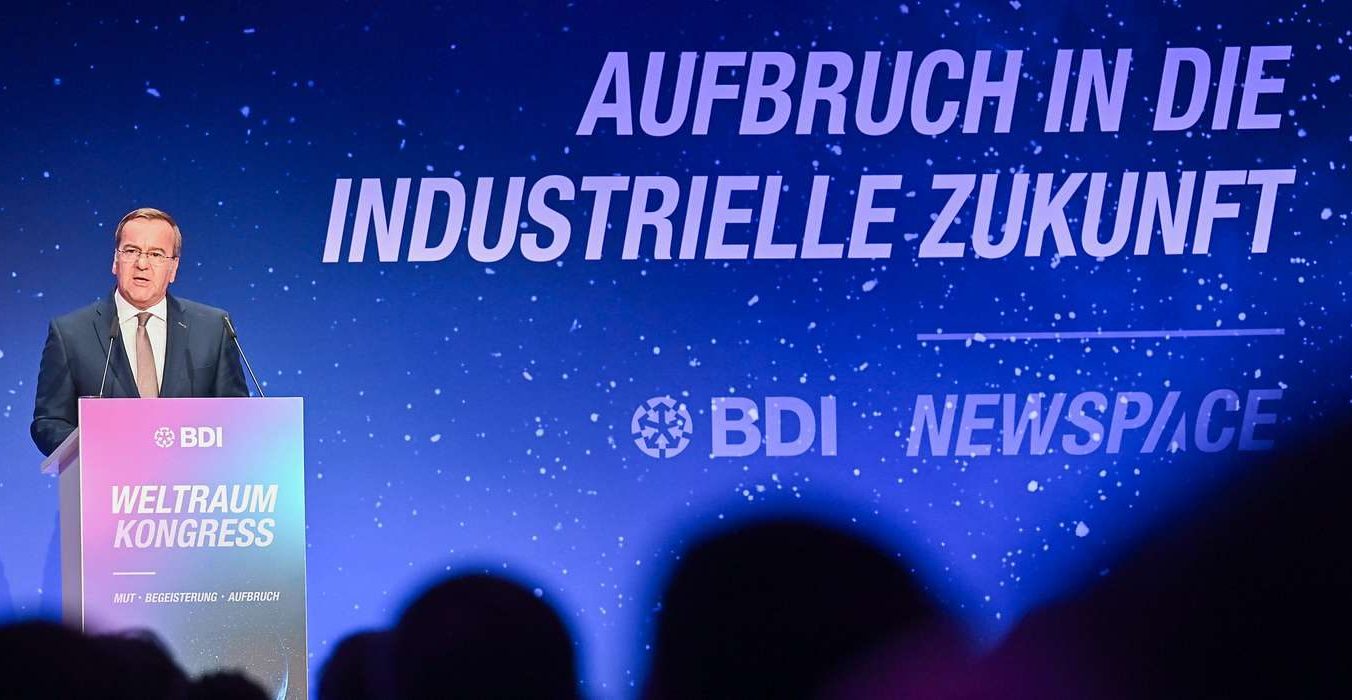

Readers of this magazine have known for years what we, as investors, have also known for years: that the space sector is not some marginal realm of human activity, to be left to a handful of specialists operating on the sidelines of normal life. Rather, space is the backbone of the world economy, a domain of critical infrastructure, a theatre of economic and geopolitical competition and a lucrative opportunity for private-sector actors. And that’s to say nothing of the disproportionate part that those working in space have played either in creating or forcing advances in technology that today, almost none of us could do without: real-time operating systems, GPS, smoke detectors, the personal computer. Until recently, the mystery was why this vast sector was not seen in the light of this, its critical role in enabling our way of life.
And, increasingly, in preserving it.
On Wednesday, Germany published its first national space security strategy. The national parliament passed a bill that involves a promise to spend 35 billion euros ($40.6 billion) between now and 2030 specifically on space projects and orbital security. The significance of this can’t be overstated. Because although the connection between space and defense isn’t new, the vital importance of space to defense has been grossly underestimated by the countries of the Western hemisphere, with the result being – as the authors of the strategy argued – that rival powers, namely Russia and China, have stolen the march on us. Germany’s Defence Minister Boris Pistorius and Joann Wadephul, the Foreign Minister, struck a grave note when they wrote that space was “no longer a place reserved for peaceful research’ and that ‘our freedom, our prosperity and our security are also under threat in space.”
The strategy states without embellishment the brute fact that Russia and China have developed technology that can “disrupt, dazzle, manipulate or destroy” our own poorly protected systems. China has built machinery that ‘tow’ satellites robotically, and Russia has been targeting and jamming British as well as German satellites, according to intelligence sources in both countries. We can assume it has targeted many more. With this in mind, we need to move fast, and that is what Germany has pledged to do. The new strategy commits it to protecting satellites, strengthening space platforms, expanding its Earth-observation capacity and building systems that can withstand electromagnetic pulses (EMPs).
This is where things get interesting. Because in order to achieve these aims, the German government can no longer approach defense in the old way. That way was characterized by painfully slow procurement, far too much red tape and knee-jerk preference for a small group of big contractors unable to innovate at speed. Now, to meet the needs of this moment, it will need to look to companies with vision, creativity, ambition, competitiveness and adaptability — virtues most effectively developed in the blast furnace of commercial markets.
It’s no surprise, then, that if we consider the kinds of companies that can help Germany to realize its vision, many are dual-use. I’m thinking of the optical communications pioneer Cailabs, whose ground stations allow for the rapid, secure transmission of data through the atmosphere via laser. There’s also FibreCoat, whose advanced materials can not only protect satellites against the harsh conditions of space but are entirely EMP-resistant, and therefore satisfy one of the key needs set out in the strategy. ICEYE, already the lynchpin of European space intelligence, has shown how synthetic aperture radar (SAR) satellites can, irrespective of the weather or time of day, capture images of Earth in staggering levels of detail for a vast array of purposes.
The document alludes to what I mentioned at the start of this article: that much of civilian life depends on uninterrupted space-based services. Financial transactions, navigation, secure communications, emergency response — these and countless other areas would collapse without space infrastructure, and it doesn’t take much imagination to picture the chaos that would ensue. That space infrastructure is being probed, picked at, targeted and tested. Europe must see that space is the great enabler of modern life, and Germany is showing them how.
But investors also have a job to do. Germany is prepared to invest 35 billion euros in space-based defense; now, private investors across the continent must match that ambition. Research grants won’t do. Public money won’t be sufficient. Sustained, generous, private investment must rush into the space sector and support the growth of the kinds of companies that Germany and its allies are turning to for their defense. If the commercial ecosystem is healthy, then Europe will be able to build up a truly modern space-based military able to face up to the challenges of today, tomorrow and the day after that. Public procurement can anchor demand, but only thanks to private investment will companies be able to meet it.
What should investors do? First, back the companies solving the problems Germany has set out: secure communication firms, EMP-resilient materials developers, SAR satellite manufacturers. Second, seek out the next wave of dual-use ventures emerging from Europe’s research institutions. Early commitments here will help to shape the market. In short: boost support for proven players, and open up the playing field for the new ones.
This is a turning point: a sign that space resilience is a priority at the national and continental level, and that the old ways of doing things no longer work. It’s a victory for clear-eyed realism: an acknowledgement that if Germany and the rest of Europe are to be able to defend themselves, then they must act to mobilize the world-class talent and first-rate technology at their disposal. Private investors must now respond to make that happen.
Felix von Schubert is the executive chairman and Partner at NewSpace Capital.
SpaceNews is committed to publishing our community’s diverse perspectives. Whether you’re an academic, executive, engineer or even just a concerned citizen of the cosmos, send your arguments and viewpoints to opinion@spacenews.com to be considered for publication online or in our next magazine. The perspectives shared in these opinion articles are solely those of the authors.










Related Posts

Stay Informed With the Latest & Most Important News
Previous Post
Next Post





Advertisement
-
 01Two Black Holes Observed Circling Each Other for the First Time
 -
 02From Polymerization-Enabled Folding and Assembly to Chemical Evolution: Key Processes for Emergence of Functional Polymers in the Origin of Life
 -
 03Astronomy 101: From the Sun and Moon to Wormholes and Warp Drive, Key Theories, Discoveries, and Facts about the Universe (The Adams 101 Series)
 -
 04True Anomaly hires former York Space executive as chief operating officer
 -
 05Φsat-2 begins science phase for AI Earth images
 -
 06Hurricane forecasters are losing 3 key satellites ahead of peak storm season − a meteorologist explains why it matters
 -
 07Binary star systems are complex astronomical objects − a new AI approach could pin down their properties quickly