
Now Reading: A vindication for NASA’s CLPS program, and a victory for Firefly
-
01
A vindication for NASA’s CLPS program, and a victory for Firefly


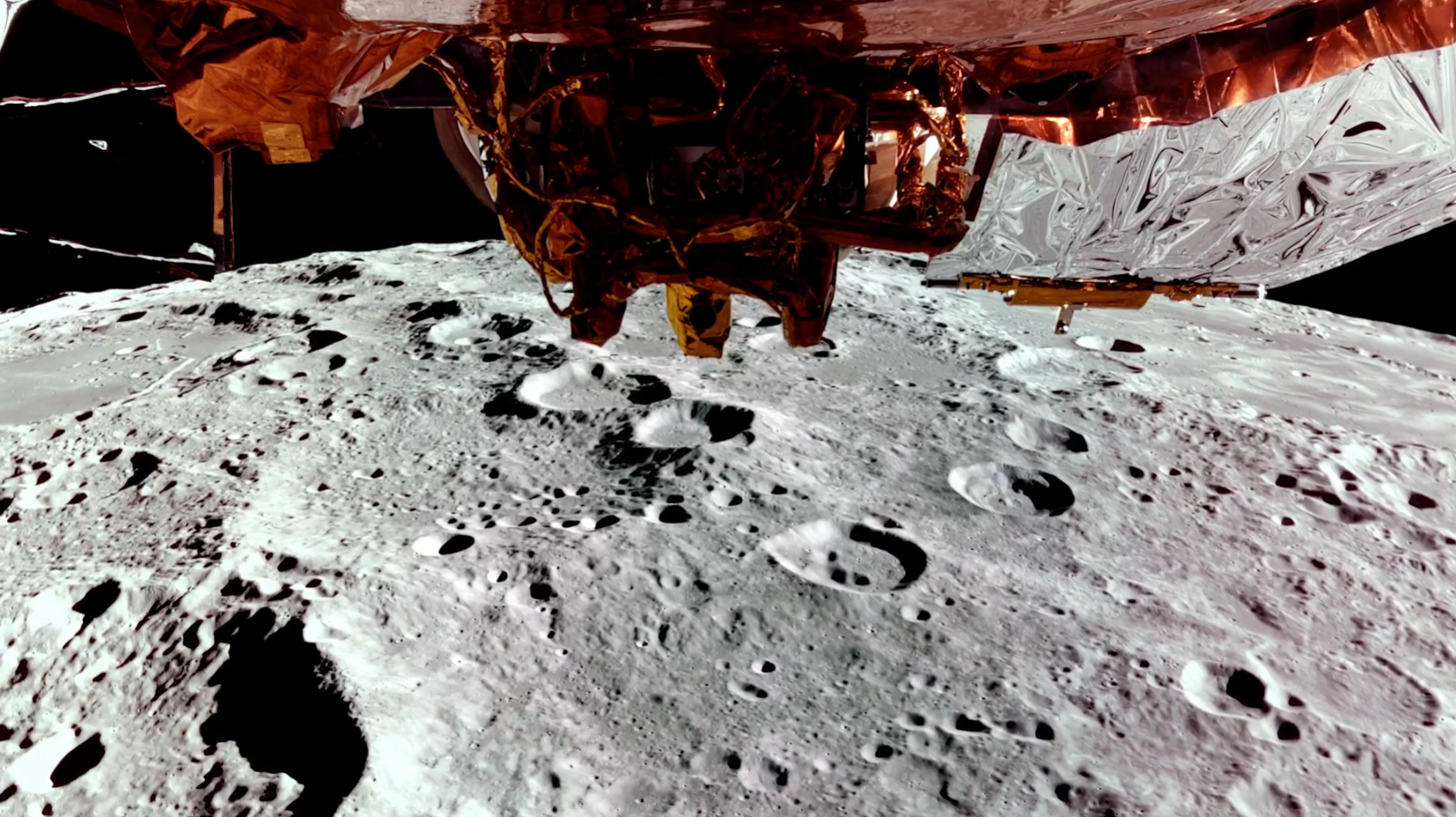

Each year, SpaceNews selects the people, programs and technologies that have most influenced the direction of the space industry in the past year. Started in 2017, our annual celebration recognizes outsized achievements in a business in which no ambition feels unattainable. This year’s winners of the 8th annual SpaceNews Icon Awards were announced and celebrated at a Dec. 2 ceremony hosted at the Johns Hopkins University Bloomberg Center in Washington, D.C. Congratulations to all of the winners and finalists.
Even one-quarter of the way into the 21st century, landing on the moon is difficult. In recent years, Intuitive Machines has sent two landers to the lunar surface, only for them to topple over when touching down. Two landers from Japanese company ispace also crashed attempting landings, while one from Astrobotic malfunctioned hours after launch and never made it to the moon. Nearly 60 years after the Soviet Union’s Luna 9 became the first spacecraft to soft-land on the moon, Russia’s Luna 25 crashed trying its own landing in 2023.
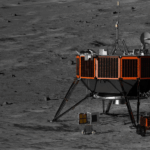
That makes what Firefly Aerospace achieved with Blue Ghost 1 all the more impressive. On March 2, that spacecraft landed safely in Mare Crisium on the northeastern quadrant of the moon’s near side. On its first try, the company scored a bullseye.
The landing marked the start of two weeks of operations on the lunar surface, concluding when sunset caused the solar-powered lander to shut down as expected. NASA, which flew 10 payloads on the lander through its Commercial Lunar Payload Services (CLPS) program, called the mission a success.
“Blue Ghost 1 is an existence proof of how we wanted Commercial Lunar Payload Services to work,” Joel Kearns, deputy associate administrator for exploration in NASA’s science directorate, said at a briefing just after the end of the mission.
The landing was a vindication for CLPS but an even bigger victory for Firefly, which had been known primarily as a launch company. “We’re a rocket company that evolved into an end-to-end, fully integrated space company,” said Jason Kim, the company’s CEO.
The landing raised Firefly’s profile and five months later the company went public on Nasdaq, raising nearly $1 billion in what the firm called the largest initial public offering for a pure-play space company.
Firefly, which had two more Blue Ghost missions in development for NASA when Blue Ghost 1 landed, won an award for another mission in July. That allows the company to maintain an active production line of landers through at least the end of the decade.
The Blue Ghost 1 success was done with a young team. The average age of the personnel in mission control for the landing was 28, noted Ray Allensworth, spacecraft program director at Firefly.
It also helped attract non-NASA business for those Blue Ghost landers. “After mission 1, we had a lot of payloads coming to talk to us,” she said, although its next lander, Blue Ghost 2, is already fully booked.
Those potential customers will instead have to find space on the following two missions, and potentially others that will follow.
This article first appeared in the December 2025 issue of SpaceNews Magazine.










Related Posts


Stay Informed With the Latest & Most Important News
Previous Post
Next Post



Advertisement
-
 01Two Black Holes Observed Circling Each Other for the First Time
 -
 02From Polymerization-Enabled Folding and Assembly to Chemical Evolution: Key Processes for Emergence of Functional Polymers in the Origin of Life
 -
 03Astronomy 101: From the Sun and Moon to Wormholes and Warp Drive, Key Theories, Discoveries, and Facts about the Universe (The Adams 101 Series)
 -
 04True Anomaly hires former York Space executive as chief operating officer
 -
 05Φsat-2 begins science phase for AI Earth images
 -
 06Hurricane forecasters are losing 3 key satellites ahead of peak storm season − a meteorologist explains why it matters
 -
 07Binary star systems are complex astronomical objects − a new AI approach could pin down their properties quickly