
Now Reading: NASA extends agreement with CASIS for ISS national lab
-
01
NASA extends agreement with CASIS for ISS national lab


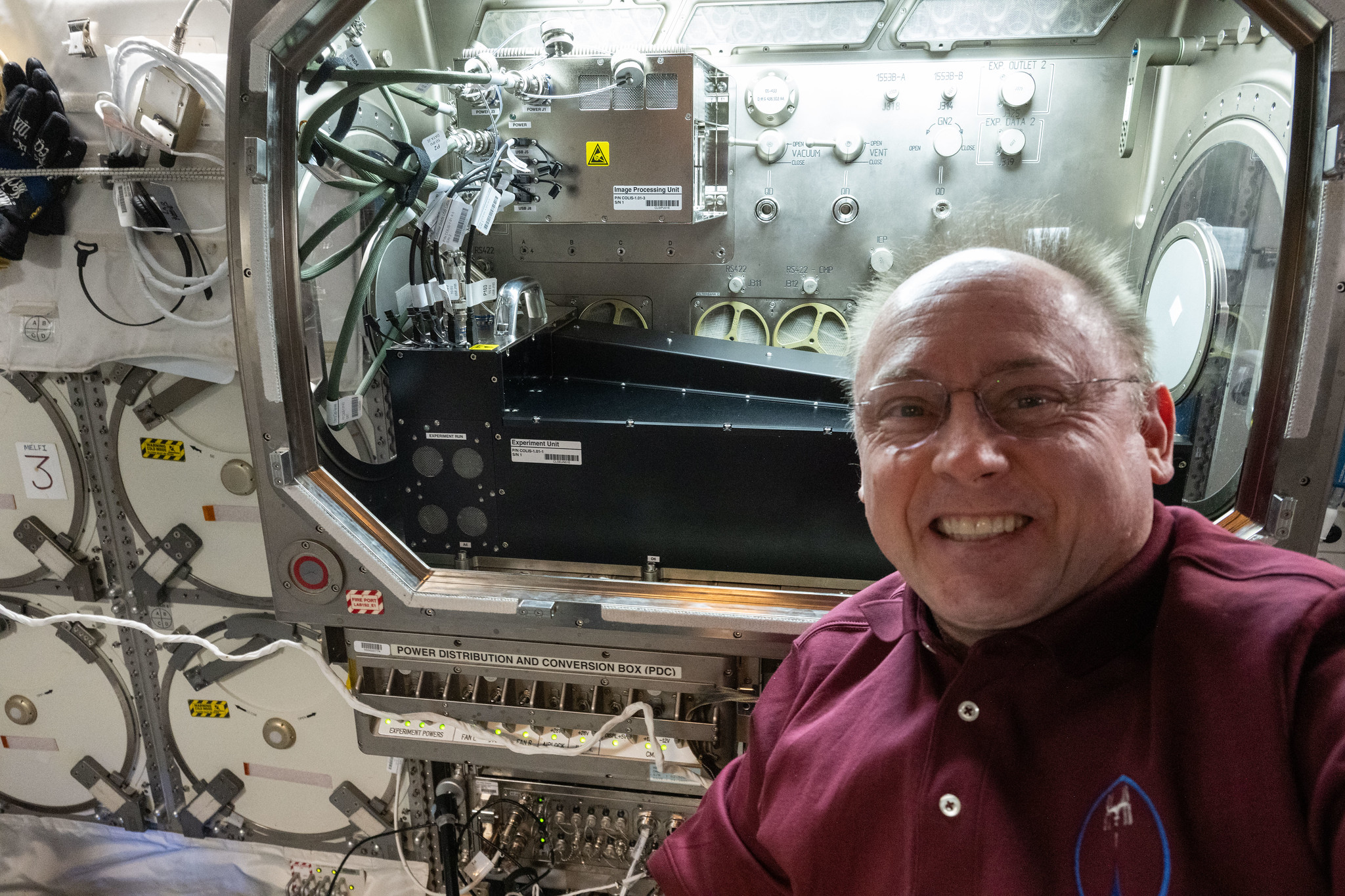

WASHINGTON — NASA has extended an agreement with a nonprofit organization to manage the portion of the International Space Station designated as a national laboratory, likely for the final time.
The Center for the Advancement of Science in Space, or CASIS, announced Dec. 4 that NASA extended its cooperative agreement to manage the ISS National Lab through 2030, the station’s current projected retirement date. The agreement had been set to expire in 2027.
CASIS has managed the ISS National Lab since 2011, when a NASA authorization bill directed the agency to select a nonprofit to oversee the lab. Previous legislation set aside up to half of the U.S. segment’s resources, including crew time, for non-NASA researchers.
Since 2011, CASIS has sponsored more than 940 payloads on the ISS in research ranging from biotechnology to in-space manufacturing, generating more than 630 peer-reviewed publications.
“For nearly 14 years, NASA has entrusted CASIS with managing this incredible asset for our nation and for the benefit of humanity,” Ray Lugo, chief executive of CASIS, said in a statement. “We are honored that NASA has extended this unique partnership through 2030, and we will continue to work in collaboration, pushing the limits of space-based R&D for the benefit of life on Earth while driving a robust and sustainable market economy in space.”
The NASA–CASIS relationship has not always been smooth. In 2019, NASA ordered an independent review of CASIS and implemented a “strategic pause” in its activities, citing concerns about the organization’s management. That report, released in April 2020, recommended changes in both CASIS management and NASA’s oversight.
The review also led to the creation of a User Advisory Committee to serve as a liaison between researchers and CASIS. However, a 2022 Government Accountability Office report, requested by Congress, found CASIS was not adequately using the committee or providing it with necessary information about ISS resource allocations.
Supporting commercial space
CASIS said nearly 60% of the payloads it has sponsored since 2011 have come from the private sector. “From Fortune 500 companies to innovative startups, the ISS National Lab has created a robust pipeline of commercial research that has pushed advancements in pharmaceutical development, advanced communications, consumer goods and more,” the organization said.
Among those companies is LambdaVision, a Connecticut-based startup that has flown nine ISS missions through CASIS to test the production of protein thin films in microgravity for developing artificial retinas.
“Through those nine missions, we have been able to demonstrate that we can manufacture these 200-layer retinal implants on the International Space Station with autonomy,” Nicole Wagner, chief executive of LambdaVision, said in a recent interview. “We’ve been able to do that now reproducibly, so that’s a big win for us.”
The progress helped LambdaVision raise a $7 million seed round in November led by Seven Seven Six and Aurelia Foundry Fund, with additional support from Seraphim Space.
Most of the funding will support ground-based testing, including preclinical trials of artificial retinas in animals followed by clinical tests, initially focusing on patients with advanced retinitis pigmentosa, Wagner said.
The company plans additional ISS missions, with the next expected in November 2026, to test scaling up in-space manufacturing of artificial retinas. “We’re starting to probe ways that we can scale, starting to now look at ways to make more artificial retinas in a smaller footprint as well,” she said.
LambdaVision is also planning for life after the ISS retires, evaluating commercial space station concepts and other platforms capable of providing microgravity research and returning payloads to Earth.
Wagner said the company expects to use multiple providers in the future. “Interoperability between platforms is going to be important. Cadence is important. Ability to scale is also important,” she said, adding that the company’s payloads don’t have specialized power or volume requirements.










Related Posts

Stay Informed With the Latest & Most Important News
Previous Post
Next Post

Advertisement
-
 01Two Black Holes Observed Circling Each Other for the First Time
 -
 02From Polymerization-Enabled Folding and Assembly to Chemical Evolution: Key Processes for Emergence of Functional Polymers in the Origin of Life
 -
 03Astronomy 101: From the Sun and Moon to Wormholes and Warp Drive, Key Theories, Discoveries, and Facts about the Universe (The Adams 101 Series)
 -
 04True Anomaly hires former York Space executive as chief operating officer
 -
 05Φsat-2 begins science phase for AI Earth images
 -
 06Hurricane forecasters are losing 3 key satellites ahead of peak storm season − a meteorologist explains why it matters
 -
 07Binary star systems are complex astronomical objects − a new AI approach could pin down their properties quickly