
Now Reading: Global Rocket Launch Surge Sparks Exciting Week in Space Exploration
-
01
Global Rocket Launch Surge Sparks Exciting Week in Space Exploration

Global Rocket Launch Surge Sparks Exciting Week in Space Exploration

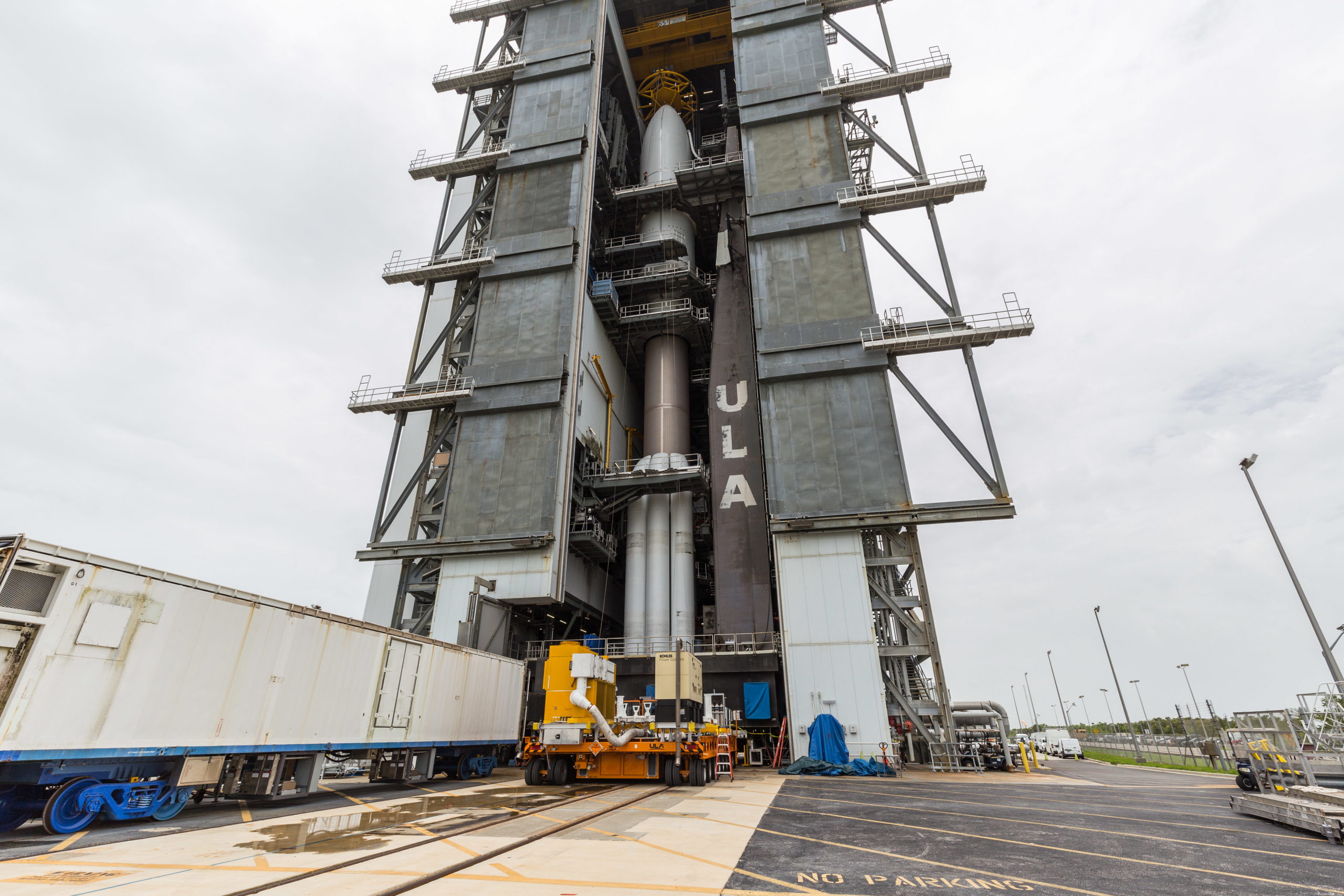

The week beginning December 8 is set to be a bustling period in space exploration, with multiple rocket launches planned from various providers worldwide. China will see a flurry of activity with at least six launches slated from four different spaceports. In addition, Russia is preparing for two forthcoming missions, launching once from Plesetsk and once from Baikonur. On the U.S. front, the United Launch Alliance is scheduled to conduct an Atlas V mission from Florida, and Rocket Lab has a launch planned out of New Zealand. Notably, SpaceX intends to execute seven Falcon 9 launches, primarily aimed at deploying Starlink satellites.
The China Aerospace Science and Technology Corporation (CASC) kicked off the week by successfully launching a Chang Zheng 6A (CZ-6A) from the Taiyuan Satellite Launch Center at 22:10 UTC on December 8. Although the specific payload remains undisclosed, the trajectory suggests it could be used for sun-synchronous missions typical for Earth observation satellites. The CZ-6A launch system is positioned as a more modern alternative to older models, with capabilities to lift 6,500 kilograms to a 500-kilometer sun-synchronous orbit.
SpaceX joined the action shortly after with its Starlink Group 6-92 mission. Launched from Kennedy Space Center’s Launch Complex 39A at 5:26 PM EST, this mission successfully deployed 29 Starlink v2 Mini satellites. The Falcon 9 booster used for this launch, designated B1067, achieved a remarkable milestone by completing its 32nd flight, which is a new record for a single booster.
On December 9, CASC has further plans with a Chang Zheng 4C (CZ-4C) launch set for 03:40 UTC from the Jiuquan Satellite Launch Center. This mission also aims for a sun-synchronous orbit, but details about the intended payload are yet to be revealed.
Later in the day, the CZ-3B/E rocket will follow up with a launch from the Xichang Satellite Launch Center at 15:10 UTC, heading eastward, traditionally used for geostationary missions. The particulars of its payload are also under wraps.
Meanwhile, SpaceX’s Falcon 9 is slated to launch the NROL-77 mission, a classified payload for the National Reconnaissance Office, on December 9 at 2:16 PM EST from Cape Canaveral Space Force Station. This mission will use booster B1096-4, which has an established history with other payloads and will operate a maneuver returning to the launch site.
Adding to the week’s launches, CAS Space’s Kinetica 1 rocket is scheduled for its fifth flight of the year on December 10 at 04:00 UTC, taking off from the Jiuquan Satellite Launch Center. This mission aims for a sun-synchronous orbit and highlights the ongoing trend of smaller, commercial launch vehicles gaining traction in the space industry.
The Falcon 9 will also support two more Starlink missions later that week, maintaining the relentless pace SpaceX has set for satellite deployments. This ongoing effort emphasizes the company’s ambition to build a robust satellite internet service.
Internationally, Russia will be contributing to the launch frenzy with a Soyuz 2.1a mission on December 11, set to deliver the Obzor-R no. 1 satellite as part of its ongoing earth observation efforts, while also hosting additional rideshare payloads.
Further on the calendar, both the Falcon 9 and various Chinese rockets are set to keep the momentum going into the week, showcasing the global commitment to expanding access to space and satellite infrastructure. Amid all this activity, the ULA’s Atlas V booster will lift off on December 15, marking an important contribution to Amazon’s growing satellite constellation, as well as a significant historical benchmark in space launch capabilities.
As this week unfolds, the world will closely watch a dynamic and busy period for space exploration, setting the stage for advancements and developments in technology and satellite communications for the future.










Related Posts
Stay Informed With the Latest & Most Important News
Previous Post
Next Post


Advertisement
-
 01Two Black Holes Observed Circling Each Other for the First Time
 -
 02From Polymerization-Enabled Folding and Assembly to Chemical Evolution: Key Processes for Emergence of Functional Polymers in the Origin of Life
 -
 03Astronomy 101: From the Sun and Moon to Wormholes and Warp Drive, Key Theories, Discoveries, and Facts about the Universe (The Adams 101 Series)
 -
 04True Anomaly hires former York Space executive as chief operating officer
 -
 05Φsat-2 begins science phase for AI Earth images
 -
 06Hurricane forecasters are losing 3 key satellites ahead of peak storm season − a meteorologist explains why it matters
 -
 07Binary star systems are complex astronomical objects − a new AI approach could pin down their properties quickly