
Now Reading: Space Force uses AI challenge to push everyday use of artificial intelligence
-
01
Space Force uses AI challenge to push everyday use of artificial intelligence


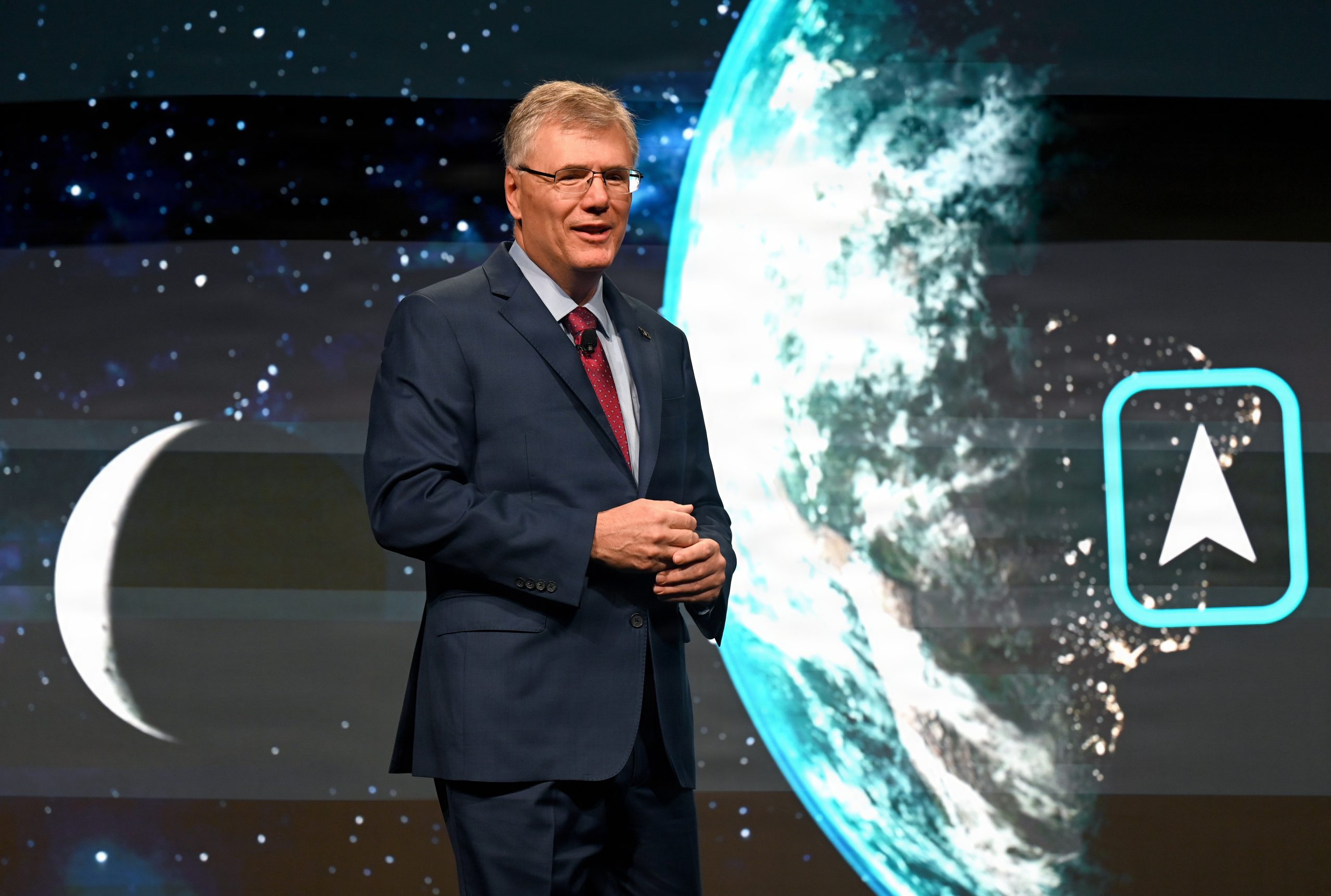

ORLANDO, Fla. — An AI-powered onboarding assistant designed to help new Space Force members navigate the earliest stages of service won the U.S. Space Force’s annual AI Challenge, senior officials said last week, highlighting the tool as an example of how service members can apply artificial intelligence to practical, internal problems.
The winning entry, known as the Polaris Onboarding Agent, is a digital guide that provides interactive, conversational answers to common questions faced by new guardians. The tool covers administrative requirements, training pathways, policies, benefits and Space Force–specific terminology, tailoring responses based on a user’s role, timing and status in the onboarding process.
Rather than relying on static checklists, PDFs, or informal hand-offs between offices, Polaris uses an AI assistant model to guide users through tasks and decisions as they arise. Senior leaders described the approach as a low-risk way to improve efficiency while reducing confusion for new personnel.
“Automation has to be part of everything we do,” Air Force Secretary Troy Meink told an audience of Space Force guardians at the Spacepower conference, where the challenge results were highlighted.
The Space Force AI Challenge is an annual competition intended to accelerate the development and adoption of AI tools that address concrete problems facing the service. Twenty-nine teams competed in the 2025 challenge, according to Space Force officials.
Meink called on the service to build AI literacy inside the force, rather than relying primarily on contractors for AI-driven solutions.
“I love our support contractors. They’re phenomenal, right? And we have a lot of them that support us in this area,” Meink said. “But you have to be experts,” he added. “If you don’t understand how large language models work, you need to start playing with GenAI,” he said, referring to a recently introduced Pentagon AI platform.
“You need to be able to generate automated applications for what you want to do,” Meink added. “We can’t just turn to a contract … we need that skill set in everything we do.”
The Polaris Onboarding Agent was developed by Order66, a software factory within Space Systems Command. Software factories across the Defense Department are designed to rapidly build and field digital tools using government and military developers, often focusing on internal processes rather than operational systems.
The AI Challenge and the Polaris project align with a broader Defense Department effort to operationalize artificial intelligence across the military, particularly in non-classified, administrative and decision-support roles.
That effort includes GenAI.mil, a secure enterprise platform designed to give service members and civilian employees access to commercial generative AI tools, such as Google’s Gemini for Government. The platform is intended to embed generative AI into everyday workflows while maintaining security controls for unclassified and controlled unclassified information.
Defense officials have stressed that early AI adoption efforts are focused on improving internal efficiency and readiness, while allowing the department to build experience with the technology before applying it to higher-risk operational missions.










Related Posts

Stay Informed With the Latest & Most Important News
Previous Post
Next Post



Advertisement
-
 01Two Black Holes Observed Circling Each Other for the First Time
 -
 02From Polymerization-Enabled Folding and Assembly to Chemical Evolution: Key Processes for Emergence of Functional Polymers in the Origin of Life
 -
 03Astronomy 101: From the Sun and Moon to Wormholes and Warp Drive, Key Theories, Discoveries, and Facts about the Universe (The Adams 101 Series)
 -
 04True Anomaly hires former York Space executive as chief operating officer
 -
 05Φsat-2 begins science phase for AI Earth images
 -
 06Hurricane forecasters are losing 3 key satellites ahead of peak storm season − a meteorologist explains why it matters
 -
 07Binary star systems are complex astronomical objects − a new AI approach could pin down their properties quickly