
Now Reading: Easley and Darden: Unraveling the Roles in the Roswell Incident
-
01
Easley and Darden: Unraveling the Roles in the Roswell Incident


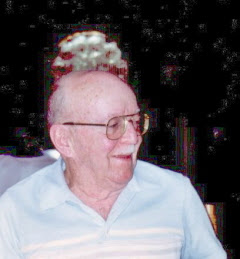

The Roswell incident remains one of the most discussed topics in UFO lore, and among the myriad individuals involved in the unfolding drama of July 1947, two names frequently surface: Major Edwin Easley and Major Robert Darden. Their respective roles as Provost Marshals at the Roswell Army Air Field have sparked considerable debate, especially regarding their authority and actions at the Impact Site, where debris and alleged extraterrestrial remains reportedly came to light.
Documentation suggests that Easley was the Provost Marshal during the critical timeline of the incident, tasked with overseeing base security and law enforcement. This responsibility typically included coordination of the Military Police (MP) Company, specifically the 1395th MP Company under Captain Beverly Tripp. In contrast, Darden’s involvement in this context has been clouded by conflicting testimonies and the evolving narratives around the Roswell event.
- During an interview with Sheridan Cavitt, a key eyewitness, the name of Darden emerged as a potential Provost Marshal. However, subsequent clarifications noted that Darden did not assume this role until 1948.
- Rickett’s accounts further complicate the narrative. As a former Counterintelligence agent, he recalled being taken to a site near Corona by Cavitt, where he observed military vehicles and encountered personnel who suggested a significant operation was underway, hinting at the presence of Darden and his men.
This claim raises questions about Darden’s purported responsibilities during the Roswell incident, particularly since he was assigned as an air inspector in July 1947. This administrative role was distinctly separate from the security duties presumed to be handled by the Provost Marshal’s office. To illustrate this, analysis of base telephone directories from that time indicates that Darden’s contact number was associated with the Air Inspectors section and not linked to any security operations.
Interestingly, the 390th Air Service Squadron, which Darden was associated with, had a critical mission involving modifications to B-29 bombers, indicating a higher-level security clearance was necessary for personnel involved in such activities. Despite the intriguing connections, it appears that the significant security measures at the crash site would fall under Easley’s jurisdiction as the active Provost Marshal of the 1947 period.
Evidence from the operations and static structures on the base supports the idea that Darden’s role did not involve oversight of the Impact Site. The mapping of the Roswell Army Air Field illustrates the logistical divisions of responsibility among various military units, reinforcing the likelihood that Easley was firmly in control of the security protocols surrounding the event.
Moreover, the nature of the testimony provided by Rickett, while valuable, suggests a common phenomenon known as memory distortion. Individuals involved in high-stress situations, such as military personnel during a crisis, may inadvertently misremember details, including the names and roles of others involved. This aligns with the understanding that Rickett accurately described the event’s core aspects but might have conflated Easley’s and Darden’s duties due to the passage of time since the incident.
The interplay of these roles reflects a broader theme in the study of the Roswell incident: the necessity of meticulous evidence examination. Differences in recollections point to the complexity of military operations and the chaos that can ensue during events that transcend ordinary experiences, such as supposed extraterrestrial encounters.
In analyzing the details surrounding the Roswell incident, it is essential to consider not only the testimonies from individuals like Darden and Easley but also the structural hierarchies and documentation from the era. As researchers and enthusiasts delve deeper into the annals of Roswell, one must remain vigilant against the pitfalls of relying too heavily on singular narratives. The truth may well reside in the convergence of various accounts, reminding us of the fluid nature of human memory and the complexity inherent in the historical record.










Related Posts
Stay Informed With the Latest & Most Important News
Previous Post
Next Post



Advertisement
-
 01Two Black Holes Observed Circling Each Other for the First Time
 -
 02From Polymerization-Enabled Folding and Assembly to Chemical Evolution: Key Processes for Emergence of Functional Polymers in the Origin of Life
 -
 03Astronomy 101: From the Sun and Moon to Wormholes and Warp Drive, Key Theories, Discoveries, and Facts about the Universe (The Adams 101 Series)
 -
 04True Anomaly hires former York Space executive as chief operating officer
 -
 05Φsat-2 begins science phase for AI Earth images
 -
 06Hurricane forecasters are losing 3 key satellites ahead of peak storm season − a meteorologist explains why it matters
 -
 07Binary star systems are complex astronomical objects − a new AI approach could pin down their properties quickly