
Now Reading: SpaceX launches next second-generation Italian COSMO-SkyMed satellite
-
01
SpaceX launches next second-generation Italian COSMO-SkyMed satellite


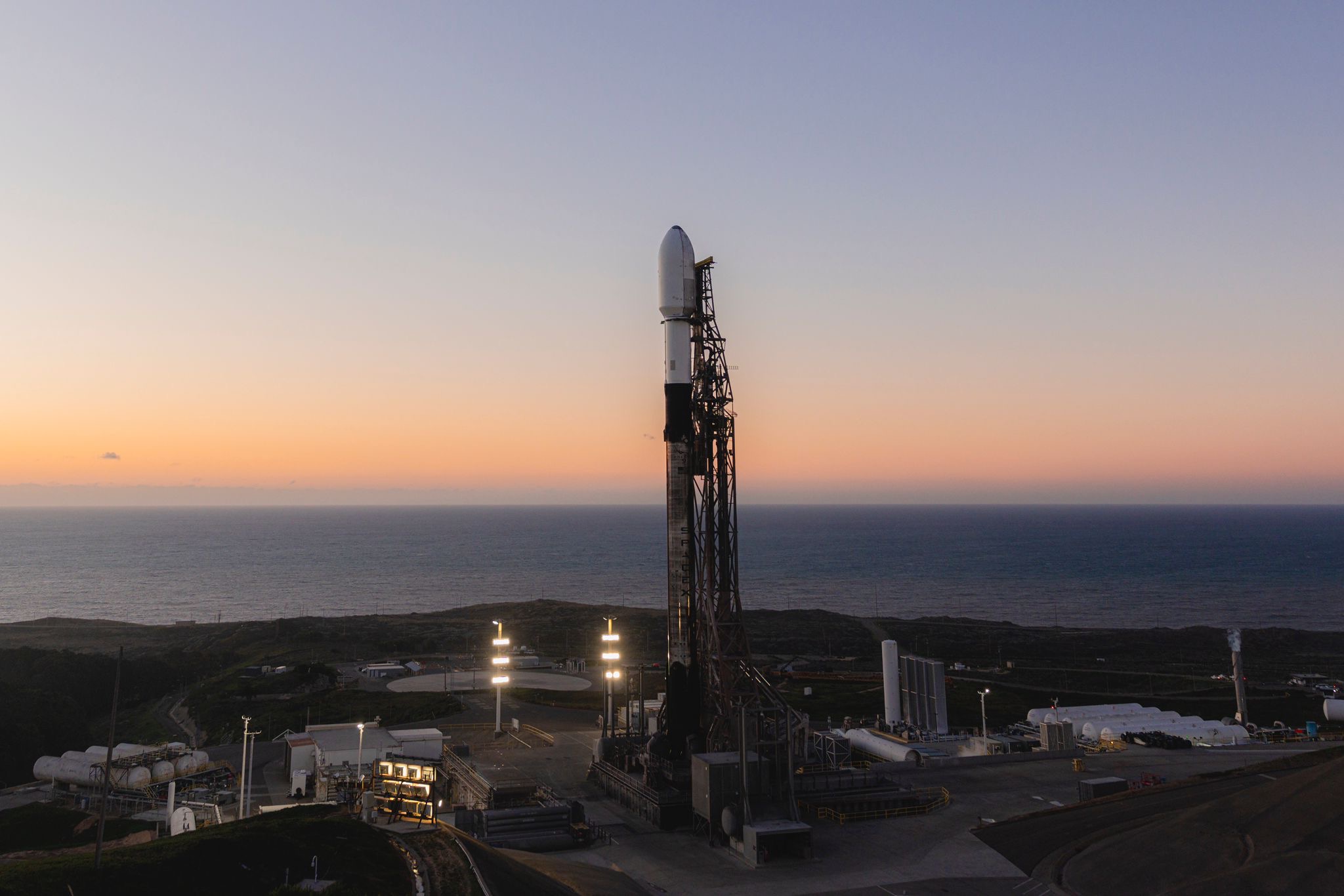

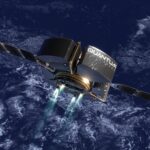
MILAN – A SpaceX Falcon 9 rocket lifting off from Vandenberg Space Force Base in California, successfully launched a second-generation satellite for Italy’s COSMO-SkyMed Earth observation constellation, on Jan. 2 at 6:09 p.m. Pacific time.
The Falcon 9 deployed COSMO-SkyMed CSG-FM3, the third into a sun-synchronous orbit at an altitude of 618 kilometers at 2:22 UTC. Signal acquisition was confirmed 59 minutes after deployment.
“COSMO-SkyMed represents evidence of Italy’s ability to invest over the long term,” Italian Space Agency (ASI) President Teodoro Valente said.
COSMO-SkyMed is a dual-use synthetic aperture radar (SAR) system operating in low Earth orbit. Its first-generation constellation comprised four satellites launched between 2007 and 2010.
The system consists of five operational satellites: two first-generation COSMO-SkyMed (CSK) spacecraft, out from the original four, and three second-generation COSMO-SkyMed (CSG) satellites. The CSG satellites were launched in 2019 aboard a Soyuz rocket, in 2022 aboard a Falcon 9 after an originally planned Vega-C launch, and most recently with this Falcon 9 launch.
With a launch mass of about 2,207 kilograms and a deployed span of 16.66 meters, CSG-FM3 is the heaviest of the second-generation satellites. It introduces several technical upgrades intended to improve flexibility and performance.
“The main upgrade is the antenna,” ASI program manager Claudia Facchinetti told SpaceNews. “The new antenna is more flexible and efficient, allowing a single pass to observe multiple areas and respond to multiple user requests at the same time.”
The satellite also carries a new laser reflector array that enables millimeter-level accuracy in georeferencing SAR imagery.
Designed from the outset as a dual-use system, COSMO-SkyMed supports both civilian and military applications, including monitoring of natural disasters under all weather conditions, day and night.
“Our goal was to ensure continuity between the two generations of COSMO-SkyMed and to deliver faster and more accurate data for research, security and defense,” said ASI Director General Luca Salamone.
The satellites are built by Thales Alenia Space, which is also responsible for the overall mission. Telespazio developed the ground segment and manages civilian mission operations and the control center, while e-GEOS is responsible for commercial data distribution. Leonardo supplies additional onboard technologies and systems. For the security and defense component, satellite signal processing and management are handled by the Italian Ministry of Defense.
This is not the first time Italy has launched an institutional satellite aboard a SpaceX vehicle rather than Vega-C. All 16 satellites of Italy’s IRIDE Earth observation constellation, launched in 2025, also flew aboard Falcon 9 rockets. An ASI spokesperson told SpaceNews the decision to launch COSMO-SkyMed with SpaceX was driven by the need to meet a tight mission schedule.
The fourth and final second-generation COSMO-SkyMed satellite is expected to launch in early 2027, enabling the retirement of the remaining first-generation spacecraft after more than 15 years of service.










Related Posts
Stay Informed With the Latest & Most Important News
Previous Post
Next Post


Advertisement
-
 01Two Black Holes Observed Circling Each Other for the First Time
 -
 02From Polymerization-Enabled Folding and Assembly to Chemical Evolution: Key Processes for Emergence of Functional Polymers in the Origin of Life
 -
 03Astronomy 101: From the Sun and Moon to Wormholes and Warp Drive, Key Theories, Discoveries, and Facts about the Universe (The Adams 101 Series)
 -
 04True Anomaly hires former York Space executive as chief operating officer
 -
 05Φsat-2 begins science phase for AI Earth images
 -
 06Hurricane forecasters are losing 3 key satellites ahead of peak storm season − a meteorologist explains why it matters
 -
 07Binary star systems are complex astronomical objects − a new AI approach could pin down their properties quickly