
Now Reading: Vulcan to open 2026 with national security launch
-
01
Vulcan to open 2026 with national security launch


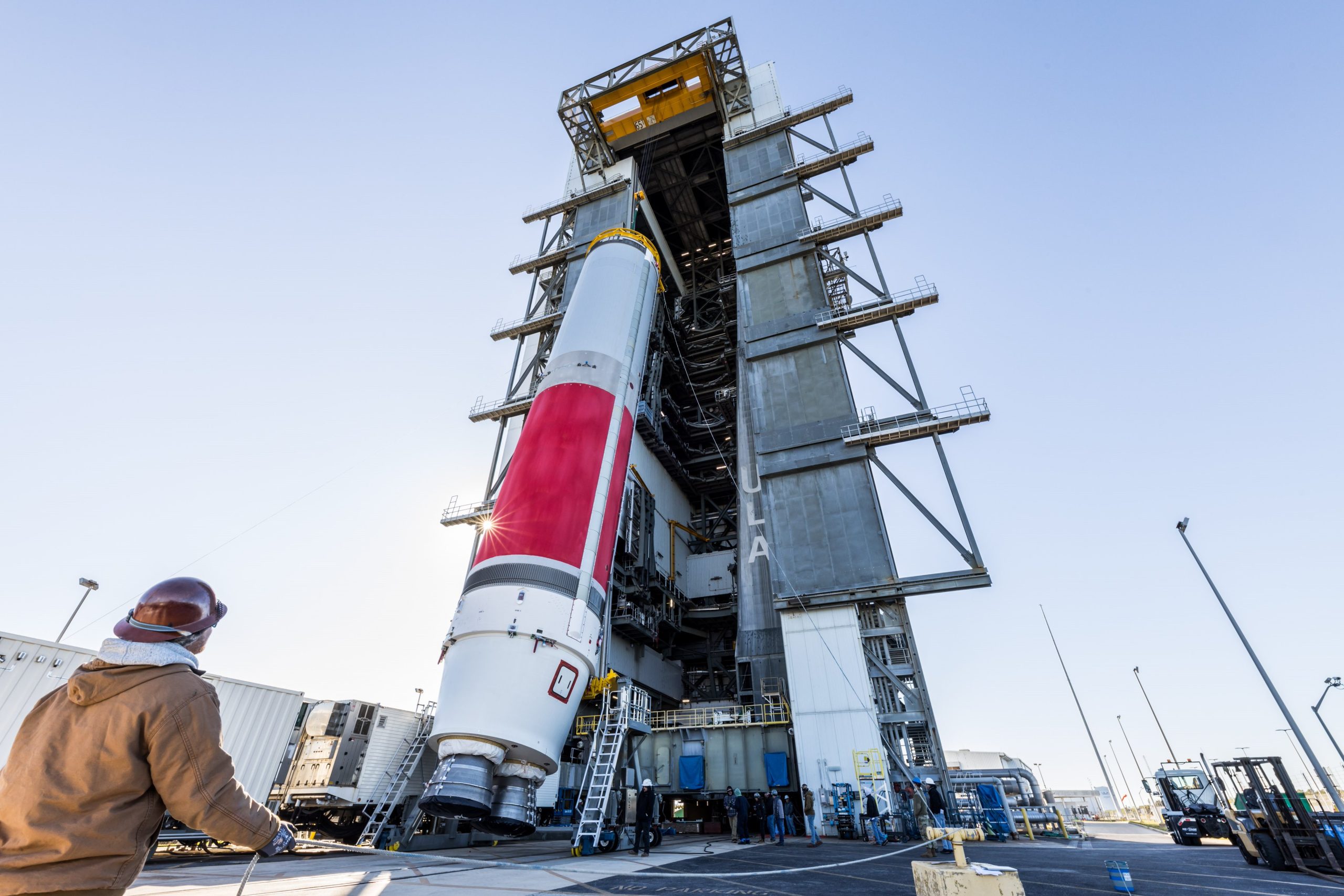

WASHINGTON — United Launch Alliance plans to begin 2026 with a national security mission as its Vulcan Centaur rocket prepares to launch USSF-87 for the U.S. Space Force. The mission is scheduled for liftoff Feb. 2 from Space Launch Complex 41 at Cape Canaveral Space Force Station.
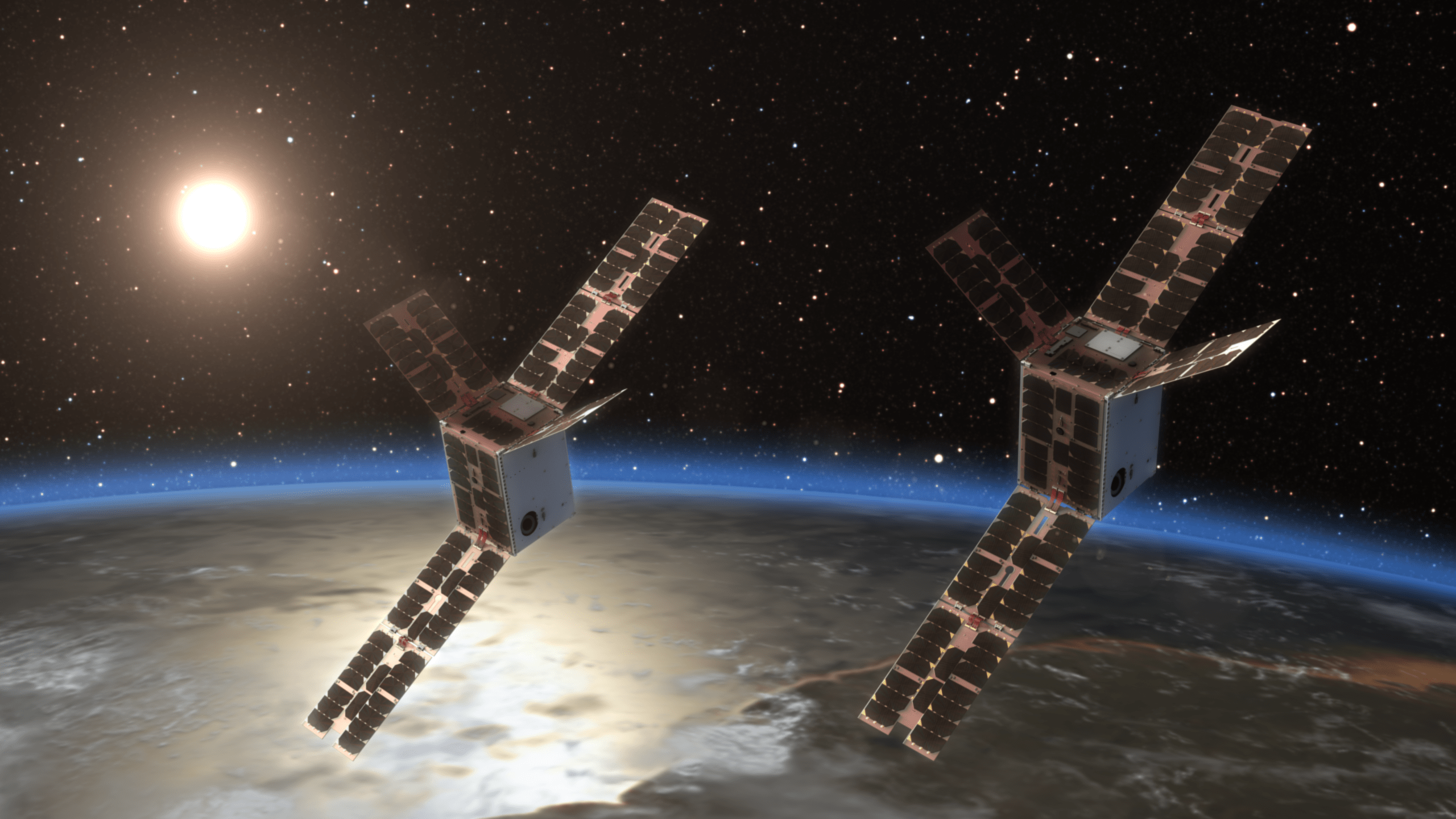
USSF-87 will deploy two Geosynchronous Space Situational Awareness Program satellites, GSSAP-7 and GSSAP-8, into near-geosynchronous orbit. USSF-87 will be Vulcan’s fourth launch overall and its second NSSL mission, making it an important data point for assessing whether the rocket is moving toward a higher operational cadence following development and certification delays.
The launch will use Vulcan’s VC4S configuration, which includes four solid rocket boosters to provide the additional performance needed for a direct insertion toward geosynchronous orbit.
USSF-87 comes at a pivotal point for both Vulcan and United Launch Alliance, the Boeing–Lockheed Martin joint venture. The rocket entered service years later than originally planned after delays tied to BE-4 engine development, ground infrastructure work and the Space Force’s requirement for two successful certification flights. During that period, SpaceX flew the majority of NSSL missions while Vulcan accumulated a backlog of more than two dozen awarded launches under the NSSL Phase 2 contract.
The mission will also fly against the backdrop of a recent leadership shakeup at ULA announced just weeks ahead of the launch. Longtime chief executive Tory Bruno, who departed ULA to take a job as head of Blue Origin’s national security business, has been closely associated with Vulcan’s development and transition to operations. With little margin for additional slips, the transition adds another variable as Vulcan moves from demonstrating it can fly to demonstrating it can fly often.
Transition to new satellite architecture
The USSF-87 payloads are part of the Space Force’s long-running GSSAP constellation, which provides space domain awareness in the geosynchronous orbit regime. Built by Northrop Grumman, the maneuverable satellites carry optical sensors designed to track and characterize objects in and around GEO, supporting collision avoidance and monitoring of on-orbit activity. While the Space Force has continued to field incremental upgrades to GSSAP, it has said the system is expected to be replaced or succeeded later in the decade by a next-generation architecture known as RG-XX.
For Vulcan, however, the focus is less on the payload than on pace. Space Force officials have said they expect ULA to work through its NSSL backlog over time, but have stopped short of defining when Vulcan might reach a consistent operational tempo.
When the Space Force awarded NSSL Phase 2 contracts in 2020, ULA was assigned 25 missions, with Vulcan expected to begin flying national security payloads by the early 2020s as Atlas 5 and Delta 4 were phased out.
In congressional testimony in May 2025, Maj. Gen. Stephen Purdy, the Space Force’s senior procurement executive, told lawmakers that the Vulcan program had performed unsatisfactorily and that issues with the rocket had overshadowed its successful certification, contributing to delays in four national security launches.
“Despite the retirement of highly successful Atlas and Delta launch vehicles, the transition to Vulcan has been slow and continues to impact the completion of Space Force mission objectives,” Purdy testified. He added that ULA had increased engineering resources and management focus to resolve Vulcan’s issues.










Related Posts
Stay Informed With the Latest & Most Important News
Previous Post
Next Post


Advertisement
-
 01Two Black Holes Observed Circling Each Other for the First Time
 -
 02From Polymerization-Enabled Folding and Assembly to Chemical Evolution: Key Processes for Emergence of Functional Polymers in the Origin of Life
 -
 03Astronomy 101: From the Sun and Moon to Wormholes and Warp Drive, Key Theories, Discoveries, and Facts about the Universe (The Adams 101 Series)
 -
 04True Anomaly hires former York Space executive as chief operating officer
 -
 05Φsat-2 begins science phase for AI Earth images
 -
 06Hurricane forecasters are losing 3 key satellites ahead of peak storm season − a meteorologist explains why it matters
 -
 07Binary star systems are complex astronomical objects − a new AI approach could pin down their properties quickly