
Now Reading: The Space Force will acquire and integrate systems faster in 2026
-
01
The Space Force will acquire and integrate systems faster in 2026



At the beginning of 2026, it’s worth reflecting on the U.S. Space Force’s recent accomplishments. They include the creation of the Commercial Space Office and its Commercial Augmentation Space Reserve, a working capital fund to provide flexibility in providing MILSATCOM services and new acquisition approaches for Resilient GPS and Protected Tactical SATCOM. The list of milestones is remarkable, especially given the military’s newest service was announced just six years ago.
A focus for several years has been developing and implementing strategies to counter threats to our space assets by 2026. The Space Force recognizes that in any future conflict, particularly one that requires the preservation of space capabilities, the solution must incorporate both commercial capabilities and international partnerships. This imperative is reflected in recent strategy documents, such as the Comprehensive Strategy for the Space Force, the Commercial Space Strategy and the International Partnership Strategy.
But preparing for a future fight requires more than strategy; it requires discipline and decisive action in implementing strategy efficiently and effectively. Fortunately, the Space Force understands the challenge and are prepared to meet it head on.
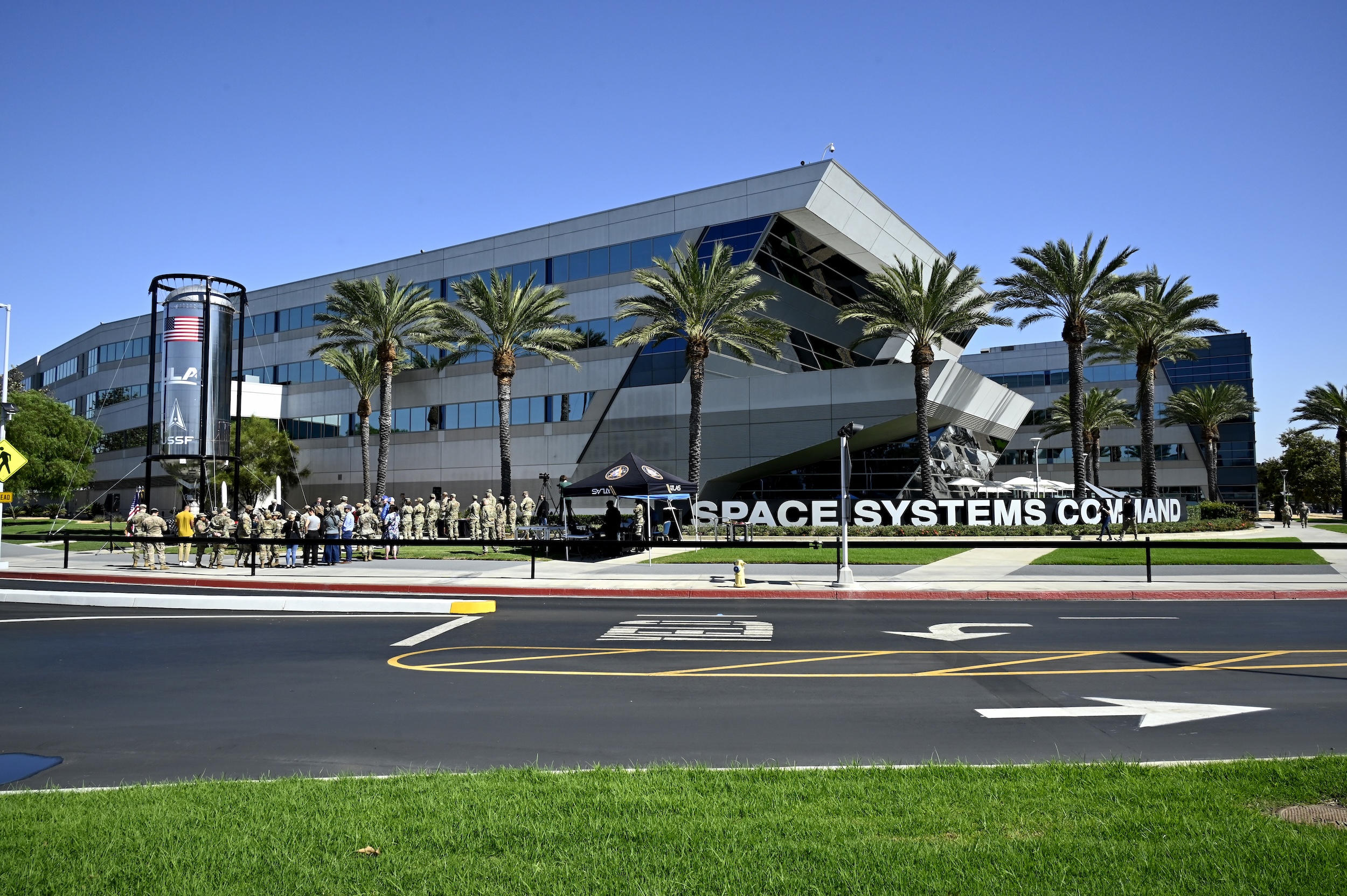
To emphasize the growing need to protect and defend our assets, Space Systems Command even has a countdown clock in their main building to ensure the workforce understands the timeline of the emerging threat. Their effort has been focused on not just building and launching space hardware but delivering end-to-end capabilities across warfighting domains.
By its very nature, space systems are inherently dual-use and integral to joint force operations. That’s why end-to-end integration of the U.S. space systems is critical, especially between the capabilities of Space Systems Command and those of our commercial and international partners. Specifically, the Space Force is supporting the joint fight through a critical partnership with the Air Force and the Command, Control, Communications and Battle Management program office under Maj. Gen. Luke Cropsey to develop and implement end-to-end command and control. The need to integrate these mission threads successfully will be critical, particularly in light of Golden Dome, which will likely begin by leveraging existing space and ground capabilities that will require even more significant integration challenges.
There has also been a recent seismic shift under Maj. Gen. Stephen Purdy, in elevating the expectations for acquisition professionals to embrace commercially developed capabilities for military purposes versus developing bespoke systems. Although the shift is not new, this is more than just lip service. Today, there is a clear direction to adopt proven commercial capabilities with minimum modifications instead of designing capabilities from scratch based on a set of specific requirements. If a commercial solution can provide a significant percentage of the capability that is needed, it should be leveraged in favor of designing a new system altogether.
The acquisition workforce will have higher demands in this new environment with expectations to go fast and leverage capabilities from commercial and international partners. This is an exciting time when there is not only permission, but also encouragement to do business differently. However, the acquisition workforce has suffered significant losses, so it will be important to leverage small senior teams efficiently and get additional help through support contractors.
The Space Force has already shifted its approach to the acquisition process through programs such as GPS-R and PTS-G, where multiple companies were awarded prototyping contracts to allow the government the opportunity to evaluate the performance of the various contractors and then down-select to a single contractor based on performance. This approach is opening doors for new space companies and has the potential to bring in even more new entrants that will expand the overall space capabilities of the U.S.
In 2026, I also expect a continued focus on monitoring the emerging threat environment in space and ensuring the U.S. has the ability to respond. There will certainly be augmentation of capabilities such as space domain awareness, battle management command and control and enhanced protection of Space Force assets. But the space domain is not just about hardware and software on orbit, it is about the networking and processing of high-quality information and delivering it to commanders and decision-makers at the speed of need. Artificial intelligence will be critical to analyzing massive amounts of data for each of the mission areas in order to provide decision quality information in a timely manner. The Space Force’s momentum toward these ends has led to significant gains in expediting acquisition timelines, incorporating the capabilities from commercial and international partners and integrating all of the available capabilities to deliver end-to-end solutions for the warfighter.
My expectations for Space Force in 2026 include accelerating its focus on expediting acquisition timelines, leveraging commercial capabilities and international partnerships and integrating key capabilities to provide end-to-end solutions. Space is more important than ever in supporting the joint fight and ensuring the safety of the U.S. If the first six years of the Space Force are any indication of the growing strategic importance of space, then 2026 will be the year this momentum accelerates even further.
Claire Leon is the former director of the Space Force’s Space Systems Integration Office and a partner at Elara Nova.
This article first appeared in the January 2026 issue of SpaceNews Magazine.
SpaceNews is committed to publishing our community’s diverse perspectives. Whether you’re an academic, executive, engineer or even just a concerned citizen of the cosmos, send your arguments and viewpoints to opinion (at) spacenews.com to be considered for publication online or in our next magazine. If you have something to submit, read some of our recent opinion articles and our submission guidelines to get a sense of what we’re looking for. The perspectives shared in these opinion articles are solely those of the authors and do not necessarily represent their employers or professional affiliations.










Related Posts

Stay Informed With the Latest & Most Important News

Advertisement
-
 01Two Black Holes Observed Circling Each Other for the First Time
 -
 02From Polymerization-Enabled Folding and Assembly to Chemical Evolution: Key Processes for Emergence of Functional Polymers in the Origin of Life
 -
 03Astronomy 101: From the Sun and Moon to Wormholes and Warp Drive, Key Theories, Discoveries, and Facts about the Universe (The Adams 101 Series)
 -
 04True Anomaly hires former York Space executive as chief operating officer
 -
 05Φsat-2 begins science phase for AI Earth images
 -
 06Hurricane forecasters are losing 3 key satellites ahead of peak storm season − a meteorologist explains why it matters
 -
 07Binary star systems are complex astronomical objects − a new AI approach could pin down their properties quickly