
Now Reading: Jupiter is at its best and brightest of 2026 tonight! Here’s what to expect as the gas giant reaches opposition
-
01
Jupiter is at its best and brightest of 2026 tonight! Here’s what to expect as the gas giant reaches opposition

Jupiter is at its best and brightest of 2026 tonight! Here’s what to expect as the gas giant reaches opposition

Jupiter will be at its most spectacular in 2026 in the early hours of Jan. 10, as it shines above the eastern horizon among the stars of the constellation Gemini. Here’s where to look and what to expect as the gas giant draws closest to Earth around opposition.
The visibility of planets in the night sky varies dramatically based on their orbital positions relative to the sun and Earth. The best time to view superior planets — worlds that orbit the sun at a greater distance than our Blue Marble — is at their points of opposition, when they line up in our night sky directly opposite the sun, with Earth in the middle.
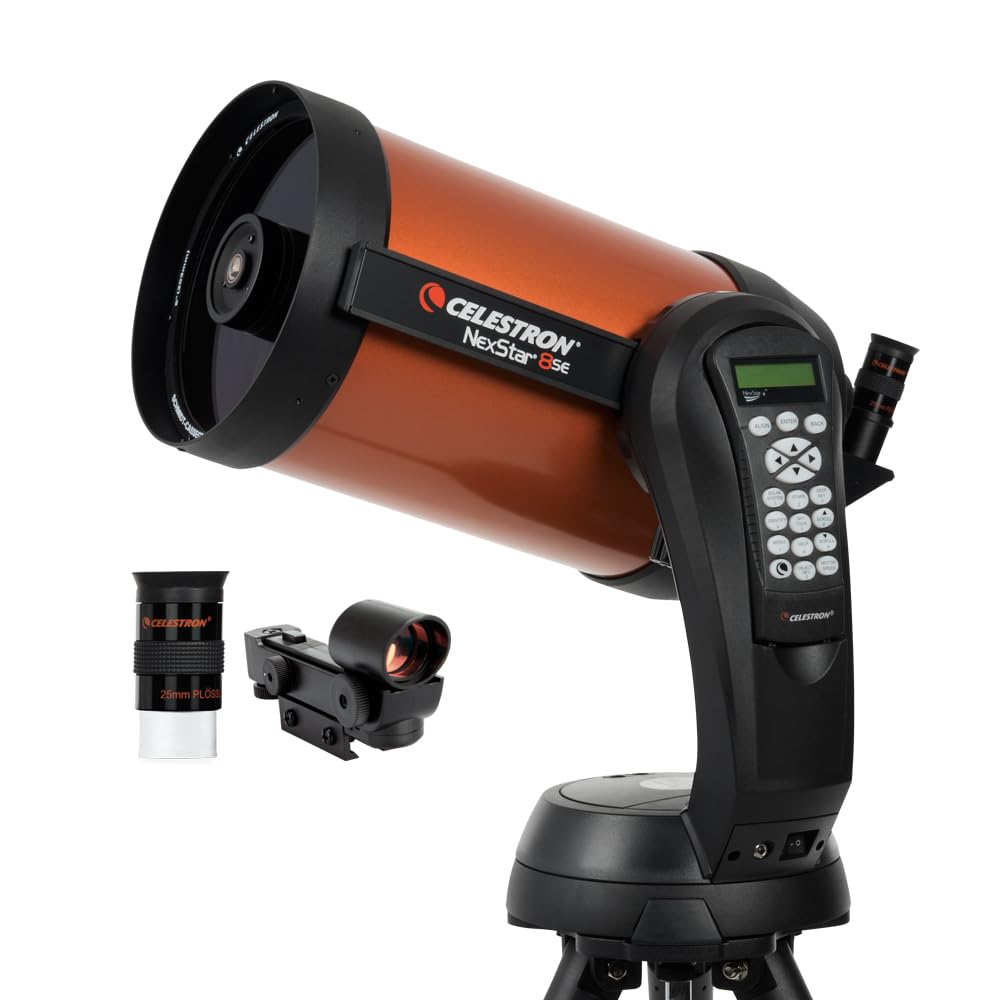
Celestron NexStar 8SE

The Celeston NexStar 8SE has a huge 8-inch aperture which allows it to collect plenty of light to reveal stunning details in the atmospheric bands lining Jupiter’s stormy cloud tops. Check out our Celestron NexStar 8SE review for a more detailed look at the easy going motorized telescope.
The moment of opposition coincides with when a planet draws near to its closest point to Earth in its orbit. As a result, Jupiter will appear brighter and subtly larger in the eyepiece of a telescope on Jan. 10, boasting an angular size of 45.6 arcseconds at opposition, as opposed to the 31.3 arcseconds it would occupy when furthest from Earth (when it would be hidden behind the sun). For context, the full moon takes up between 29.4 and 33.5 arcminutes, with each arcminute being the equivalent of 60 arcseconds.
Look to the eastern horizon at sunset on Jan. 10 to find Jupiter shining in the constellation Gemini, with Orion the “hunter” to its right and the bright star Capella above. The gas giant will arc high overhead before finally ending the night low on the western horizon as the sun rises on Jan. 11.
Jupiter was named after the king of the Roman pantheon of gods and it’s pretty easy to understand why. The gas giant makes for a dazzling astronomical target when viewed with the naked eye, which only gets more impressive when viewed through a telescope with an aperture of 4-inches (152 mm) or more, which helps reveal its colorful atmospheric cloud bands.
The four large Galilean moons Io, Europa, Ganymede and Callisto will also be visible arrayed in a line formation extending either side of the gas giant on the night of Jan. 10.

If you’re using a telescope with a larger aperture, you may want to try viewing the planet with a special astronomy filter screwed into the eyepiece, which will help reduce glare while enhancing the contrast between colors in the Jovian atmosphere‘s stormy cloud tops.
Want to catch a glimpse of Jupiter up close? Then be sure to check out our picks of the best telescopes for exploring the planets of the solar system. If you’re interested in photographing the night sky then you may also want to read up on our roundup of the best cameras and lenses for astrophotography.
Editor’s Note: If you would like to share your astrophotography with Space.com’s readers, then please send your photo(s), comments, and your name and location to spacephotos@space.com.










Related Posts

Stay Informed With the Latest & Most Important News
Previous Post
Next Post

Advertisement
-
 01Two Black Holes Observed Circling Each Other for the First Time
 -
 02From Polymerization-Enabled Folding and Assembly to Chemical Evolution: Key Processes for Emergence of Functional Polymers in the Origin of Life
 -
 03Astronomy 101: From the Sun and Moon to Wormholes and Warp Drive, Key Theories, Discoveries, and Facts about the Universe (The Adams 101 Series)
 -
 04True Anomaly hires former York Space executive as chief operating officer
 -
 05Φsat-2 begins science phase for AI Earth images
 -
 06Hurricane forecasters are losing 3 key satellites ahead of peak storm season − a meteorologist explains why it matters
 -
 07Binary star systems are complex astronomical objects − a new AI approach could pin down their properties quickly