
Now Reading: This year must bring greater collaboration against orbital congestion
-
01
This year must bring greater collaboration against orbital congestion


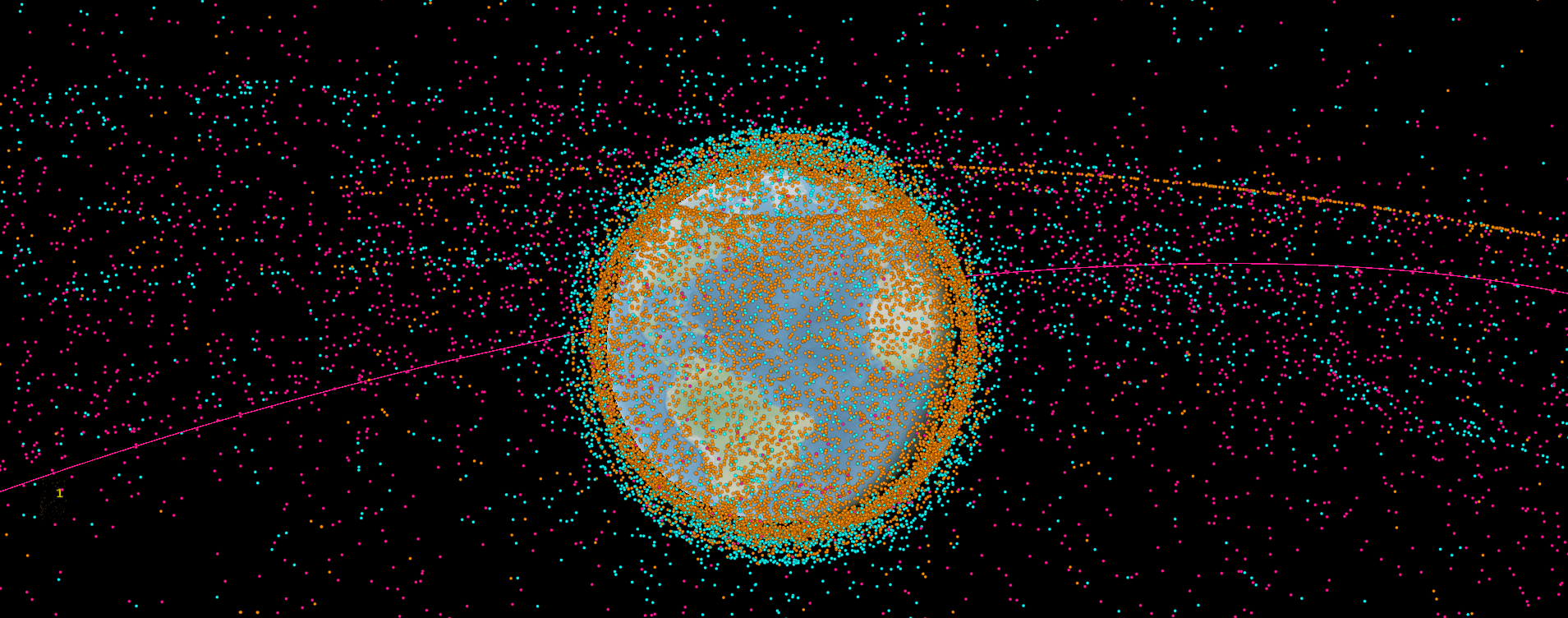

The problem of overcrowding orbits and increasing space debris has never been more urgent. International organizations, policy makers, regulators, space operators and researchers are recognizing how critical this issue is and how it could impact all space services and operations, including, but not limited to, satellite broadband, global navigation satellite systems, scientific research and space missions.
While there is progress that space sustainability is an urgent matter, the measures in place remain limited compared to the scope of the challenges ahead. A forward-looking approach to long-term space sustainability requires actions from all stakeholders, in particular to address the collision risks arising from the rapidly growing number of satellites as well as the risk of creating oligopolies, which could constrain new players’ access to space resources.
What to expect in 2026 and beyond
A radical increase in the number of operational satellites: The rapid expansion of satellite constellations will continue, mainly driven by commercial players. Operators aim to deliver global broadband services by deploying thousands of satellites in low Earth orbit (LEO). While these megaconstellations promise to bridge the digital gap and stimulate economic growth, they also increase the risks of orbital congestion and collisions.
Rising risks of collisions and harmful interference: The growing number of satellites in LEO further amplifies issues regarding limited spectrum and signal interference, as well as the risk of dangerous and potentially cascading collisions between satellites and other satellites or debris.
Advancements in space debris tracking and AI-based collision avoidance: There will be advances in space debris tracking systems and artificial intelligence for collision risk assessment. Enhanced ground-based radars and emerging in-orbit tracking systems are improving the ability to detect and predict the movement of debris. AI-based software will play a growing role in automating collision avoidance. Some regulatory constraints will need to be addressed to handle new systems spectrum needs, for instance, for space-to-space applications employing radar systems that could be used for space tracking functions that enhance space situational awareness, monitor debris trajectories and support space traffic management.
New actors in the space discussion: UN agencies and offices play a very special role in the space sustainability debate. Nevertheless, the space technology evolution and new business models are much faster than the decisions affecting international treaties. This complex dynamic creates a conducive environment for the rise of new actors and self-regulated practices from the industry to mitigate the risk of in-orbit collision. Some of these new actors aim not only to propose technical solutions to reduce collision risks in LEO, but also to recommend regulatory measures regarding equity access to spectrum and orbit resources, and market competition.
What should happen to assure long-term space sustainability?
Invest in active debris removal technologies: Although cleaning up existing debris is technically and economically complex, 2026 should see the deployment of more active debris removal (ADR) missions. Projects like Astroscale and ClearSpace debris capture technology, are expected to pave the way for scalable ADR systems. Governments and industries must work together to incentivize the commercialization of these services, while covering the significant upfront costs associated with operating such spacecraft.
“Sustainability by design” approach for spacecraft: All future spacecraft should be designed with a sustainability approach. This includes features like propulsion systems for controlled deorbiting, materials that burn up completely upon reentry and modular designs that allow for in-orbit servicing or upgrades. Sustainability must become embedded in the mindset of every actor operating in space to reduce the creation of new debris.
Strengthen global collaboration: Global collaboration represents the quest of solutions to spectrum coordination, interference prevention, space situational awareness, collision avoidance, rationale and efficient utilization of space resources. Nevertheless, it also includes having tangible progress on international treaties, revising outdated liability frameworks, holding operators accountable for negligent behavior in orbit and supporting equitable access to space connectivity resources.
Of course, technology solutions are good, but regulatory measures that can be efficiently and effectively enforced are needed to ensure that space and its resources, which are a common good, remain open to all today and in the decades to come. Relying on voluntary practices may not solve challenges that will only become more complicated to address as the number of space objects keeps increasing. Existing industry practices and international standards were developed in a simpler and less risky environment. Therefore, an open dialogue between all stakeholders is also needed.
The need for consensus
Space knows no borders. Space sustainability demands a united response from the international community. However, geopolitical issues have hindered collaboration in space governance, mainly in international fora that need consensus to approve decisions. In such a complex environment, it is expected that new actors will also have an important role producing and disseminating relevant information to policymakers and regulators.
Agostinho Linhares is executive director of the Instituto de Pesquisa para Economia Digital (IPE Digital) in Brazil.
This article first appeared in the January 2026 issue of SpaceNews Magazine.
SpaceNews is committed to publishing our community’s diverse perspectives. Whether you’re an academic, executive, engineer or even just a concerned citizen of the cosmos, send your arguments and viewpoints to opinion (at) spacenews.com to be considered for publication online or in our next magazine. If you have something to submit, read some of our recent opinion articles and our submission guidelines to get a sense of what we’re looking for. The perspectives shared in these opinion articles are solely those of the authors and do not necessarily represent their employers or professional affiliations.










Related Posts
Stay Informed With the Latest & Most Important News
Previous Post
Next Post


Advertisement
-
 01Two Black Holes Observed Circling Each Other for the First Time
 -
 02From Polymerization-Enabled Folding and Assembly to Chemical Evolution: Key Processes for Emergence of Functional Polymers in the Origin of Life
 -
 03Astronomy 101: From the Sun and Moon to Wormholes and Warp Drive, Key Theories, Discoveries, and Facts about the Universe (The Adams 101 Series)
 -
 04True Anomaly hires former York Space executive as chief operating officer
 -
 05Φsat-2 begins science phase for AI Earth images
 -
 06Hurricane forecasters are losing 3 key satellites ahead of peak storm season − a meteorologist explains why it matters
 -
 07Binary star systems are complex astronomical objects − a new AI approach could pin down their properties quickly