
Now Reading: India’s PSLV launch fails during ascent, 16 satellites lost
-
01
India’s PSLV launch fails during ascent, 16 satellites lost


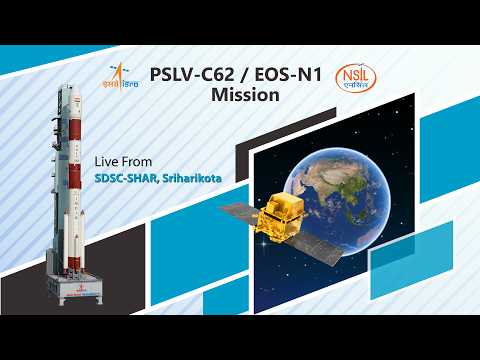
HELSINKI — India’s Polar Satellite Launch Vehicle failed late Sunday during ascent, resulting in the loss of a primary Earth observation satellite and 15 smaller co-passenger spacecraft.
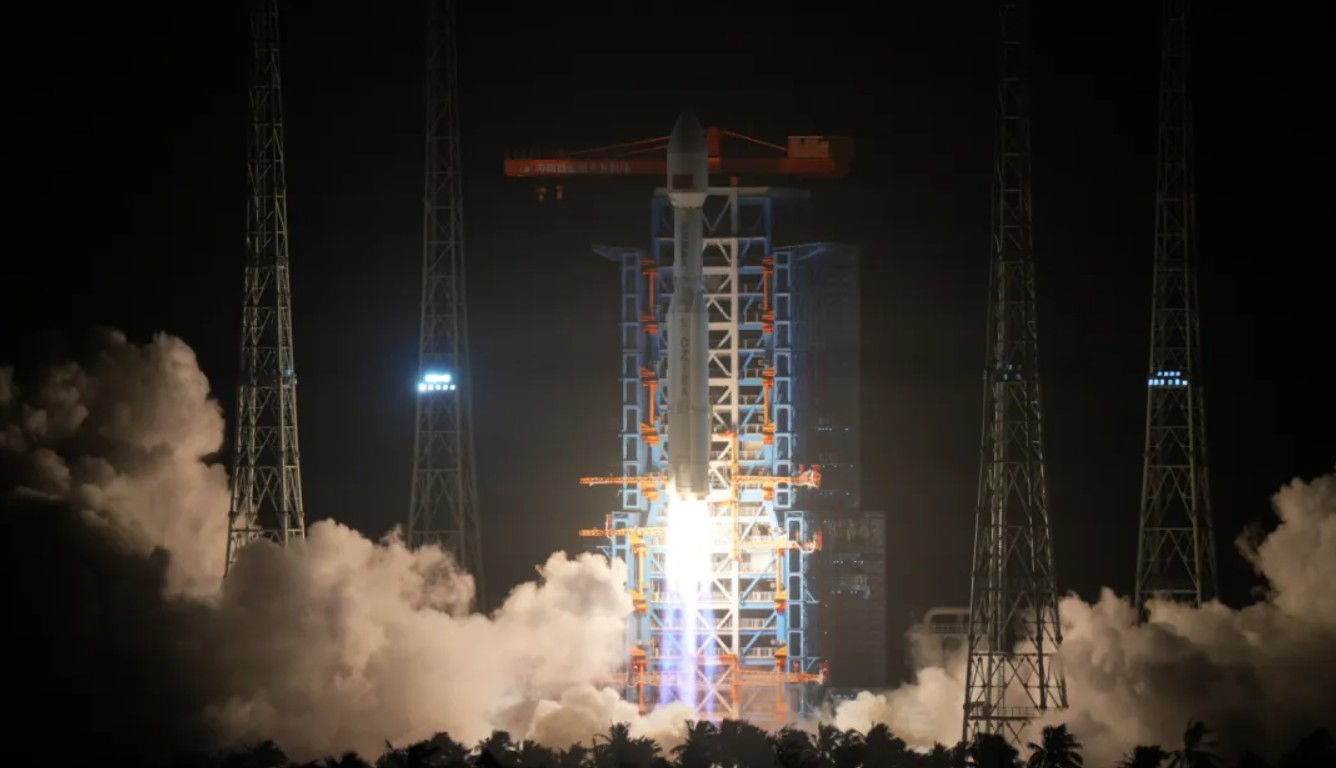
PSLV-C62 lifted off at 11:48 p.m. Eastern, Jan. 11 (0448 UTC, Jan. 12) from the Satish Dhawan Space Center. The webcast of the launch showed a loss of attitude control just after six minutes into the flight, during a third stage burn. This resulted in the stage entering a tumble and the loss of the mission. The EOS-N1 Earth observation satellite and 15 other payloads were lost as a result.
“Performance of the vehicle up to the end of the third stage was as expected, then we saw more disturbance in the vehicle’s roll rates, subsequently there was a deviation observed in flight path. We are analysing the data and we shall come back at the earliest,” Indian Space Research Organisation (ISRO) chairman V. Narayanan said.
Spaceflight activity tracker Jonathan McDowell estimated that the stage reached a suborbital trajectory and fell into the Indian Ocean.
The mission was arranged by ISRO’s commercial arm, NewSpace India Limited. EOS-N1 was understood to be intended to provide hyperspectral imaging potentially for military and strategic applications.
Further satellites lost on the launch included the Theos-2 Earth observation satellite developed by SSTL of the United Kingdom in collaboration with Thailand, satellites for Indian company Dhruva Space, a diplomatic satellite involving Nepal and five satellites for Brazilian company AlltoSpace, including satellites for demonstrating Internet of Things sensors, collecting agricultural data and assisting fishing vessels in distress. The Kestrel Initial Technology Demonstrator (KID), a 25-kilogram scaled reentry vehicle prototype from Spanish startup Orbital Paradigm and supported by the European Space Agency, was also lost.
The previous Polar Satellite Launch Vehicle (PSLV) mission failed May 17, 2025, also due to an anomaly with the solid propellant third stage, resulting in the loss of the EOS-09 radar imaging satellite. The launch was the rocket’s 64th, and had earlier launched major missions including Chandrayaan-1, the Mars Orbiter Mission and Aditya-L1.
The failure may bring delays to planned upcoming PSLV launches, including PSLV-C63, slated to launch the Technology Demonstrator Satellite-01 (TDS-01) and PSLV-N1 carrying EOS-10, a mission stated to be the first time Indian industry consortium HAL and L&T produce a PSLV in its entirety.
One of the major upcoming missions for India in 2026 is the first uncrewed Gaganyaan mission on the HLVM3-G1 launcher as part of the country’s human spaceflight plans. The mission is designed to validate life support, reentry and sea recovery. The spacecraft will carry Vyommitra, a humanoid robot. A second uncrewed flight rehearsal is currently scheduled for late 2026.











Related Posts
Stay Informed With the Latest & Most Important News
Previous Post
Next Post

Advertisement
-
 01Two Black Holes Observed Circling Each Other for the First Time
 -
 02From Polymerization-Enabled Folding and Assembly to Chemical Evolution: Key Processes for Emergence of Functional Polymers in the Origin of Life
 -
 03Astronomy 101: From the Sun and Moon to Wormholes and Warp Drive, Key Theories, Discoveries, and Facts about the Universe (The Adams 101 Series)
 -
 04True Anomaly hires former York Space executive as chief operating officer
 -
 05Φsat-2 begins science phase for AI Earth images
 -
 06Hurricane forecasters are losing 3 key satellites ahead of peak storm season − a meteorologist explains why it matters
 -
 07Binary star systems are complex astronomical objects − a new AI approach could pin down their properties quickly