
Now Reading: There’s no end in sight for a space ‘nuclear renaissance’
-
01
There’s no end in sight for a space ‘nuclear renaissance’


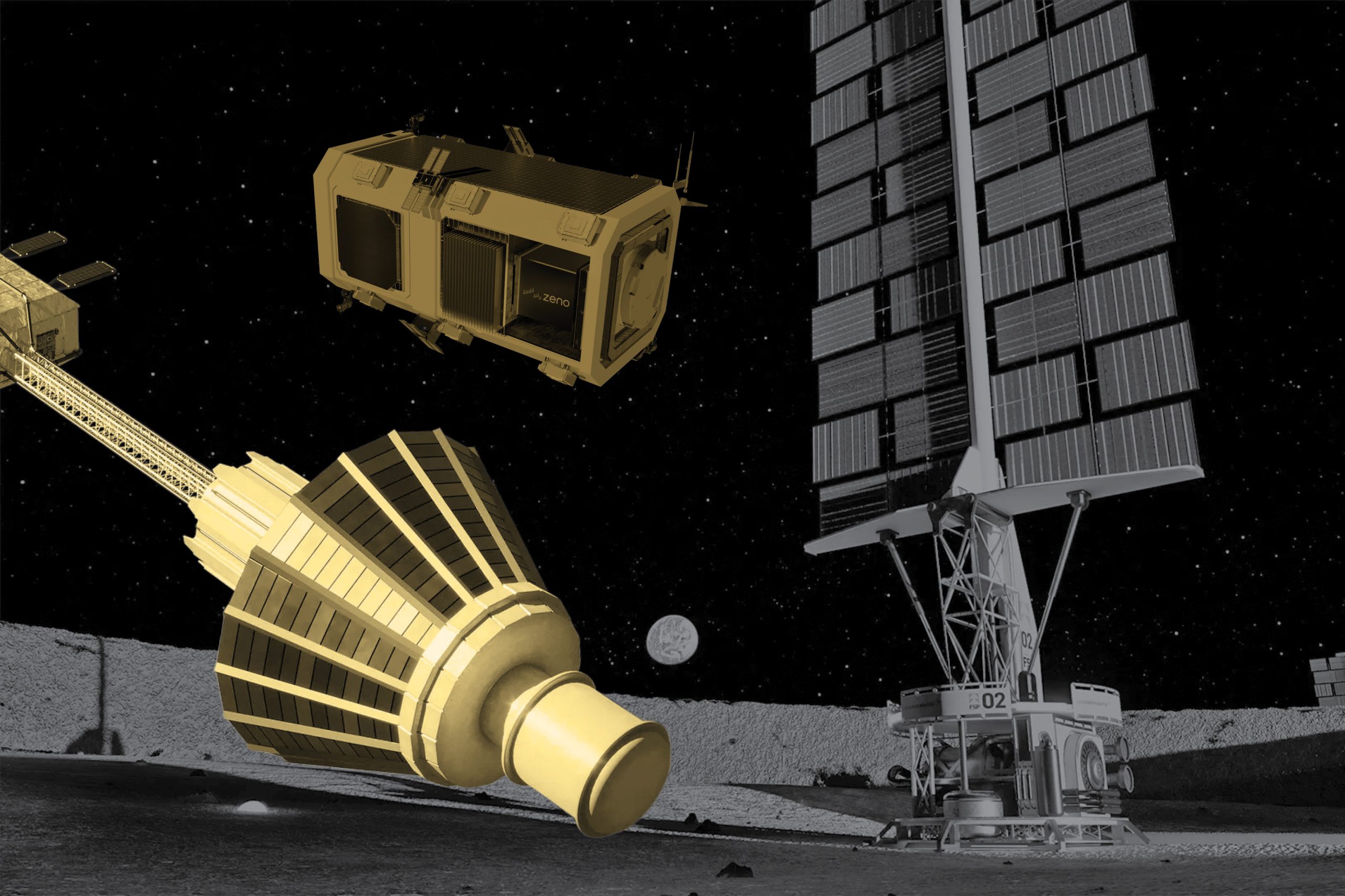

A widespread demand for nuclear power has led some to call this period a “nuclear renaissance,” one that will continue to build momentum in 2026. This growing need is being driven by two primary use cases: small modular nuclear reactors for cloud infrastructure and terrestrial data center needs, and nuclear electric reactors for lunar surface or in-space propulsion applications.
Nuclear electric reactors in space can help provide power for space-based applications like powering lunar infrastructure through the lunar night. Further, space based nuclear thermal propulsion remains a viable concept for deep space and cislunar exploration.
The capital markets have responded to these technologic advancements in kind with increased interest and investment capital flows that are focused on these vital terrestrial and space-based applications. In 2026, we will see momentum continue to build toward this nuclear renaissance, particularly as the regulatory environment improves.
A series of influential factors are contributing to this trend: growing commercial demands and investment opportunities, new ideas and innovators, specialized expertise leveraged from other space and terrestrial industries, increased space logistical demands and emerging approaches of manufacturing high assay low enriched uranium at scale.
But to make nuclear power a reality, sustained investment over the long term is critical.
As private capital seeks a robust return on investment, it remains necessary for the regulatory ecosystem to provide oversight and interaction at a commensurate pace to sustain the investment interest. The U.S. can lead the long-term presence in space and enable a modern domestic terrestrial nuclear power industry, but it requires continuous investment and attention from government and industry alike. So while many emerging companies are concentrating on both application areas, a collaborative and innovative public-private partnership will be essential for the investment community to see value in supporting these endeavors.
Small modular reactors can support critical deployed military operations at remote environments by providing a reliable, terrestrial power source for distributed military and civilian applications. By leveraging small modular reactors this way, the U.S. can reduce the logistics supply lines for fuel and mitigate the energy risks that can compromise the distributed operations of the government’s support infrastructure, particularly in remote environments such as forward bases and the Arctic.
In space, nuclear electric is vital for power generation on the lunar surface and also as a spacecraft power source (in the kW to MW range). In addition, there are viable concepts for nuclear thermal propulsion, reducing transit times to Mars as well as enhancing cislunar exploration by providing space constellation architecture options.
Nuclear thermal propulsion is distinct from the relatively proven radio isotope thermal generation sources typically used for deep space applications despite their lower power capacities.
Solar electric power sources are challenged to provide substantial power needs on the lunar surface and to address the “through the lunar night” needs for a sustained presence on the moon. This is why space nuclear applications provide the necessary electric power infrastructure for a leading space power like the U.S.
I expect continued space nuclear electric progress in 2026 because the scaling of solar array/electric systems to meet emerging demands is insufficient in comparison to the intrinsic ability of small nuclear reactors, particularly in terms of reduced cost per kilogram to launch and the inadequate linear improvements of solar array efficiencies balanced against infrastructure demands.
Power generation must leap in orders of magnitude to match the commensurate drop in launch costs from the surface of the Earth. The combination can accelerate the pace of our infrastructure expansion on the lunar surface and elsewhere, and the maturation of space logistics, assembly, manufacturing, refueling and other maturing concepts will be further enabled.
However, there are risks and technical challenges that still require work. For example, substantially increased power in space and on the lunar surface requires exceptional thermal management and thermal dissipation ability. Many concepts are considering this, which will inevitably lead to improved thermal management approaches to handle excess power dissipation with space nuclear electric, both on the lunar surface and in space.
The physics of peaceful terrestrial nuclear power are well understood as it has evolved over the last 70 years. Addressing the entire regulatory chain will be vital to provide robust power sources for infrastructure needs for distributed small terrestrial power sources, as the 21st century progresses. Programs and funding and efforts have to be focused on the entire value chain, not just one element of the system.
This monumental effort will require collaboration across U.S. regulatory organizations, the U.S. government-sponsored organizations and the appropriate funding sources to jointly address full safe system operations and bring the coming nuclear renaissance to fruition.
Brad Tousley is former director of the Tactical Technology Office at DARPA and partner at Elara Nova.
This article first appeared in the January 2026 issue of SpaceNews Magazine.
SpaceNews is committed to publishing our community’s diverse perspectives. Whether you’re an academic, executive, engineer or even just a concerned citizen of the cosmos, send your arguments and viewpoints to opinion (at) spacenews.com to be considered for publication online or in our next magazine. If you have something to submit, read some of our recent opinion articles and our submission guidelines to get a sense of what we’re looking for. The perspectives shared in these opinion articles are solely those of the authors and do not necessarily represent their employers or professional affiliations.










Related Posts
Stay Informed With the Latest & Most Important News




Advertisement
-
 01Two Black Holes Observed Circling Each Other for the First Time
 -
 02From Polymerization-Enabled Folding and Assembly to Chemical Evolution: Key Processes for Emergence of Functional Polymers in the Origin of Life
 -
 03Astronomy 101: From the Sun and Moon to Wormholes and Warp Drive, Key Theories, Discoveries, and Facts about the Universe (The Adams 101 Series)
 -
 04True Anomaly hires former York Space executive as chief operating officer
 -
 05Φsat-2 begins science phase for AI Earth images
 -
 06Hurricane forecasters are losing 3 key satellites ahead of peak storm season − a meteorologist explains why it matters
 -
 07Binary star systems are complex astronomical objects − a new AI approach could pin down their properties quickly