
Now Reading: ThinkOrbital raises seed funding to advance X-ray space inspection
-
01
ThinkOrbital raises seed funding to advance X-ray space inspection


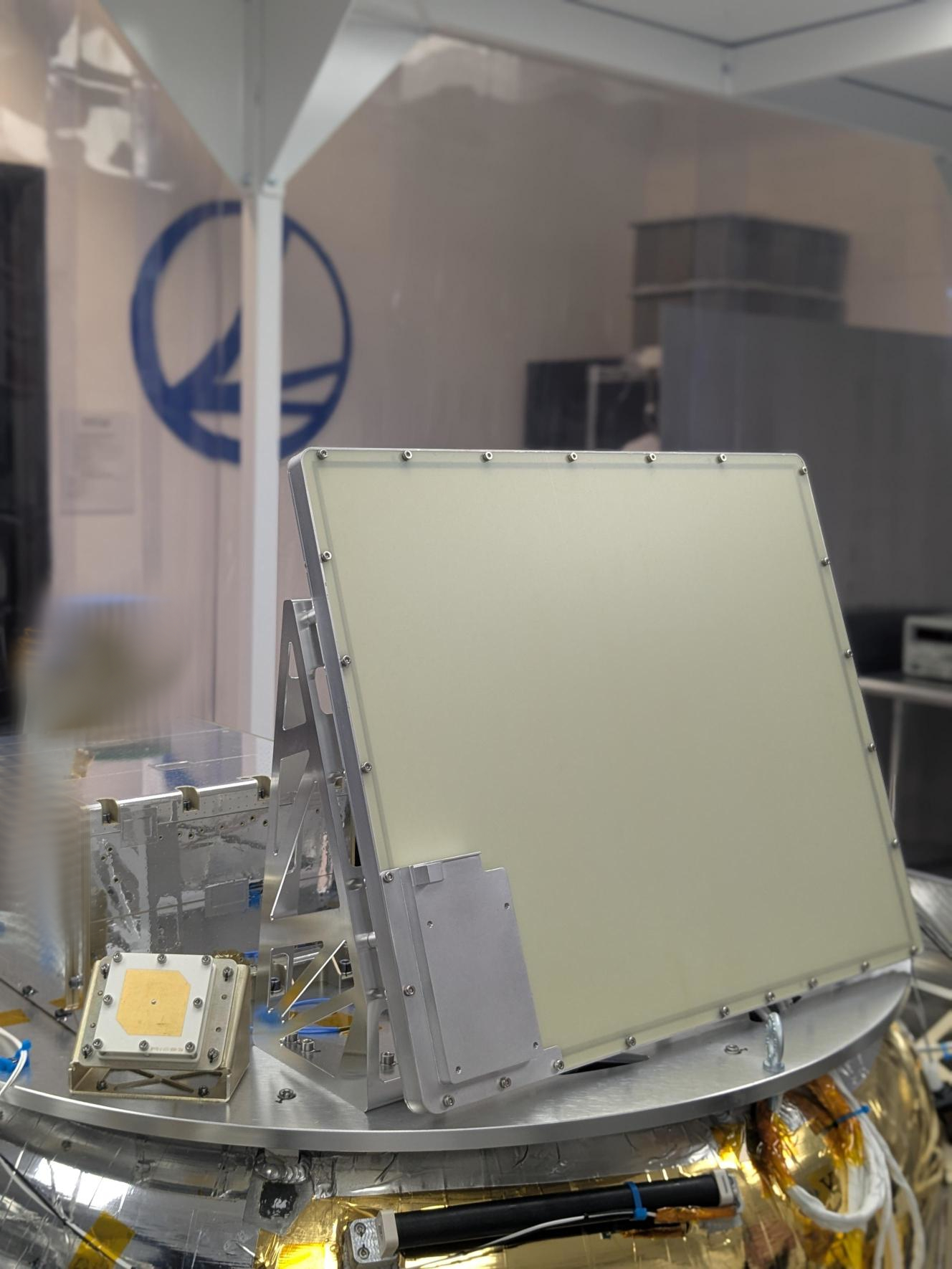

WASHINGTON — ThinkOrbital, a startup focused on space infrastructure, has secured fresh backing as it pushes to mature technologies for X-ray inspection and in-space construction at a time when the U.S. military is looking for new ways to monitor and operate around satellites in orbit.
The Boulder, Colorado–based company recently closed a seed funding round of undisclosed value led by TFX Capital. ThinkOrbital said the financing will support work to advance its in-space X-ray imaging system and broader efforts in autonomous construction and servicing technologies.
Co-founder and chief executive Lee Rosen said the company is focused on maturing technology that would allow spacecraft to be inspected using X-rays generated and received in orbit.
The technology could support inspection systems, robotic tooling, welding and assembly in commercial and government missions.
Rosen said the X-ray technology will be tested in space through two demonstration missions planned for March and October 2026. The March mission will fly ThinkOrbital’s X-ray detector panel aboard a spacecraft developed by Argo Space, marking Argo’s inaugural mission.
The demonstration is intended to combine Argo’s maneuverability with ThinkOrbital’s sensor technology to test long-range active X-ray inspection in orbit. The capability could allow operators to characterize the internal structure of spacecraft from significant distances, with potential applications in anomaly diagnosis, on-orbit servicing and national security–related space domain awareness.
Brandon Shelton, founder and managing partner of TFX Capital, framed the investment as a bet on infrastructure rather than a single product. “Infrastructure at scale is the key to unlocking the next phase of the space economy, from manufacturing to defense to power and compute,” Shelton said, “and we believe ThinkOrbital has both the technology and the team to make that future real.”
Rosen told SpaceNews that the March mission will launch the X-ray detector, while the October mission will carry the X-ray source. “Those two satellites will meet in orbit and do X-ray imaging at one-kilometer separation,” he said.
In that configuration, one spacecraft emits X-rays while the other detects the radiation after it passes through a target object, allowing the system to form an image. ThinkOrbital has disclosed that the X-ray detector will fly on an Argo Space vehicle but has not yet identified the partner for launching the X-ray emitter.
Beyond inspection, ThinkOrbital is also pursuing longer-term ambitions tied to large-scale orbital infrastructure. The company is involved in a U.S. Space Force–funded Small Business Innovation Research study with Georgia Tech University examining concepts for forward basing assets in space, such as storage depots for satellites. The work includes analyzing how many such depots might be needed and where they would be positioned to support military operations.
“The big infrastructure stuff is still the ultimate goal of the company, to be able to build huge things, data centers in outer space,” Rosen said. He added that while interest in space-based data centers is growing, there has been little clarity on how such structures would be built, supplied and sustained over time.










Related Posts
Stay Informed With the Latest & Most Important News





Advertisement
-
 01Two Black Holes Observed Circling Each Other for the First Time
 -
 02From Polymerization-Enabled Folding and Assembly to Chemical Evolution: Key Processes for Emergence of Functional Polymers in the Origin of Life
 -
 03Astronomy 101: From the Sun and Moon to Wormholes and Warp Drive, Key Theories, Discoveries, and Facts about the Universe (The Adams 101 Series)
 -
 04True Anomaly hires former York Space executive as chief operating officer
 -
 05Φsat-2 begins science phase for AI Earth images
 -
 06Hurricane forecasters are losing 3 key satellites ahead of peak storm season − a meteorologist explains why it matters
 -
 07Binary star systems are complex astronomical objects − a new AI approach could pin down their properties quickly