
Now Reading: Bringing outsiders into the space fold
-
01
Bringing outsiders into the space fold


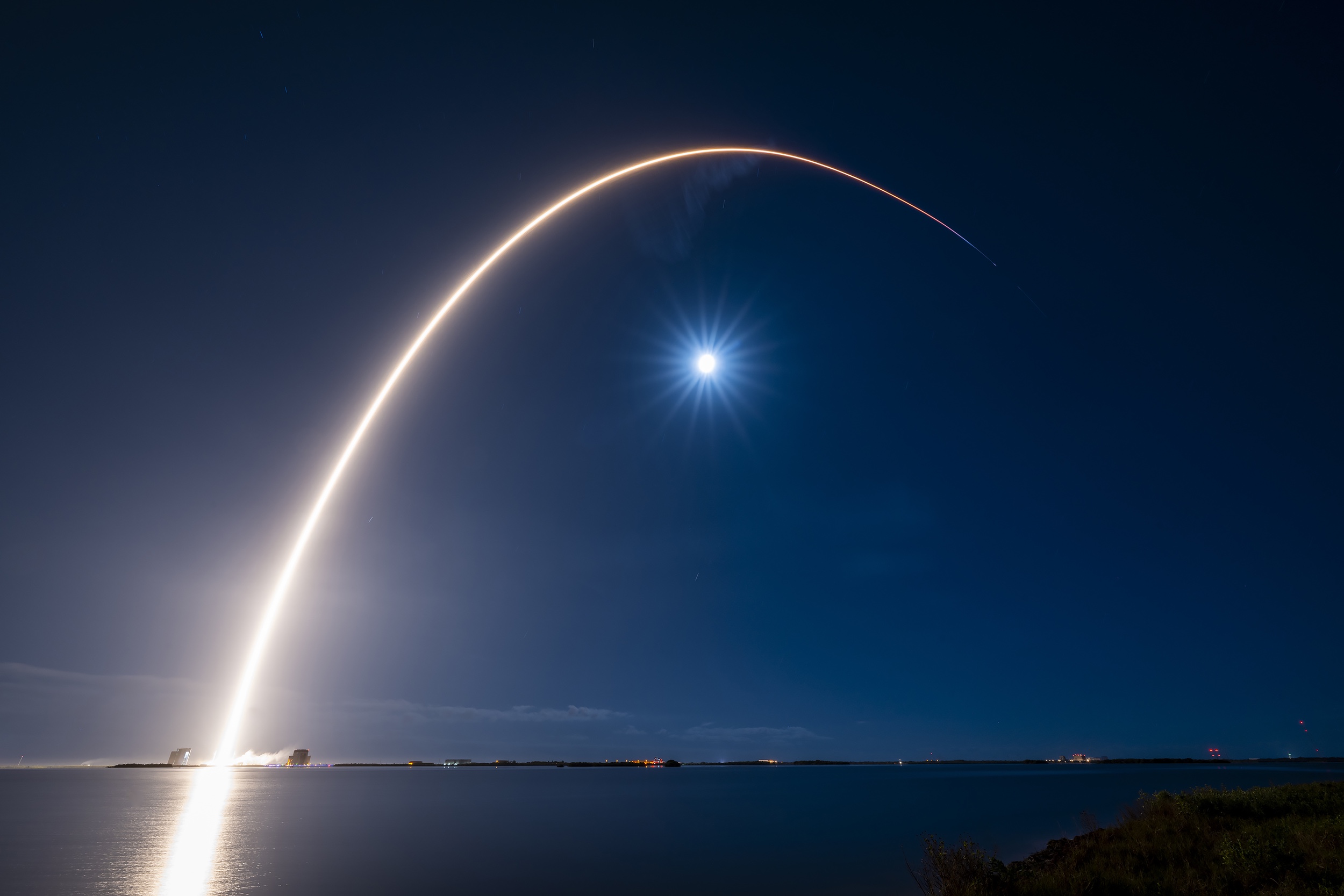

SpaceX’s 2026 IPO plans were an early Christmas present for space investors who were already bullish about the year ahead.
The move helps push the industry further into the mainstream investment and public consciousness. It also paves the way for others to go public in a capital-intensive business.
Despite ongoing financial uncertainty, demand for sovereign capabilities and the growing role of space in critical infrastructure are set to drive optimism for the space economy into 2026.
One of the trends helping fuel this optimism is how space businesses are increasingly finding customers outside the industry. California-based space-tracker Slingshot Aerospace, for example, is seeing growing interest from customers across air, land and sea in AI-enabled tools that can detect anomalous satellite behavior and determine how it could disrupt their operations.
“Looking toward 2026, the space economy is no longer defined by who builds or operates satellites,” said Slingshot Aerospace CEO Tim Solms.
“It’s defined by everyone whose business depends on the integrity of the space systems above them.”
Aviation, logistics networks, financial markets and autonomous systems all rely on space-based signals, Solms said, whether they view themselves as space users or not.
Earth’s orbit is becoming more congested and complex. SpaceX’s Starlink constellation conducted more than 144,000 collision-avoidance maneuvers in a recent six-month period, roughly a 200% increase from the previous half-year, in part because of a lower maneuver threshold. Meanwhile, terrestrial threats such as GPS jamming and spoofing are no longer confined to military scenarios.
Solms learned firsthand how quickly a mission can unravel when positioning and timing are compromised during his time as an Apache attack helicopter pilot.
“That experience stays with me,” he said. “It’s why at Slingshot we’re building AI that continuously monitors satellite constellations for anomalous behavior — jamming, spoofing, unplanned maneuvers — and fuses multiple independent data sources to provide a resilient layer of real-time awareness.
“Our goal is to give emerging non-traditional space users the tools to anticipate and respond to disruptions before they cascade into operational or safety risks on Earth.”
New space applications
Analysys Mason principal analyst Dallas Kasaboski noted that in-orbit services, such as satellite refueling, were for years viewed as interesting but too expensive and technically challenging to attract broad demand.
That is changing as governments and militaries show stronger interest. The potential to relocate or reactivate geostationary satellites was also once rarely discussed but is now being reconsidered as a way to augment launch capacity and extend asset utility.
In Earth observation, Kasaboski highlighted how AI has long been used to process imagery, but growing global enthusiasm and investment in the technology more broadly are accelerating adoption and expanding use cases.
Emerging direct-to-device (D2D) satellite capabilities are pushing this convergence even further.
“D2D is bringing the telco and satcom markets together,” he said, providing terrestrial operators with global reach and new capabilities, while giving satellite operators access to larger addressable markets and deeper funding pools.
The need for greater sovereignty reinforces this shift, along with what Kasaboski described as “industrialization,” where manufacturers from outside space increasingly view building hardware or materials for the industry as a strategic opportunity, particularly in Europe.
“These two trends can work together, e.g. government pushing both sovereign assets as well as local commercial market generation,” he said via email. “And while it provides a risk of bubbles (do we really need more satellite manufacturers?) it also brings new interest, investment and the potential for innovation that will drive the overall market forward.”
SpaceX, already a household name, one that has done so much to bring satellite capabilities to the mainstream, could shift this recognition into an even higher gear if its public listing goes as planned.
This article first appeared in the January 2026 issue of SpaceNews Magazine.










Related Posts


Stay Informed With the Latest & Most Important News
Previous Post
Next Post




Advertisement
-
 01Two Black Holes Observed Circling Each Other for the First Time
 -
 02From Polymerization-Enabled Folding and Assembly to Chemical Evolution: Key Processes for Emergence of Functional Polymers in the Origin of Life
 -
 03Astronomy 101: From the Sun and Moon to Wormholes and Warp Drive, Key Theories, Discoveries, and Facts about the Universe (The Adams 101 Series)
 -
 04True Anomaly hires former York Space executive as chief operating officer
 -
 05Φsat-2 begins science phase for AI Earth images
 -
 06Hurricane forecasters are losing 3 key satellites ahead of peak storm season − a meteorologist explains why it matters
 -
 07Binary star systems are complex astronomical objects − a new AI approach could pin down their properties quickly