
Now Reading: TrustPoint demonstrates non-GPS navigation for LEO satellites
-
01
TrustPoint demonstrates non-GPS navigation for LEO satellites


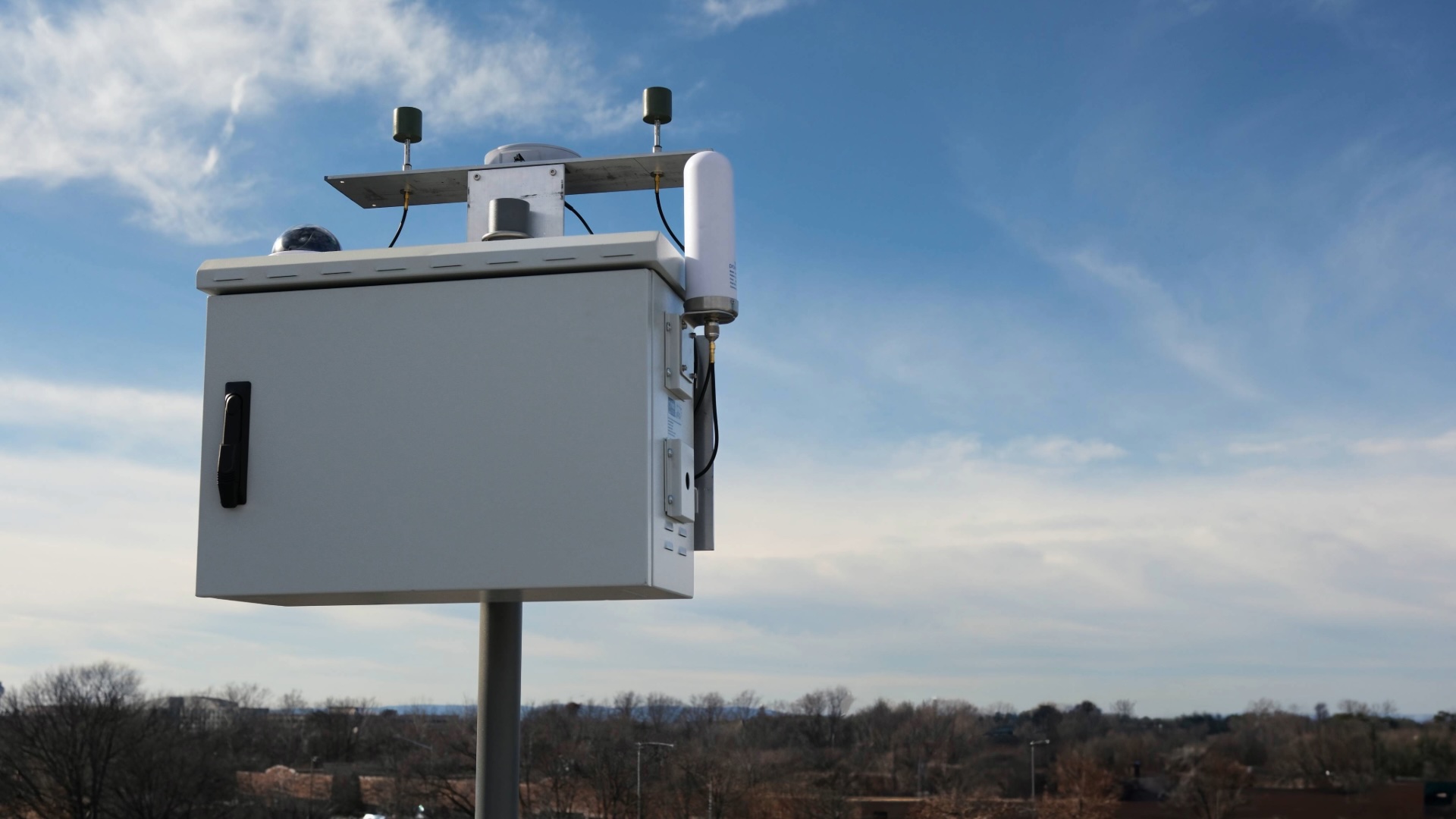

WASHINGTON — TrustPoint, a Virginia-based startup developing a network of navigation satellites in low Earth orbit, said it has successfully transmitted time and tracking signals from a ground station to a spacecraft in orbit, marking a key step in its effort to build a GPS-independent system.
The company developed a ground station called LEONS, shorthand for low Earth orbit navigation system, designed to provide GPS-independent positioning, navigation and timing signals to satellites in space, said TrustPoint’s chief executive and co-founder Patrick Shannon.
“It transmits signals up to LEO satellites, tells them where they are and what time it is,” he said.
Today, most LEO satellites rely on GPS for time and position, but GPS jamming from terrestrial sources is increasingly affecting satellites in orbit, said Shannon.
The ground station, with a footprint comparable to a microwave oven, was developed to support TrustPoint’s own constellation. Shannon said the company is now showing that the system can also work with other LEO operators that want GPS-independent timing and navigation for their spacecraft. He said TrustPoint plans to deploy as many as 100 ground nodes.
“This level of independence from GPS is critical for our customers’ reliability and resilience requirements and ensures that disruptions to GPS do not cascade into the TrustPoint system,” said Shannon.
The latest test showed that TrustPoint’s ground node can generate and maintain precise time on its own and transmit that information uplink to a spacecraft, said Shannon.
Interest in non-GPS positioning, navigation and timing, known as PNT, has grown as military operations and commercial satellite operators face interference in conflict zones. Several companies are developing LEO-based PNT systems that promise stronger signals and greater resilience than traditional satellite navigation systems operating in higher orbits. Many of those efforts have focused primarily on broadcasting signals from space. TrustPoint has taken a different approach by investing heavily in its ground segment. The company intends to deliver PNT using a C-band LEO architecture, operating at higher frequencies than the L-band signals used by GPS.
The ground-to-space navigation demonstration was completed under U.S. Space Force SpaceWERX contracts funded through the Small Business Innovation Research program.
The ground station intentionally was made compact so it can be installed relatively easily, Shannon said. “We can place these all over the world very affordably and very quickly.”
A single node, he said, can support all satellites in view simultaneously.
The spacecraft used in the test was operated by an undisclosed partner and was not a TrustPoint satellite. Shannon said future demonstrations will attempt to transmit time and tracking signals to the company’s three satellites already in orbit. More launches are scheduled for later this year, said Shannon.










Related Posts

Stay Informed With the Latest & Most Important News
Previous Post
Next Post
Advertisement
-
 01Two Black Holes Observed Circling Each Other for the First Time
 -
 02From Polymerization-Enabled Folding and Assembly to Chemical Evolution: Key Processes for Emergence of Functional Polymers in the Origin of Life
 -
 03Astronomy 101: From the Sun and Moon to Wormholes and Warp Drive, Key Theories, Discoveries, and Facts about the Universe (The Adams 101 Series)
 -
 04True Anomaly hires former York Space executive as chief operating officer
 -
 05Φsat-2 begins science phase for AI Earth images
 -
 06Hurricane forecasters are losing 3 key satellites ahead of peak storm season − a meteorologist explains why it matters
 -
 07Binary star systems are complex astronomical objects − a new AI approach could pin down their properties quickly