
Now Reading: Crew-11 makes early return from ISS
-
01
Crew-11 makes early return from ISS



Updated 6:50 a.m. Eastern after post-splashdown briefing.
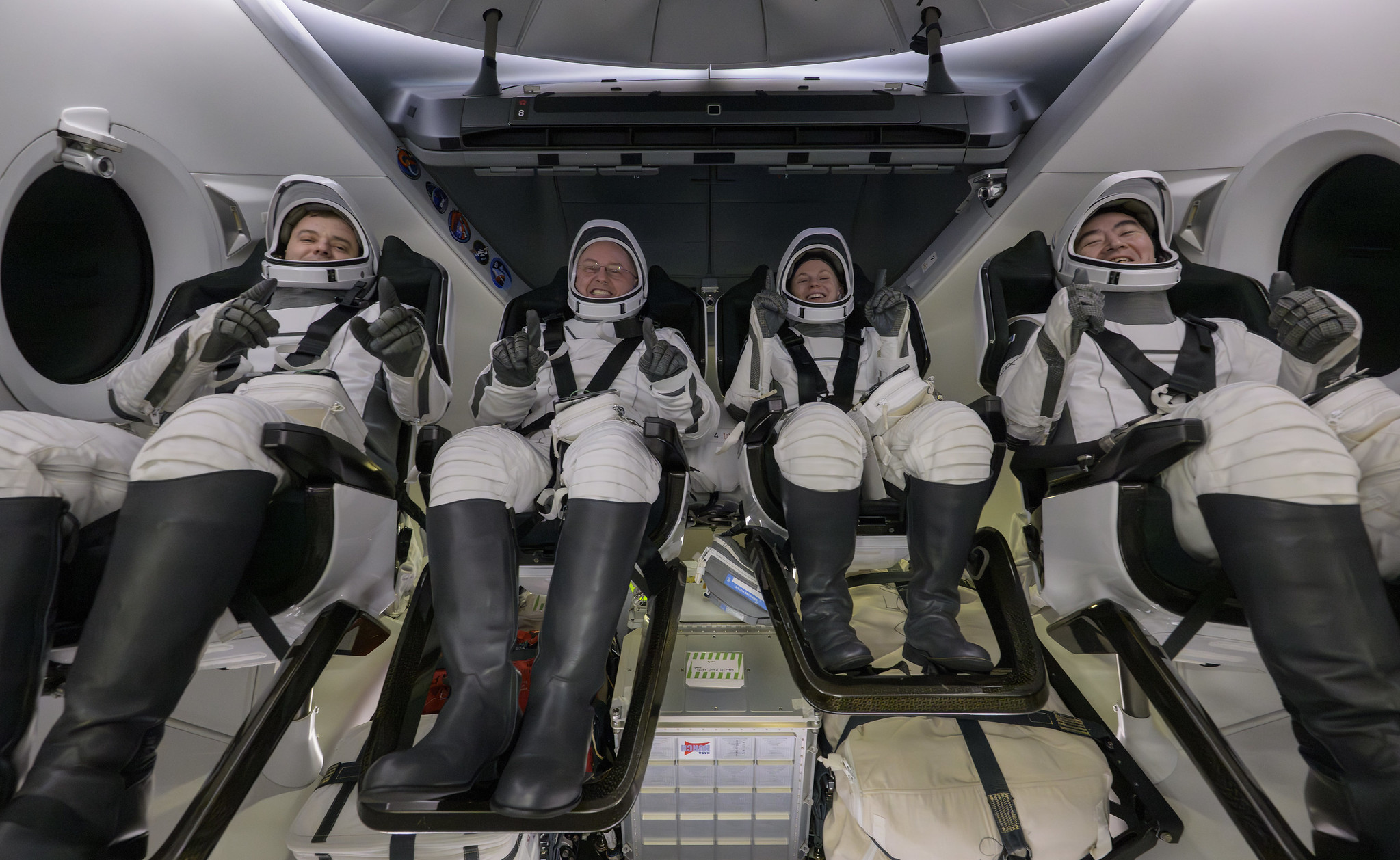
WASHINGTON — A Crew Dragon spacecraft splashed down off the California coast Jan. 15, bringing back four people from the International Space Station more than a month early because of a medical issue with one of them.
The Crew Dragon spacecraft Endeavour splashed down off the coast of San Diego at 3:41 a.m. Eastern. It had undocked from the station at 5:20 p.m. Eastern Jan. 14.
Returning from the ISS after five and a half months there were NASA astronauts Zena Cardman and Mike Fincke, who served as commander and pilot, respectively, of Crew-11, along with mission specialists Kimiya Yui of the Japanese space agency JAXA and Oleg Platonov of Roscosmos.
NASA announced Jan. 7 that it moved up the return of Crew-11, which had previously been planned for no earlier than the latter half of February, after one person had a “medical concern” that could be best diagnosed on the ground. The agency, citing medical privacy, did not disclose which person had the medical issue or any details about it.
The issue “was sufficient enough that we were concerned about the astronaut,” said J.D. Polk, NASA chief health and medical officer, at a Jan. 7 briefing, requiring tests beyond the scope of equipment available on the station. “The best way to complete that workup is on the ground, where we have the full suite of medical testing hardware.”
Photos and videos from the station, including a change-of-command ceremony on the station Jan. 12, offered no evidence of any medical conditions involving the crew. NASA had emphasized that the person who experienced the medical concern was stable.
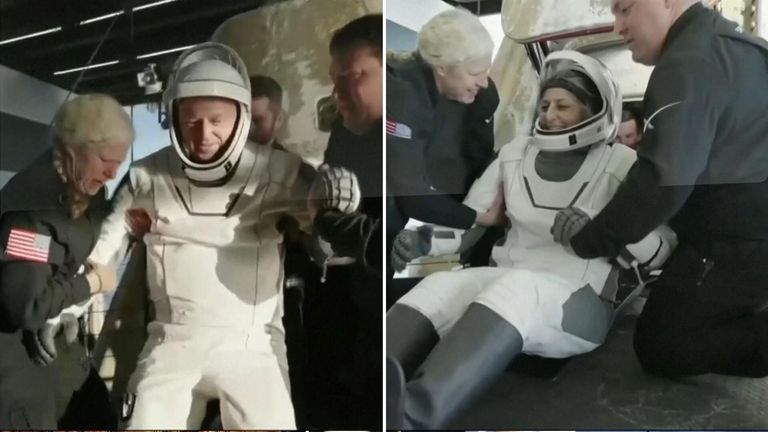
The four exited the Crew Dragon normally. “They’re safe. They’re in good spirits,” NASA Administrator Jared Isaacman said in a post-splashdown briefing, noting they were going through normal medical checks. The astronaut who had the medical concern “is doing fine,” he added.
The astronauts will be taken by helicopter to a San Diego hospital for additional medical evaluations, including an overnight stay, a departure from standard post-splashdown operations. They will then travel to Houston on Jan. 16, pending the completion of those medical checks.
This was the first time that NASA ended a crewed mission early because of a medical issue. Both Isaacman and Joel Montalbano, deputy associate administrator for space operations, emphasized at the briefing that this early return followed normal procedures, with no changes to accommodate the astronaut with the medical concern.
“NASA was ready. The team responded quickly and professionally, as did the teams across the agency, working closely with our commercial partners, and executed a very safe return,” Isaacman said. “This is exactly why we train and this is NASA at its finest.”
“Nothing has really jumped out” in terms of lessons learned from this early return, Montalbano said. He praised SpaceX for its work to prepare for the accelerated return, getting its recovery ship and other assets ready and even practicing helicopter flights from the ship to the hospital.
“I think when we go through the debrief on this, we’re going to learn a lot about the things we got right,” Isaacman added, saying the early return “was executed almost near flawlessly.”
With Crew-11 back on the ground, there are three people remaining on the ISS: NASA astronaut Chris Williams and Roscosmos cosmonauts Sergey Kud-Sverchkov and Sergey Mikaev. Four new astronauts from NASA, ESA and Roscosmos are scheduled to launch on Crew-12 in mid-February, but NASA said when it announced the early return of Crew-11 it was studying moving up the Crew-12 launch.
Montalbano said NASA is still looking how to move up Crew-12 but has not set a date for that mission. The agency is also rescheduling the departures of a cargo Dragon spacecraft and Japanese HTV-X cargo spacecraft from the station that originally were set to leave before Crew-11.
Isaacman reiterated comments at an earlier briefing that moving up Crew-12 should not conflict with Artemis 2, which is currently scheduled to launch as soon as Feb. 6 from the Kennedy Space Center. The two are “parallel efforts,” he said, but may require some degree of deconfliction.
“If it comes down to a point in time where we have to deconflict between two human spaceflight missions, that is a very good problem to have at NASA,” he said.










Related Posts

Stay Informed With the Latest & Most Important News
Previous Post
Next Post



Advertisement
-
 01Two Black Holes Observed Circling Each Other for the First Time
 -
 02From Polymerization-Enabled Folding and Assembly to Chemical Evolution: Key Processes for Emergence of Functional Polymers in the Origin of Life
 -
 03Astronomy 101: From the Sun and Moon to Wormholes and Warp Drive, Key Theories, Discoveries, and Facts about the Universe (The Adams 101 Series)
 -
 04True Anomaly hires former York Space executive as chief operating officer
 -
 05Φsat-2 begins science phase for AI Earth images
 -
 06Hurricane forecasters are losing 3 key satellites ahead of peak storm season − a meteorologist explains why it matters
 -
 07Binary star systems are complex astronomical objects − a new AI approach could pin down their properties quickly