
Now Reading: China hit by dual launch failures as Long March 3B and Ceres-2 debut mission fail
-
01
China hit by dual launch failures as Long March 3B and Ceres-2 debut mission fail


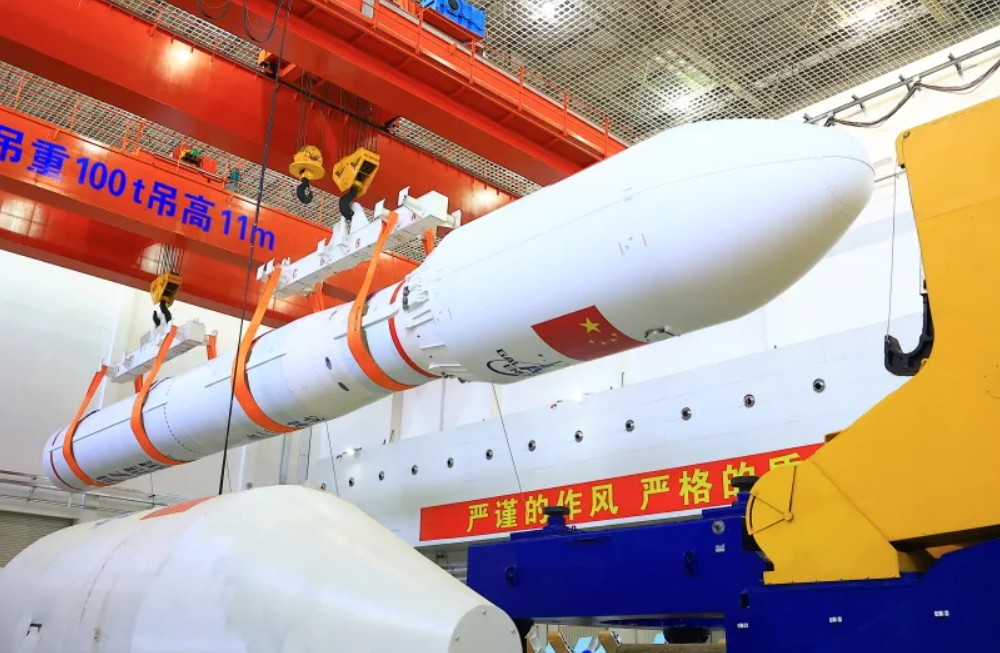

HELSINKI — China suffered a pair of launch failures Friday, seeing the loss of a classified Shijian satellite and the failed first launch of the Ceres-2 rocket.
The Long March 3B lifted off at 11:55 Eastern (1655 UTC) Jan. 16 from Xichang Satellite Launch Center in southwest China. While amateur footage indicated the launch had taken place on schedule in line with airspace closure notices, silence followed. The China Aerospace Science and Technology Corporation (CASC) confirmed the failure around 12 hours after liftoff, stating that the Shijian-32 satellite had been lost following a third stage anomaly. “The specific cause is under further analysis and investigation,” state media Xinhua reported.
The failure is the first full failure of a Long March 3B launch since the loss of the Palapa-N1/Nusantara-2 satellite for Indonesia in April 2020, again involving the Long March 3B and a third stage issue.
This is the first complete failure of a Long March 3B mission since the Palapa-N1 loss in April 2020, and appears to be the first outright launch failure for the Long March family in around 300 launches. More recently, a partial failure in March 2024 had followed an anomaly with a Yuanzheng-1S upper stage atop of a Long March 2C rocket. The lunar spacecraft, DRO-A and B, were however eventually delivered into their intended lunar orbits via a series of complex orbital maneuvers.
The hypergolic Long March 3B is mostly used for launches to geostationary transfer orbit, including communications, meteorological, remote sensing and tech demo missions. The failure may delay launches such as those for the TJS experimental series and Tianlian relay satellites. China has other options for such launches in the form of the newer, kerolox Long March 7A, which launches from the coastal Wenchang spaceport. Both the 3B and 7A use hydrolox upper stages, but different engines and other systems, limiting common-cause risk.
CASC did not provide any insight into the Shijian-32 satellite and its intended mission. The Shijian program comprises a diverse series of satellites, typically used to conduct experiments, test new technologies and verify operational practices on orbit. Two separate satellites, Shijian-21 and Shijian-25, separated in geosynchronous orbit late last year after spending months apparently docked in order to conduct on-orbit refueling tests.
Ceres-2 debut launch ends in failure
The loss of Shijian-32 was followed less than 12 hours later by another blow. Galactic Energy finally conducted the first launch of its new, larger Ceres-2 solid rocket after months of preparations and repeatedly rescinded launch windows.
The Ceres-2 lifted off at 11:08 p.m. Eastern, Jan. 16 (0408 UTC, Jan. 17) from the Jiuquan Satellite Launch Center in northwest China. Galactic Energy confirmed the loss of the debut flight, stating that an anomaly had occurred and that the specific cause is under further investigation. The company further extended its sincerest apologies to all parties involved in the mission. Around six satellites were thought to be aboard the flight, including the ultra-flat disk satellite Lilac-3 from the Harbin Institute of Technology and Beijing University of Aeronautics and Astronautics.
The launcher was expected to be able to deliver 1,600 kilograms to 500-kilometer-altitude low Earth orbit (LEO), far above the 400 kg to LEO of the smaller Ceres-1.
The launch followed a day after the smaller Ceres-1 had made a successful return to flight from a converged barge off the coast of Shandong province, following a November failure.
The loss will come as a blow as the company planned to step up its ambitions. Galactic Energy is also preparing for the debut flight of its first liquid propellant launcher with the Pallas-1 rocket (~8,000 kg to LEO) and the company has also filed initial paperwork towards an IPO.
In 2025 China suffered just two failures across 92 orbital launch attempts, which included successful debuts of new launchers. The country has now suffered two losses within 12 hours in January 2026. India also suffered a failure earlier this week, with an anomaly resulting in the loss of the PSLV-C62 rocket and 16 satellites, though Orbital Paradigm later stated its scale reentry capsule KID survived.
The launches were China’s fifth and sixth of 2026, following successful launches of a Long March 6A sending Yaogan-50 (01) into an unusual, highly retrograde orbit, a Long March 8A launching an 18th batch of Guowang satellites, a Long March 2C carrying AlSat-3A for Algeria and a Ceres-1 sea launch for the Tianqi constellation. The country is expected to launch more than 100 times this year for the first time.










Related Posts



Stay Informed With the Latest & Most Important News
Previous Post
Next Post





Advertisement
-
 01Two Black Holes Observed Circling Each Other for the First Time
 -
 02From Polymerization-Enabled Folding and Assembly to Chemical Evolution: Key Processes for Emergence of Functional Polymers in the Origin of Life
 -
 03Astronomy 101: From the Sun and Moon to Wormholes and Warp Drive, Key Theories, Discoveries, and Facts about the Universe (The Adams 101 Series)
 -
 04True Anomaly hires former York Space executive as chief operating officer
 -
 05Φsat-2 begins science phase for AI Earth images
 -
 06Hurricane forecasters are losing 3 key satellites ahead of peak storm season − a meteorologist explains why it matters
 -
 07Binary star systems are complex astronomical objects − a new AI approach could pin down their properties quickly