
Now Reading: NASA must act now to ensure U.S. leadership in space
-
01
NASA must act now to ensure U.S. leadership in space


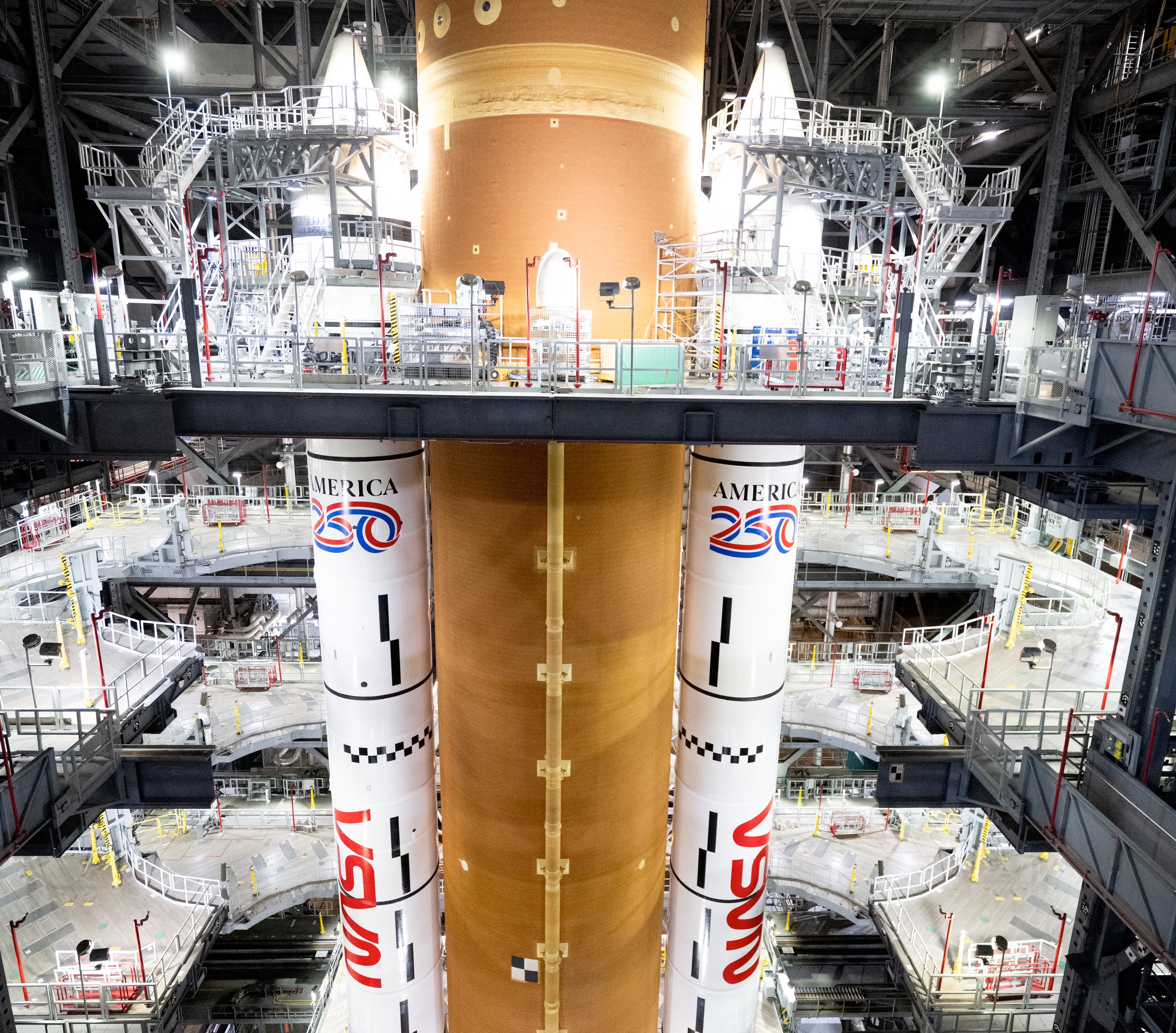

Jared Isaacman made something unmistakably clear during his confirmation hearing as NASA Administrator: time is not on America’s side. The United States is no longer alone in deep space ambition, and the race to return humans to the moon is strategic, geopolitical and urgent — not just symbolic. China has declared its intent with regards to the moon. China’s architecture is tightly integrated, centrally governed and relentlessly focused. The U.S., by contrast, has the world’s most capable space agency — but one constrained by fragmented governance, unclear accountability and an Artemis program that has yet to reconcile ambition with execution reality.
If the U.S. is serious about returning astronauts to the moon before China, NASA must act immediately and decisively. That starts not with new slogans or incremental adjustments, but with ground truth, an integrated plan and governance reform designed for speed and accountability.
Step one: immediately establish ground truth
NASA cannot manage what it does not clearly understand. The new administrator needs to direct an Independent Review Team to establish an unvarnished assessment of the current Artemis enterprise. This is not another routine review, but a rapid Program Status Assessment across the full architecture: Orion, Space Launch System, ground systems, Gateway, Human Landing System, lunar surface systems, nuclear power and propulsion, systems engineering and integration and moon-to-Mars plans. Jared Isaacman even mentioned in his Project Athena the use of “strike teams” and use of independent review in Directive #3.
The objective is simple: separate facts from assumptions. What is actually ready? What is not? Where are the true schedule drivers, cost risks and integration failures? Without this baseline, every subsequent decision is built on sand.
Step two: define the future state — not in pieces, but as a system
NASA’s challenge is not a lack of vision. The goals are clear:
- Return U.S. astronauts to the moon by 2028,
- Establish initial elements of a sustained lunar presence by 2030,
- Enable an achievable path to human Mars exploration by the late 2030s,
- Transition low Earth orbit to commercial platforms while maintaining continuous human presence.
What is missing is a single, integrated plan that aligns architecture, budget, workforce, infrastructure and industrial base to those outcomes. Within 60 days, the administrator should charter an Architecture Definition Team empowered to answer the hard questions NASA has too often deferred:
- Who does what — and when?
- What is essential for 2028, and what is not?
- How much does it actually cost, and where are the trade-offs?
- What alternatives exist if current elements cannot close the schedule?
Step three: reconcile the gaps and make real choices
Once NASA understands the delta between its current state and desired future state, it must confront reality. That reconciliation, achievable in 30 days, will surface unavoidable gaps in: budget and funding profiles, infrastructure readiness, industrial base capacity, workforce skills and availability, technology maturity and integration risk. Closing those gaps requires hard choices. Some priorities may need to be deferred. Others accelerated. Governance must reward truth-telling, not schedule theater.
Step four: fix governance for speed, not comfort
Even the best plan will fail if NASA’s governance remains misaligned with urgency. Within the first three months, the administrator must reset how the agency operates at the top:
- Clarify leadership roles and decision authority
- Streamline decision processes
- Increase transparency and accountability
- Align risk posture with national urgency
- Improve stakeholder communication — especially with Congress
The goal is a culture of focus and velocity, where decisions are made at the right level, quickly and backed by accountability. This is not merely about flags and footprints. The nation that leads on the moon will shape the rules, norms and economic future of cislunar space for decades. If the U. S. drifts, China will define that future instead.
Jared Isaacman’s confirmation hearing set the tone. Now leadership must set the pace. The path forward is clear — establish ground truth, build an integrated plan, reconcile the gaps, fix governance, execute relentlessly. The moon is the test and 2028 is closer than it looks.
Walt Faulconer is president of Faulconer Consulting Group providing strategic planning, project management, systems engineering and business development solutions for civil, commercial and defense clients.
SpaceNews is committed to publishing our community’s diverse perspectives. Whether you’re an academic, executive, engineer or even just a concerned citizen of the cosmos, send your arguments and viewpoints to opinion (at) spacenews.com to be considered for publication online or in our next magazine. If you have something to submit, read some of our recent opinion articles and our submission guidelines to get a sense of what we’re looking for. The perspectives shared in these opinion articles are solely those of the authors and do not necessarily represent their employers or professional affiliations.










Related Posts



Stay Informed With the Latest & Most Important News
Previous Post
Next Post




Advertisement
-
 01Two Black Holes Observed Circling Each Other for the First Time
 -
 02From Polymerization-Enabled Folding and Assembly to Chemical Evolution: Key Processes for Emergence of Functional Polymers in the Origin of Life
 -
 03Astronomy 101: From the Sun and Moon to Wormholes and Warp Drive, Key Theories, Discoveries, and Facts about the Universe (The Adams 101 Series)
 -
 04True Anomaly hires former York Space executive as chief operating officer
 -
 05Φsat-2 begins science phase for AI Earth images
 -
 06Hurricane forecasters are losing 3 key satellites ahead of peak storm season − a meteorologist explains why it matters
 -
 07Binary star systems are complex astronomical objects − a new AI approach could pin down their properties quickly