
Now Reading: Free warnings, better catalogs: the real fix for space safety
-
01
Free warnings, better catalogs: the real fix for space safety



A one-line change in the Dec. 18, 2025 Executive Order, Ensuring American Space Superiority, reopened a debate: should the United States charge satellite operators for basic space situational awareness (SSA) and civil space traffic coordination (STC) services? The order revised SPD-3 by removing the expectation that these services be provided “free of direct user fees,” and instead described them as available “for commercial and other relevant use.”
We are arguing about the wrong thing. The decisive question is not who pays. It is whether the civil system measurably improves safety by helping operators see and characterize the hazards that drive mission risk.
On that standard, paywalls for basic warnings are the wrong instrument. The bigger problem is that today’s catalog is still incomplete in ways that matter for safety, including smaller and intermittently observed hazardous objects in key regimes. Operators cannot maneuver against what is not credibly characterized, and better coordination workflows do not reduce risk if the hazard set is incomplete.
Free baseline wins
For most operators, SSA and STC are safety functions, not mission outputs. When a credible baseline is available at no charge, users tend to accept “good enough.” This is not conjecture; it’s how rational commercial, civil, academic, and government programs budget, and it is why a free baseline becomes the default unless a paid alternative is clearly superior at reducing risk.
Europe is already proving the point. EU Space Surveillance and Tracking (SST) provides collision avoidance and related services free of charge to registered users and reports that more than 300 organizations receive SST services. EU SST has used U.S. Defense Department catalogs and conjunction data messages as external inputs in its screening workflows, but that is rapidly changing as Europe invests heavily in its own sensors and services. In a multi-system world, the differentiator will be hazard coverage and decision-grade confidence, not branding or pricing.
So if the U.S. system becomes fee-based for baseline safety while an increasingly credible alternative remains free, many operators, especially smaller and emerging ones, will choose the free option If TraCSS is not demonstrably better at characterizing real hazards, it will lose adoption even if it is more advanced on paper.
That outcome would weaken U.S. influence over safety norms, reduce adoption of U.S. civil services and fragment operational decision-making across multiple systems when coordination matters most.
An Executive Order cannot, by itself, authorize user fees for what is effectively a public safety baseline. User-fee doctrine, reflected in National Cable Television, limits fees to specific benefits for identifiable recipients, not broad cost recovery for shared services. After Loper Bright overruled Chevron, courts will test statutory authority more strictly, making fee regimes built on ambiguous text more vulnerable. If Congress wants operator cost-sharing, it should authorize it explicitly and structure it as a financing mechanism for TraCSS, not a paywall on collision warnings.
The hardest constraints are stable funding and clear outcomes, not orbital mechanics
I have worked on these issues with satellite operators through the Space Data Association for more than a decade. The lesson is consistent: Many technical capabilities exist, and U.S. industry is exceptionally strong in sensors, analytics and data fusion. The constraint is not a lack of algorithms. It is the absence of stable funding and an outcome-based definition of what “good” looks like for civil space safety.
If Congress and the Administration want a “world-class” civil SSA and STC capability, the outcome should be explicit: TraCSS must be a coordination backbone plus an augmented hazard catalog that measurably improves detection, characterization and decision-grade warnings, not merely today’s catalog with marginal upgrades.
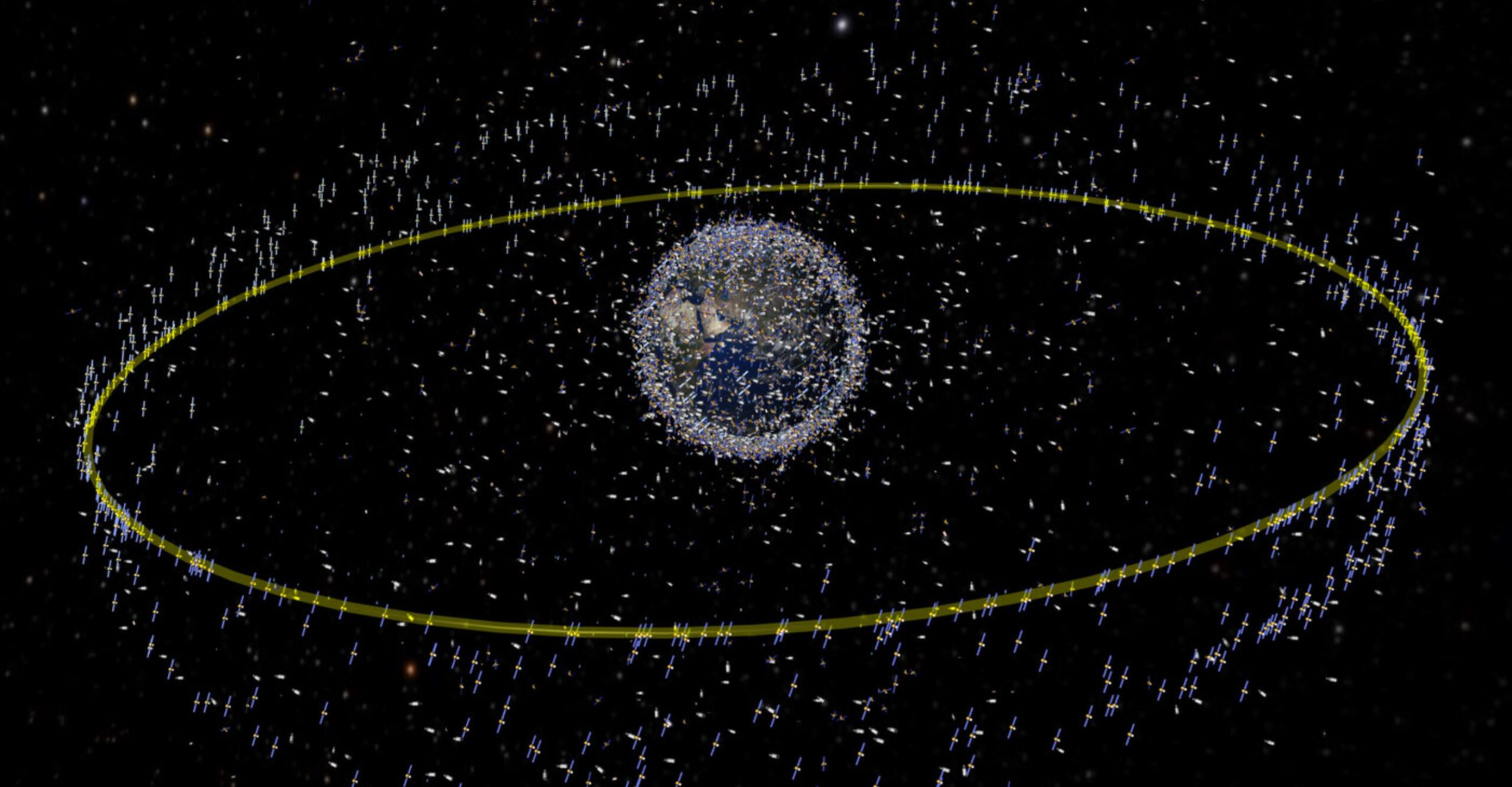
Consider the hazard environment. Public European estimates count more than 1 million pieces of debris larger than 1 centimeter. Those objects are mission risk. Credibility will hinge on whether TraCSS improves detection and characterization of hazards that routine tracking does not fully cover, including uncertainty reduction that changes maneuver decisions, while delivering timely decision support that operators trust.
Demand is scaling quickly even for the smaller tracked debris population. The U.S. DoW CDM production increased from roughly 200,000 per day in 2020 to 600,000 per day in Aug. 2023, and reached 1.31 million in a 24-hour period on Jan. 7, 2026. Across 2020–Jan 2026, that is an approximate 6.6-fold increase, roughly doubling every 2.2 years.
The answer is not to charge more. It is to fund TraCSS to scale while actually reducing risk, because higher message volume is not the same as higher safety if the hazard picture remains incomplete.
Multiple SSA systems are inevitable
The global environment is moving toward multiple sovereign and semi-sovereign SSA and STC capabilities. Initiatives at the United Nations suggest strong emerging interest, development and investment from additional spacefaring nations in the Middle East and Asia. The U.S. should assume plural catalogs and plural coordinators, then lead by setting interoperability and performance standards that make those systems converge on shared safety outcomes.
In that world, trying to force market behavior by restricting or pricing access to baseline safety information is counterproductive. The U.S. can remain the standard-setter by providing a reliable baseline, procuring and integrating the best commercial capabilities and defining standards that make data, interfaces and operational coordination interoperable across systems.
What Congress and the administration should do now
Congress should fund TraCSS against an explicit hazard coverage objective: measurable improvements in detection, characterization and uncertainty for the objects that create operational collision risk. If the goal is a safer orbital environment and durable U.S. leadership, the immediate agenda should be:
- Define the outcome: Close the hazard gap and publish metrics for catalog completeness and uncertainty.
- Fund TraCSS on multi-year appropriations tied to those metrics.
- Procure an augmented catalog using U.S. commercial sensors and analytics, with independent validation.
- Keep baseline warnings free at the point of use.
- Lead interoperability standards so multiple catalogs converge on shared safety outcomes.
In orbit, confusion and fragmentation are enduring operational risks. The U.S. should not trade adoption and leadership for a funding experiment that other sovereign systems will undercut with free alternatives. Keep basic safety free and fund public capability like the critical infrastructure it is.
Andrew D’Uva is founder and principal advisor at Providence Access Company, an attorney and senior policy advisor to the Space Data Association (SDA), a global nonprofit space traffic coordination organization, with more than 30 years in the space community.
SpaceNews is committed to publishing our community’s diverse perspectives. Whether you’re an academic, executive, engineer or even just a concerned citizen of the cosmos, send your arguments and viewpoints to opinion (at) spacenews.com to be considered for publication online or in our next magazine. If you have something to submit, read some of our recent opinion articles and our submission guidelines to get a sense of what we’re looking for. The perspectives shared in these opinion articles are solely those of the authors and do not necessarily represent their employers or professional affiliations.










Related Posts
Stay Informed With the Latest & Most Important News
Previous Post
Next Post

Advertisement
-
 01Two Black Holes Observed Circling Each Other for the First Time
 -
 02From Polymerization-Enabled Folding and Assembly to Chemical Evolution: Key Processes for Emergence of Functional Polymers in the Origin of Life
 -
 03Astronomy 101: From the Sun and Moon to Wormholes and Warp Drive, Key Theories, Discoveries, and Facts about the Universe (The Adams 101 Series)
 -
 04True Anomaly hires former York Space executive as chief operating officer
 -
 05Φsat-2 begins science phase for AI Earth images
 -
 06Hurricane forecasters are losing 3 key satellites ahead of peak storm season − a meteorologist explains why it matters
 -
 07Binary star systems are complex astronomical objects − a new AI approach could pin down their properties quickly