
Now Reading: European Space Agency’s Arctic Weather Satellite Completes Mission Boosting New Polar Satellite Network
-
01
European Space Agency’s Arctic Weather Satellite Completes Mission Boosting New Polar Satellite Network

European Space Agency’s Arctic Weather Satellite Completes Mission Boosting New Polar Satellite Network

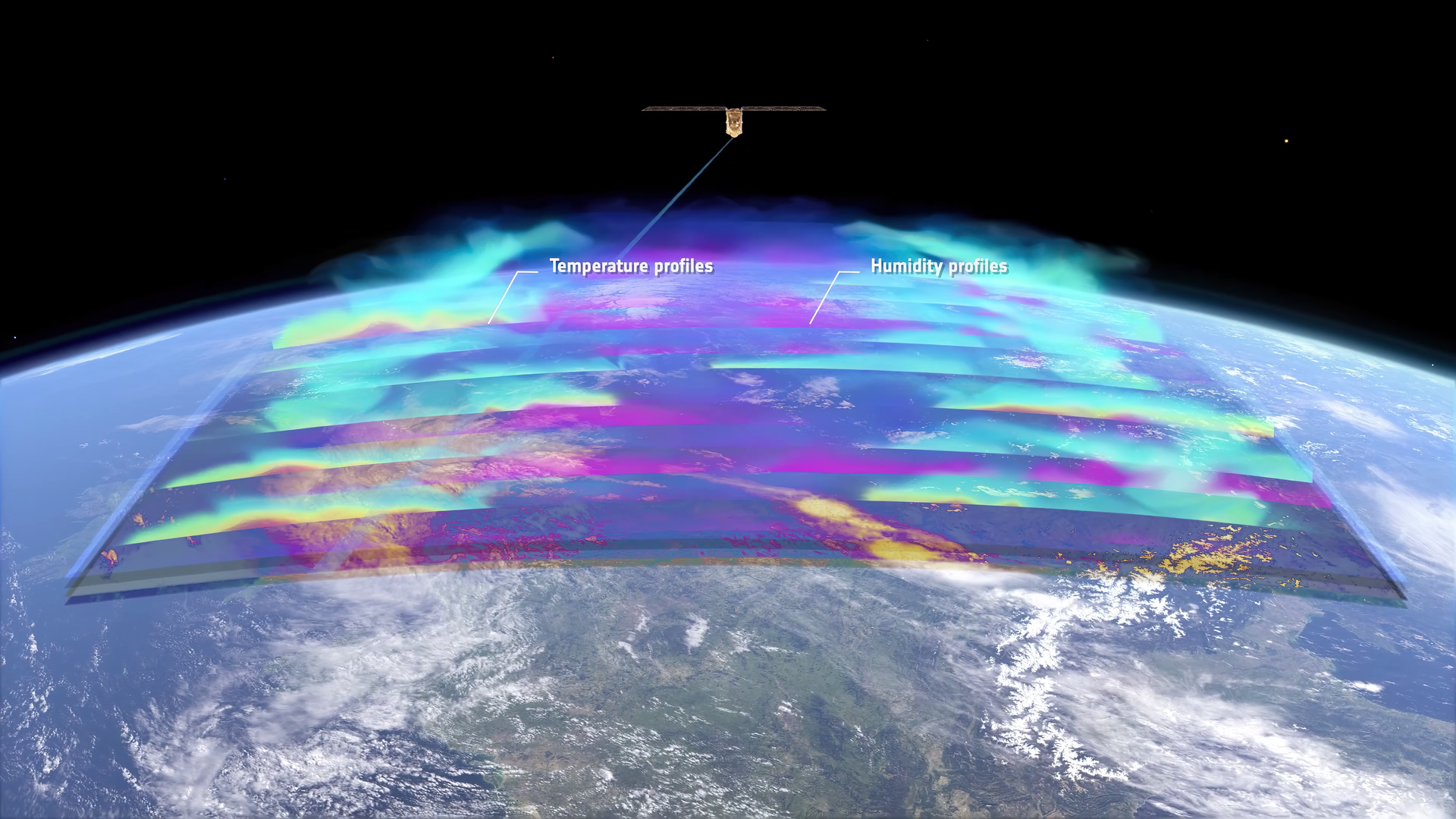

The European Space Agency’s Arctic Weather Satellite has successfully completed its primary mission, marking a significant step toward establishing a new network of polar-orbiting satellites known as EPS-Sterna. Launched in August 2024, this prototype satellite was developed in just three years and within a limited budget, demonstrating the potential of a New Space approach to create small Earth observation satellites.
Designed to support very short-term weather forecasts, the Arctic Weather Satellite addresses the growing need for timely and detailed data, especially as climate change exacerbates weather variability in the Arctic. The satellite’s capability to measure atmospheric water vapor concentrations is critical, as these can change dramatically and significantly impact forecast accuracy. Experts note that the extensive coverage necessary for effective monitoring cannot be achieved with a single satellite alone, emphasizing the importance of a dedicated constellation.
Equipped with an advanced cross-track scanning microwave radiometer, the satellite provides high-resolution measurements of both humidity and temperature in the atmosphere. The European Centre for Medium-Range Weather Forecasts (ECMWF) has recognized the quality of the data produced, incorporating it into operational weather forecasts. This data, combined with various other measurements, aids in generating precise representations of current atmospheric conditions, forming the basis for subsequent weather predictions.
The performance of the Arctic Weather Satellite has garnered acclaim, which played a pivotal role in the decision by Eumetsat to proceed with the EPS-Sterna project. Set to launch its first satellites in 2029, EPS-Sterna will consist of six operational satellites, which will be supplemented by two spares, ensuring a total of 20 satellites will be constructed by the end of the mission. The project aims to maintain and enhance global observations, with data expected to be available within approximately an hour, and a revisit time of less than three hours for the same area.
Ville Kangas, ESA’s project manager for the Arctic Weather Satellite, expressed pride in the mission’s success, highlighting the innovative solutions developed under tight constraints. The new constellation is expected to replace older systems, significantly improving the frequency of observations, thereby enhancing the monitoring of rapidly changing weather patterns. This upgrade will be particularly beneficial for regions such as the Mediterranean and the Arctic, which face increasing environmental challenges.
As preparations for EPS-Sterna continue, ESA will oversee the satellite procurement process, following a collaborative model used for other major European meteorological missions. A formal agreement between ESA and Eumetsat is anticipated soon, solidifying the partnership aimed at advancing global weather observation capabilities.










Related Posts



Stay Informed With the Latest & Most Important News
Previous Post
Next Post




Advertisement
-
 01Two Black Holes Observed Circling Each Other for the First Time
 -
 02From Polymerization-Enabled Folding and Assembly to Chemical Evolution: Key Processes for Emergence of Functional Polymers in the Origin of Life
 -
 03Astronomy 101: From the Sun and Moon to Wormholes and Warp Drive, Key Theories, Discoveries, and Facts about the Universe (The Adams 101 Series)
 -
 04True Anomaly hires former York Space executive as chief operating officer
 -
 05Φsat-2 begins science phase for AI Earth images
 -
 06Hurricane forecasters are losing 3 key satellites ahead of peak storm season − a meteorologist explains why it matters
 -
 07Binary star systems are complex astronomical objects − a new AI approach could pin down their properties quickly