
Now Reading: House appropriator sees ‘room for improvement’ in NASA funding for 2027
-
01
House appropriator sees ‘room for improvement’ in NASA funding for 2027



WASHINGTON — With the fiscal year 2026 appropriations process effectively complete, a key House appropriator says the next spending bill for NASA should build on that outcome.
A minibus appropriations package that included the Commerce, Justice and Science (CJS) spending bill passed Congress earlier this month, providing $24.438 billion for NASA in fiscal year 2026. The measure largely rejected a proposed cut of nearly 25% for the agency in the White House budget request released last May.
“It felt kind of gloomy for a few months,” acknowledged Rep. Grace Meng, D-N.Y., ranking member of the CJS appropriations subcommittee, during a Jan. 22 fireside chat on Capitol Hill organized by the Progressive Policy Institute.
“This is a really good example of how, if we are persistent and we talk about the merit, we can make a difference,” she said of the final bill.
Meng highlighted the restoration of science funding, from $3.9 billion in the administration’s request to $7.25 billion in the enacted bill, just below the fiscal year 2025 level of $7.33 billion. The legislation also includes language limiting NASA’s ability to transfer funds between missions.
“Everyone doesn’t necessarily have the same priority when we’re taking a look at NASA and CJS funding, and this helps us make sure they actually spend the money where Congress, legally and in a bipartisan way, intended it to be spent,” she said.
She also pointed to the restoration of funding for NASA’s STEM Engagement, or education, programs, which the White House proposed eliminating, as well as support for the agency’s exploration program in both the minibus and a budget reconciliation bill enacted last July.
“I’m very happy we kept the Artemis program on track,” she said. “If NASA can’t get people back to the moon, it’s not because we didn’t allocate the money.”
While work on the fiscal year 2026 spending bill has concluded, the space community is already looking ahead to fiscal year 2027. Federal law requires the White House to release its budget proposal on the first Monday in February, but that deadline is often missed, and industry officials do not expect a proposal until March.
Regardless of what the administration proposes, Meng said she wants NASA funding to remain stable or grow in 2027.
“This package was obviously better than we originally anticipated, but that doesn’t mean there isn’t room for improvement,” she said of the fiscal year 2026 minibus. “We want to, at the very least, hold to a minimum what we were able to collectively accomplish for this fiscal year.”
One priority she cited for the 2027 bill is NASA’s plan to land humans on the moon on the Artemis 3 mission, following a White House executive order issued in December that formally set a 2028 deadline for the landing.
Another is NASA’s plan to deorbit the International Space Station at the end of the decade and transition to one or more commercial space stations. “These five years will, especially in the NASA world, go by in a flash,” she said.
Meng also said she wants something the subcommittee did not get last year: a hearing with the NASA administrator. Unlike most previous years, the CJS subcommittee did not hold a hearing on NASA’s fiscal year 2026 budget request.
“I would love to have a hearing on NASA,” she said. “These are opportunities for members and the public, on both sides of the aisle, to hear about the administrator’s plans, and to hear how we can collectively work together on this budget, but also improve on what NASA already does.”
She added that she is “cautiously optimistic” about NASA Administrator Jared Isaacman and his plans for the agency, while noting concerns about the impact of workforce reductions over the past year. Those included buyout programs that led to the departure of about 20% of NASA’s civil servant workforce.
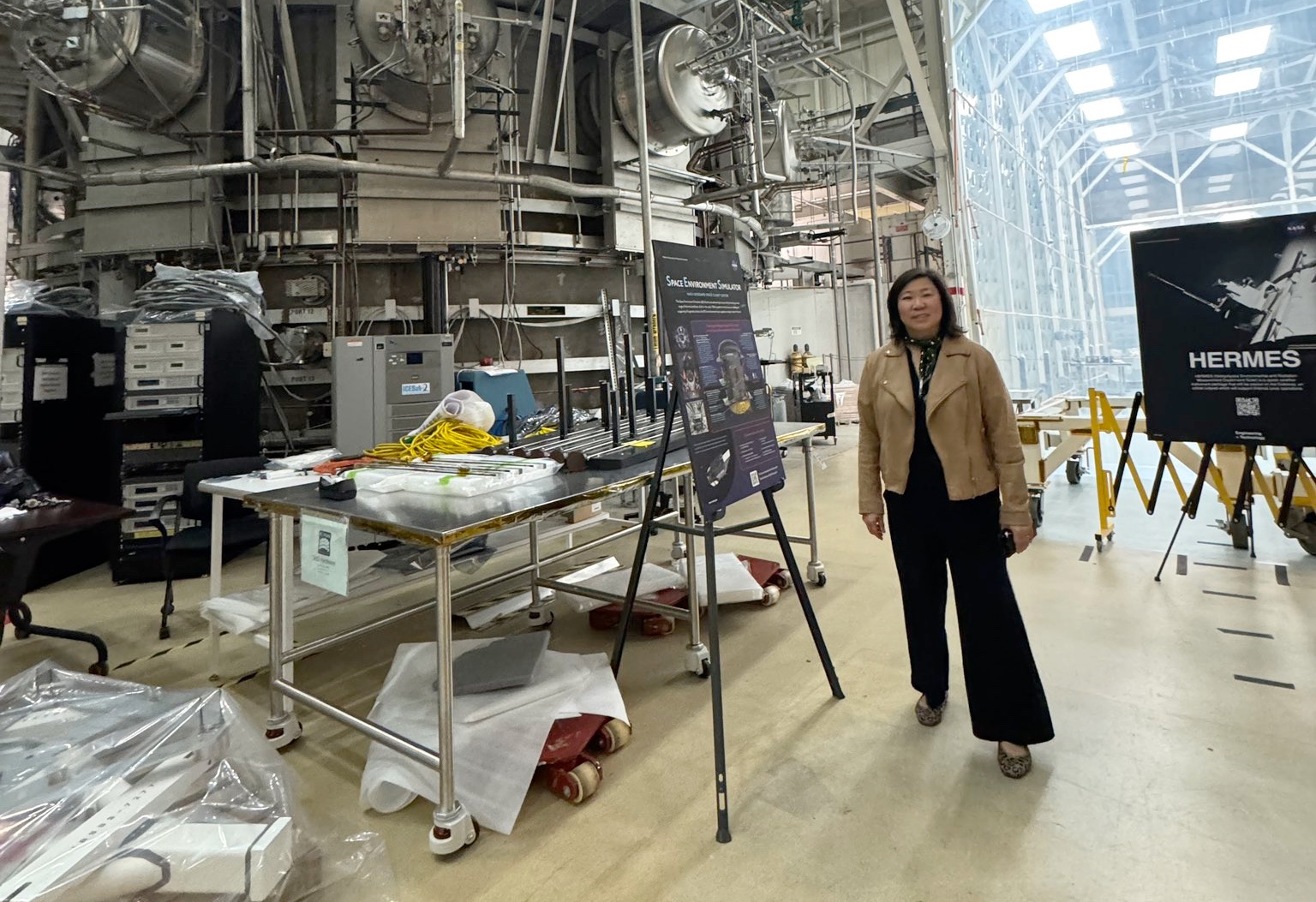
Meng said those effects were evident during a recent visit to NASA’s Goddard Space Flight Center with Reps. Glenn Ivey, D-Md., and Zoe Lofgren, D-Calif.
“We saw the direct impact of the more than 1,000 employees who are no longer there — not just their work, but the empty chairs and the morale of many of the employees,” she said.
“We have a lot of makeup work to do,” Meng added, “but we’ll be optimistic, and hopefully this budget helps restore them to where they need to be.”










Related Posts
Stay Informed With the Latest & Most Important News
Previous Post
Next Post


Advertisement
-
 01Two Black Holes Observed Circling Each Other for the First Time
 -
 02From Polymerization-Enabled Folding and Assembly to Chemical Evolution: Key Processes for Emergence of Functional Polymers in the Origin of Life
 -
 03Astronomy 101: From the Sun and Moon to Wormholes and Warp Drive, Key Theories, Discoveries, and Facts about the Universe (The Adams 101 Series)
 -
 04True Anomaly hires former York Space executive as chief operating officer
 -
 05Φsat-2 begins science phase for AI Earth images
 -
 06Hurricane forecasters are losing 3 key satellites ahead of peak storm season − a meteorologist explains why it matters
 -
 07Binary star systems are complex astronomical objects − a new AI approach could pin down their properties quickly