
Now Reading: Origins Of Life: Chemistry And Evolution
-
01
Origins Of Life: Chemistry And Evolution


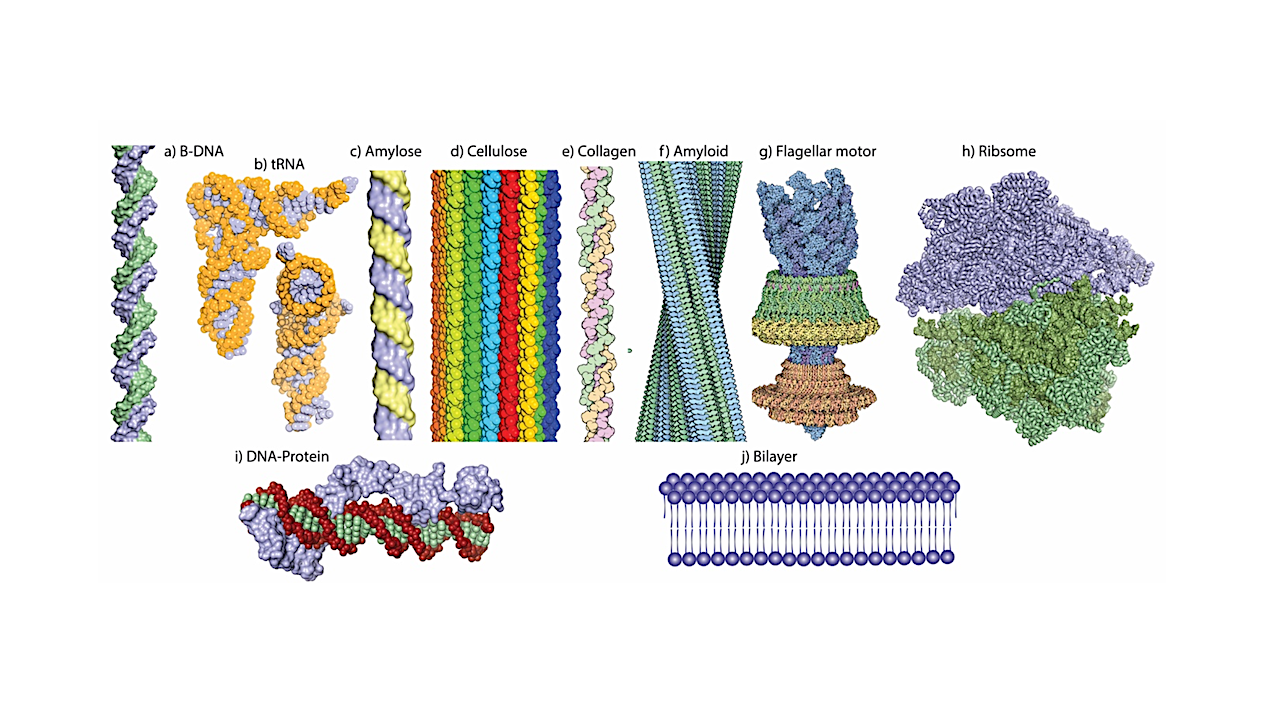
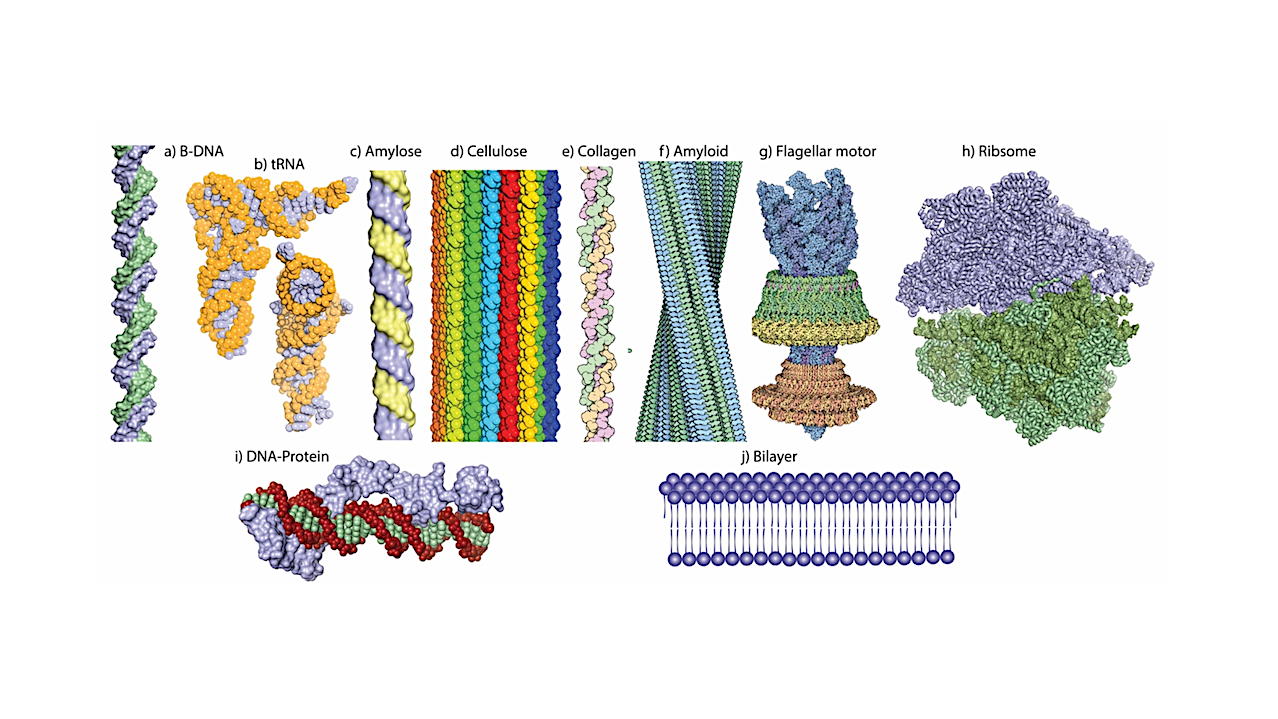
Unity of biopolymer biosynthesis, assembly and recalcitrance is predicted by chemical evolution. Each biopolymer is synthesized by condensation-dehydration chemistry, has sophisticated proficiency in folding and assembly, and is resistant to hydrolysis when folded and/or assembled (i.e., is recalcitrant). a) DNA, a double-helical polydeoxyribonucleotide. b) tRNA, a complex polyribonucleotide stabilized in part by double helices and in part by more complex interactions. c) Amylose A, a glycan in an RH double-helix. d) Crystalline cellulose, a multistranded glycan assembly. e) Collagen, a triple-helical polypeptide. f) An amyloid fiber composed of a helical assembly of b-sheet polypeptide. g) A flagellar motor, which is a pseudo-symmetric assembly of five distinct polypeptide chains. h) The ribosome, a large non-symmetric co-assembly of around 50 polypeptide chains and over 4,500 deoxyribonucleotides. i) A DNA protein complex. j) A bilayer. Some of these images were produced by Dr. David S. Goodsell and the RCSB PDB. — chemrxiv.org
Direct chemical synthesis and chemical evolution are conceptually different models for the prebiotic origin of RNA and other biopolymers. These models generate distinct predictions and motivate different experimental approaches.
Here, we compare these two models. In the direct chemical synthesis model, the inherent chemical reactivities of prebiotic compounds on the ancient Earth led to RNA, which subsequently initiated Darwinian evolution. The direct synthesis model depends upon the prebiotic availability of sugars, nucleic acid bases, amino acids, and other chemical species.
In this model stepwise chemical reactions directed by inherent reactivities of small molecule feedstocks combine in serial and parallel reactions to produce RNA. The basis of selection is generally limited to inherent chemical reactivities in systems with low chemical heterogeneity.
In a fundamentally different and more recent model, it is assumed that RNA emerged along with other biopolymers during a prolonged period of chemical evolution occurring in complex ensembles of organic compounds under dynamic, continually shifting selective pressures. The evolutionary model presages a deep biological entanglement between various types of biomolecules.
If chemical evolution produced molecules such as RNA and protein and glycan, then humankind will gain advantage by understanding and redirecting these processes. It is not currently known whether direct chemical synthesis or chemical evolution or some combination of these processes provides a viable prebiotic path to RNA.
Origins of Life: Chemistry and Evolution, chemrxiv.org
Astrobiology,











Related Posts
Stay Informed With the Latest & Most Important News
Previous Post
Next Post



Advertisement
-
 01Two Black Holes Observed Circling Each Other for the First Time
 -
 02From Polymerization-Enabled Folding and Assembly to Chemical Evolution: Key Processes for Emergence of Functional Polymers in the Origin of Life
 -
 03Astronomy 101: From the Sun and Moon to Wormholes and Warp Drive, Key Theories, Discoveries, and Facts about the Universe (The Adams 101 Series)
 -
 04True Anomaly hires former York Space executive as chief operating officer
 -
 05Φsat-2 begins science phase for AI Earth images
 -
 06Hurricane forecasters are losing 3 key satellites ahead of peak storm season − a meteorologist explains why it matters
 -
 07Binary star systems are complex astronomical objects − a new AI approach could pin down their properties quickly