
Now Reading: China set for crewed lunar tests, record launches, moon mission and reusable rockets in 2026
-
01
China set for crewed lunar tests, record launches, moon mission and reusable rockets in 2026

China set for crewed lunar tests, record launches, moon mission and reusable rockets in 2026

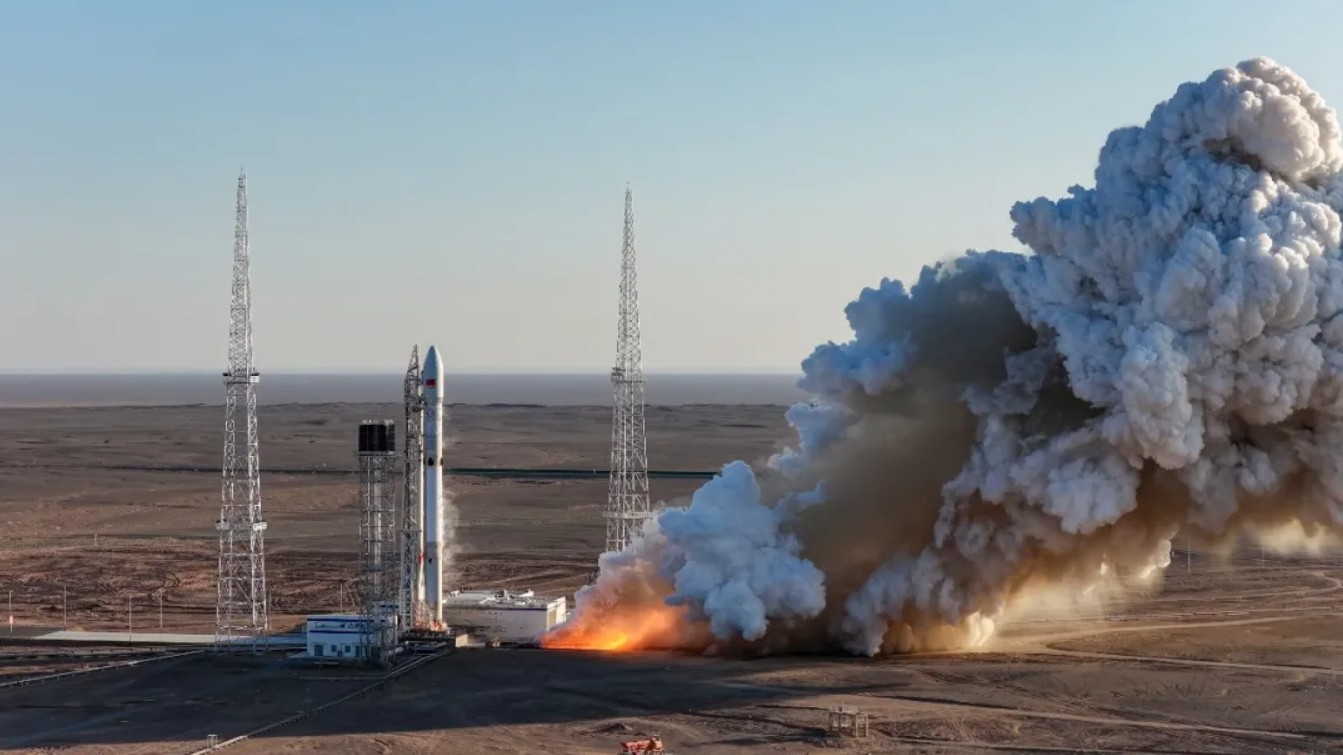

HELSINKI — China appears set to accelerate its launch rate this year while also conducting tests key to its crewed lunar ambitions and launching major missions.
The China Aerospace Science and Technology Corporation (CASC) has yet to release a clear outline of its plans and launch targets, as it had done in 2024 and previous years in a “blue book,” but indications are that launches this year will eclipse the recently-set national record of 92 launches in 2025, including 73 under CASC.
Much of the increase will come from demand from the national Guowang low Earth orbit communications megaconstellation and the Shanghai-backed, more commercially-focused Qianfan megaconstellation. There will also be major lunar missions, likely along with continued launches of the classified Yaogan series and experimental Shiyan and Shijian satellites series.
New, reusable rockets
China will also continue its push to acquire reusable launch capabilities, in particular to help boost cadence and construct the aforementioned megaconstellations, with even bigger satellite projects on the horizon. This will in part be facilitated by new state-owned and commercial rockets and an expansion of the Jiuquan and Hainan spaceports with commercial launch areas, and plans for more flights from the sea launch facilities near Haiyang, Shandong province.
Commercial reusable rocket launches will include a second flight of the Zhuque-3 along with debut launches of the potentially reusable Pallas-1 (Galactic Energy), Kinetica-2 (CAS Space), Tianlong-3 (Space Pioneer) and Nebula-1 (Deep Blue Aerospace) in early 2026. Galactic Energy also says it is already targeting the first launch of the larger Pallas-2 later in the year, while iSpace is working towards a first flight of its Hyperbola-3, while Orienspace also target the debut of the Gravity-2 within 2026. Launches of the Zhihang-1 from the newcomer Anhui Space Navigation Technology Co., Ltd, and the XZY-1 from SEpoch are also possibilities.
On the state side, there will be the first flight of the derivative, cargo-optimized Long March 10B in the first half of the year, while the debut flight is expected in the near future of the Long March 12B; a kerolox counterpart to the recently debuted methalox Long March 12A which made a reentry and recovery attempt in December.
Crewed moon program tests
Most immediately CASC is preparing for tests in the near future related to its Long March 10 rocket, two launches of which will be used to put Chinese astronauts on the moon. Open-source indicators suggestec that teams are preparing for what may be a low-altitude flight test of the Long March 10A, a single stick variant for low Earth orbit, or an in-flight escape test at maximum dynamic pressure of the Mengzhou crew spacecraft. CASC is targeting a test flight of the single-stick Long March 10 in 2026, along with a first flight of Mengzhou. Success could lead to a 2027 debut of the tri-core Long March 10.
In human spaceflight, along with the first flight of Mengzhou, there will be the launches of the Shenzhou-23 and Shenzhou-24 crewed missions to the Tiangong space station. The former spacecraft was recently delivered to the Jiuquan spaceport, with its development accelerated to fill a gap in emergency capabilities resulting from the Shenzhou-20 crisis, while the latter could include an astronaut from Pakistan who will stay aboard Tiangong for a few days. This would require a Shenzhou-23 crew member to remain in orbit for a year in total. Tianzhou-10 will also launch cargo to Tiangong in 2026.
Major missions
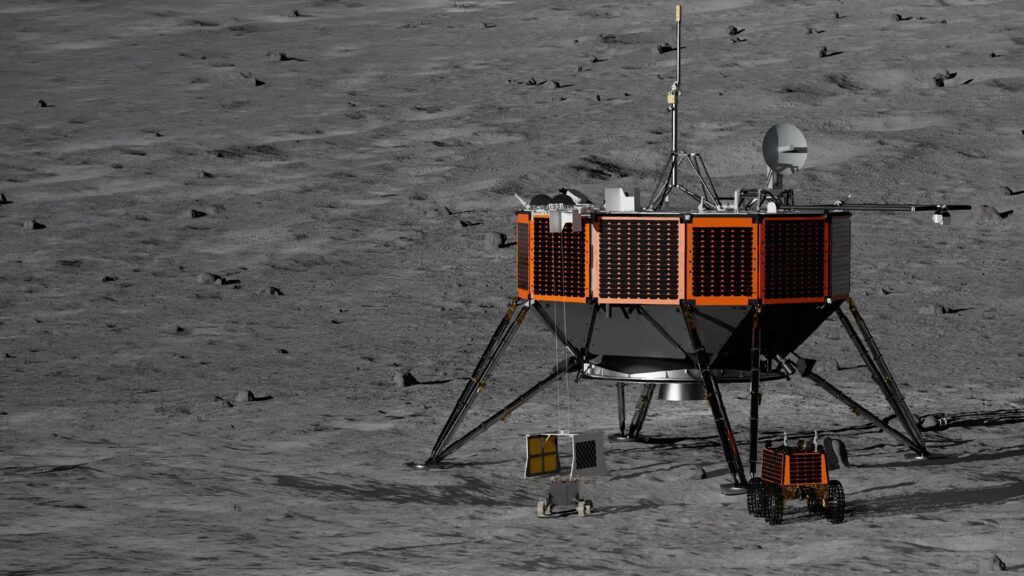
One of the biggest missions of the year will be the robotic Chang’e-7 mission to land at the lunar south pole, specifically Shackleton crater. Launch on a Long March 5 rocket from Wenchang is expected in the second half of the year. The mission will include a lander, a rover and a mini-flying probe. These will investigate the lunar south pole’s environment and resources with the support of the Queqiao-2 communications relay satellite.
The already-launched Tianwen-2 is expected to encounter the near Earth asteroid 469219 Kamoʻoalewa (2016 HO3) around July. It is expected to rendezvous with the small, rocky body around July 2026, spending seven months studying the near Earth object and collecting samples. The samples are expected to be returned to Earth in late 2027.
Other notable missions include the Solar wind-Magnetosphere-Ionosphere Link Explorer (SMILE) mission, a much-delayed joint mission of ESA and the Chinese Academy of Sciences (CAS), with the window for launch on a Vega-C rocket from French Guiana opening April 8.
Preparations for the launch of the Xuntian space telescope, a two-meter-aperture observatory that will co-orbit with Tiangong, are expected to be near completion late in 2026.
Policy developments, further surprises?
Given the opaque nature of China’s space plans to the outside world and its expanding capabilities and ambitions, surprises are also likely in store. Unexpected missions in recent years include the DRO-A/B lunar orbit test satellites, along with a Yaogan satellite launched into a highly retrograde orbit, and refueling tests in geostationary orbit. There may be progress on full-flow staged-combustion (FFSC) rocket engines on both the state and commercial side.
More concretely, China will, during annual political sessions in Beijing in March, approve its 15th Five-year Plan for the period 2026-2030, which will see the formal adaptation of new missions and targets. This will likely include crewed lunar ambitions and science and exploration missions, such as those outlined in a long-term roadmap, projects focusing on habitability and perhaps solar system boundary missions. There will likley also be strong support for commercial space.
Similarly, there will also be the release of a new space white paper later in the year or early 2027 which will outline China’s achievements over the past five years and the priorities for the five ahead. Overall, the paper will likely reflect China’s growth in capabilities, infrastructure and advancement in cislunar ambitions.










Related Posts

Stay Informed With the Latest & Most Important News
Previous Post
Next Post

Advertisement
-
 01Two Black Holes Observed Circling Each Other for the First Time
 -
 02From Polymerization-Enabled Folding and Assembly to Chemical Evolution: Key Processes for Emergence of Functional Polymers in the Origin of Life
 -
 03Astronomy 101: From the Sun and Moon to Wormholes and Warp Drive, Key Theories, Discoveries, and Facts about the Universe (The Adams 101 Series)
 -
 04True Anomaly hires former York Space executive as chief operating officer
 -
 05Φsat-2 begins science phase for AI Earth images
 -
 06Hurricane forecasters are losing 3 key satellites ahead of peak storm season − a meteorologist explains why it matters
 -
 07Binary star systems are complex astronomical objects − a new AI approach could pin down their properties quickly