
Now Reading: Carson VX 12×50 binocular review
-
01
Carson VX 12×50 binocular review


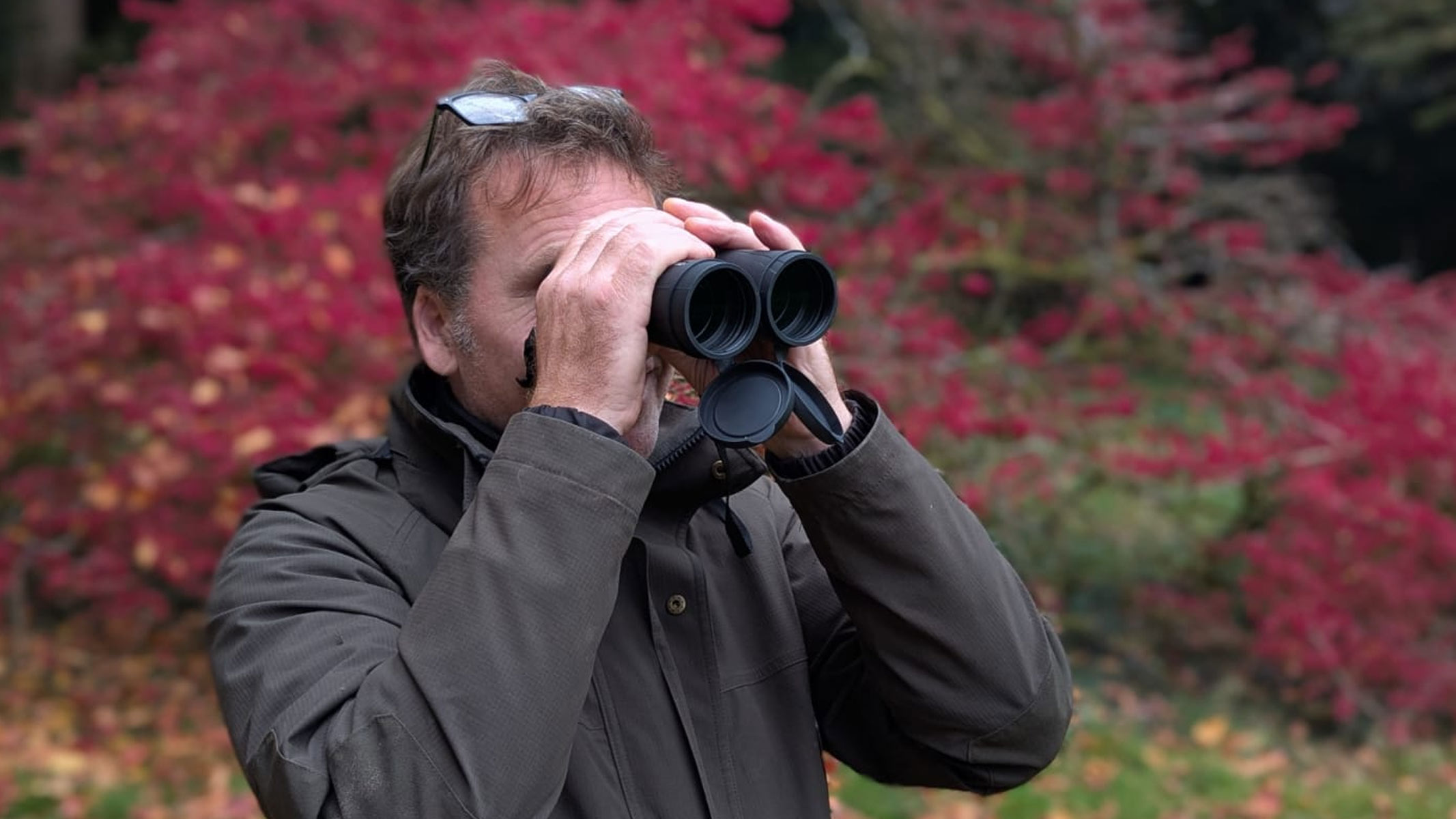
The Carson VX 12x50mm binocular is a budget-friendly entry into the world of higher-magnification binoculars, many of which feature in our best binoculars guide. With this power, you can use these binoculars across a range of fields, with improved detail and performance not readily available with lower-powered rivals.
The best binoculars for long-distance viewing tend to have 12x magnification, if not more. These binoculars feature 12x magnification and are capable of some decent astronomy. They are waterproof and nitrogen-purged to prevent fogging and protect against dust and dirt, which is very welcome. Furthermore, the glass is multicoated and phase-corrected, helping to reduce glare and reflections — ideal for sharp stargazing images. Not only this, but with 50mm objective lenses, there’s a reasonable field of view of 258 ft at 1,000 yards, also enabling good low-light performance.
Carson VX 12×50 binocular review
Carson VX 12×50 binocular: Design

- Solidly made
- Good quality shoulder bag
- Large 50mm objective lenses
The Carson VX 12×50 binoculars feel well-made and are reassuringly heavy to hold. They look chunky and straightforward, which gives an impression of quality, and they live up to this. Armoured with a textured rubber coating and a groove on the underside where the thumbs naturally rest, they provide good grip.
Durability is also good with these Carsons — I took them out to my test site on cloudy days in quite damp conditions, especially first thing in the morning, and they performed well with no fogging. This is due to them being waterproof and fogproof, making them able to withstand rough weather conditions.
The Carson VX 12×50 binoculars use a roof prism design that is commonplace nowadays. The prisms have BaK4 dielectric coatings with anti-reflective elements and are phase-corrected, which improves color and light transmission through the lens. However, while studying the moon, some chromatic aberration was present. Using a tripod mount is recommended for stargazing, as at full 12x magnification, there’s quite a bit of shake and blurriness in the received images. However, a tripod mount isn’t included in the basic package. There’s also a diopter adjustment ring that allows adjustment from -5 to 5 diopters, which helps to ensure sharp viewing.

Specifications
- Optics: Bak-4 dielectric-coated lens
- Design: Roof prism
- Magnification: 12x
- Objective lens diameter: 50mm
- Waterproof: Yes
- Fogproof: Yes
- Field of view: 258 ft. at 1,000 yards
- Eye relief: 0.63-in / 16mm
- Weight: 1.61 lbs / 730 g
- Dimensions: 6.5 x 5.3 x 2.3-in (165.1 x 134.62 x 58.42mm)
The accessories that come with these binoculars include a decent shoulder bag with the usual fabric strap. The straps are sufficiently thick, which means you can carry the binoculars safely in the bag even while hiking. The bag is made of nylon fabric and appears weatherproof. While the binoculars themselves are fogproof, the shoulder bag also helps to keep them safe from the elements. Furthermore, it’s padded on the inside, further increasing the protection in case of any bumps or knocks.
Lens covers are included for both the top and bottom lenses. However, the bottom objective lens covers are secured with a plastic band to the binoculars themselves. The top cover just sits over the caps without a tether, potentially making these easy to misplace.
Carson VX 12×50 binocular: Performance

- Good low-light performance at dawn and dusk
- Rugged and waterproof, enabling use in the rain
- Tricky to use at full magnification because of shaking
The inclusion of a 50mm objective lens allowed me to use the binoculars well into dusk and at dawn, when there was little available light. Whilst using the binoculars to observe the recent conjunction between the moon and Jupiter, I was able to discern the various craters and fissures of the moon’s surface with some clarity; the view of Jupiter was more of just identification rather than any detail, though. The Geminids meteor shower was visible through these Carsons as well, though with little detail; it wasn’t visible to the naked eye, making the use of the optic a pleasurable experience.
The evening of one of my test sessions was rainy, which I used to my advantage. Keeping the Carson out in this weather proved that the waterproofing has been well executed. I didn’t experience any fogging or clouding of the lenses, even in the heavy rain I experienced. The shoulder bag also proved helpful here, as the exterior is durable enough to withstand a heavy downpour, whilst the soft liner enabled me to slide the optic in and out with gloved hands.
Although using the binoculars for birdwatching was OK, I found the use of the tripod mount for stargazing important. The maximum 12x magnification is a useful feature as long as you can rest your hands on something solid, like a wall or fence; otherwise, the view of smaller celestial objects is affected.
The limited eye relief of 0.63-in (16mm) meant that using spectacles was limited. This amount of relief means that the field of view is dramatically reduced when using spectacles. More would have been a good addition. The eyecups are made from hard rubber and could be more comfortable, though the multi-stage twist-up mechanism is nicely judged.
The focus ring is large and falls easily to hand. It’s well weighted and feels of good quality, if not the smoothest, compared to the action of more expensive models. The feel of this part of a binocular is essential to the overall feel of quality of design, and I feel the Carson could be better here.
I was able to capture clear, crisp images, especially during the day, with these Carsons. I found them particularly good at focusing on moving objects, thanks to their wide 50mm objective lens, which allows for fast tracking of birds and moving objects at sporting events.
Carson VX 12×50 binocular: Functionality

- 12x magnification enabling close focus on distant subjects
- Wide field of view of 258ft at 1000 yds
- Solid waterproof construction with a good shoulder bag
There is plenty to like about the Carson VX 12×50 binoculars, such as the field of view, which is helpful as it lets you accurately track moving objects, like when birdwatching. The 50mm objective lenses also help here, as they let in a lot of light. The body of the Carson VX 12×50 binoculars is covered in a textured rubber material, with proper indents on the underside that help hold the Carsons steady whilst in use.
The inclusion of 12x magnification on the Carson means that stargazing is a possible use. They are at the limit of handheld focusing at that magnification, but there is a threaded port on the hinge for a tripod mount. I found this very fiddly to set up, as there’s very little room to access the small cap which covers the port. And, as stated before, the tripod mount is an optional extra and isn’t included in the basic package.
The lens and prisms are fully multicoated and also phase corrected, with the prisms being made from Bak4 glass. There’s good use of light, but I did notice purple fringing while observing the moon, indicating chromatic aberration. The image is also quite soft at maximum focus, but it is in line with a unit of this price.
I tested both the shoulder bag and the binoculars for waterproofing, since lots of my test days were very wet. Neither caused any problems, and the nitrogen purging stopped the lens fogging really well.
Overall, I liked the Carson VX 12×50 binoculars and felt they performed well across various situations for their price point.
Should you buy the Carson VX 12×50 binocular?
Buy it if:
✅ You want a tough, waterproof binocular that can handle even heavy rain: I was impressed by the waterproofing of these binoculars and the handy shoulder bag that provided extra protection from the rain.
✅ You intend to do basic stargazing: These binoculars offer sufficient night sky views for basic stargazing.
Don’t buy it if:
❌ You are after top-quality glass with little distortion: Paying a higher price will see you get less distortion, especially in low-light conditions.
❌ You want stable views while handheld: At 12x magnification, these binoculars may be a bit shaky when used handheld as they are not image-stabilized (IS).
The Carson VX 12×50 binoculars proved themselves in my tests, being a good pair of optics for lunar observation and looking at stars in the night sky. They are pleasant to use and have great views regardless of what you are looking at. I recommend them for beginners to the world of both astronomy and birdwatching, with a reasonable price point at $260.
If you are planning on an extended skywatching session, we would recommend using them with a tripod, as at 12x magnification, handheld shake can start to get in the way of detailed observations.
Waterproofing and fogproofing at an IPX6 rating make it a robust choice for those users who often find themselves in heavy rain or challenging weather conditions.
If the Carson VX 12×50 binoculars aren’t for you
If the Carson VX 12×50 binoculars aren’t for you, then we would recommend a few other models depending on what you want out of your binoculars. If you are serious about using binoculars for stargazing, then we would recommend the Celestron Nature DX 12×56 binoculars, which are heavier but have a larger objective lens at 56mm, which can let more light in when looking at dim night sky objects.
If you want the same level of magnification but are worried that you might not be able to hold them steady for observation, a pair with image stabilization (IS) might be worth the extra money. A pair like the Canon IS 12×36 III binoculars or the Fujifilm TechnoStabi TS-L 1640 binoculars is suitable for getting detail at higher magnifications and offers a much easier handheld experience while stargazing.
Related articles
If you don’t need that much magnification, the Celestron Cometron 7×50 binoculars offer a levelled-up stargazing experience for wide-field targets like constellations and the moon, whilst offering a huge amount of light in thanks to the same 50mm objective lenses.










Related Posts


Stay Informed With the Latest & Most Important News
Previous Post
Next Post

Advertisement
-
 01Two Black Holes Observed Circling Each Other for the First Time
 -
 02From Polymerization-Enabled Folding and Assembly to Chemical Evolution: Key Processes for Emergence of Functional Polymers in the Origin of Life
 -
 03Astronomy 101: From the Sun and Moon to Wormholes and Warp Drive, Key Theories, Discoveries, and Facts about the Universe (The Adams 101 Series)
 -
 04True Anomaly hires former York Space executive as chief operating officer
 -
 05Φsat-2 begins science phase for AI Earth images
 -
 06Hurricane forecasters are losing 3 key satellites ahead of peak storm season − a meteorologist explains why it matters
 -
 07Binary star systems are complex astronomical objects − a new AI approach could pin down their properties quickly