
Now Reading: Artemis II mission faces delays as critical wet dress rehearsal encounters multiple setbacks
-
01
Artemis II mission faces delays as critical wet dress rehearsal encounters multiple setbacks

Artemis II mission faces delays as critical wet dress rehearsal encounters multiple setbacks

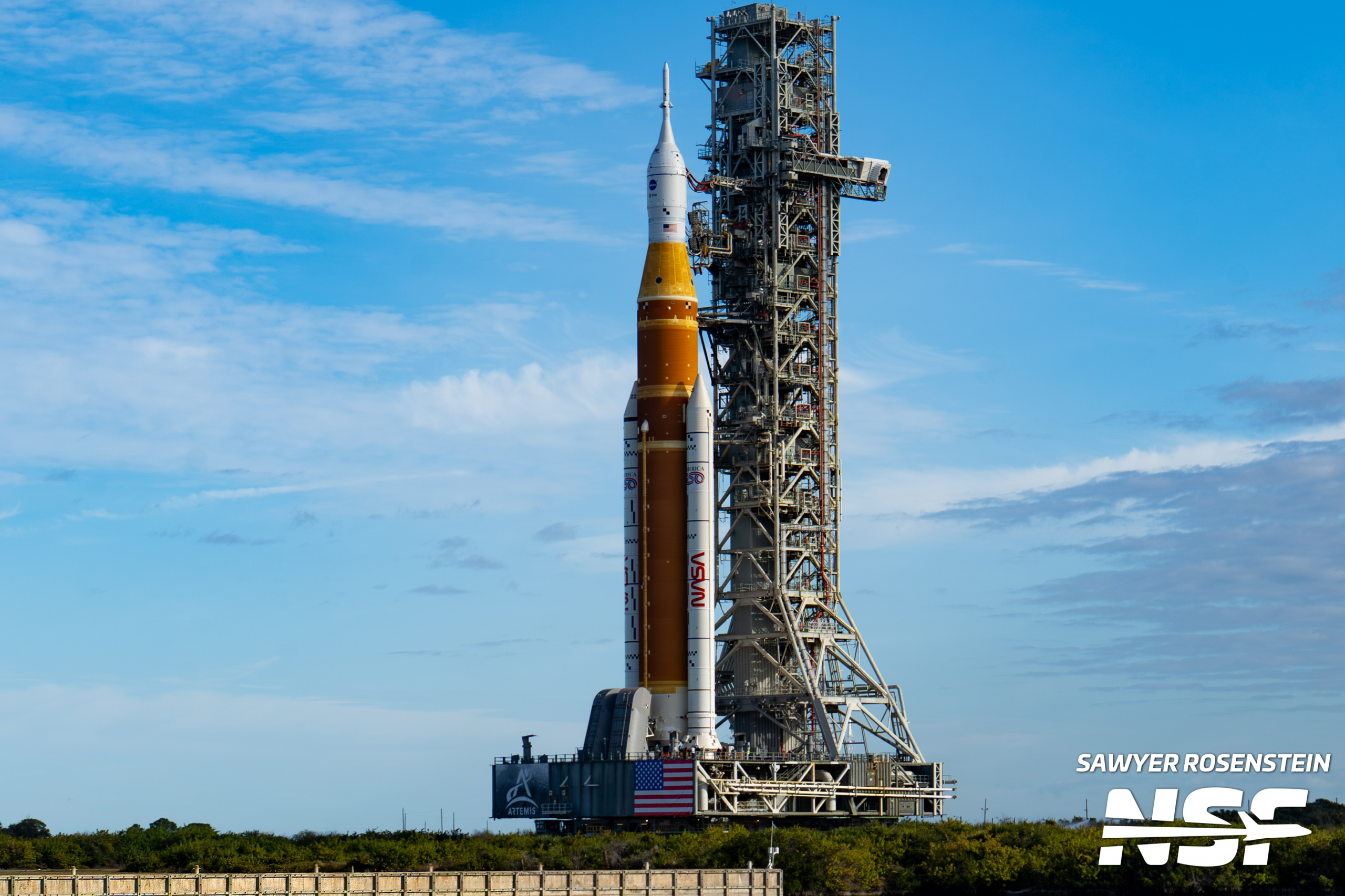

The Artemis II mission is currently facing delays in completing its Wet Dress Rehearsal (WDR) after experiencing multiple setbacks during the terminal countdown on Monday. An initial hydrogen leak emerged early in the process, followed by an extended hold caused by additional tasks required by the closeout team. With the launch window narrowing, the Space Launch System (SLS) entered the terminal count at T-10 minutes, only to hold at T-5:15 due to another hydrogen leak.
NASA is expected to provide updates on the mission’s status on Tuesday. This WDR, necessary for preparing the Artemis II spacecraft for launch, was delayed by 48 hours due to inclement weather conditions at the Kennedy Space Center (KSC), which included freezing temperatures and high winds. The rehearsal serves as an important full-scale countdown and propellant loading exercise. While a specific launch time is set, there is a flexible four-hour window to complete the test. During the WDR, the crew will not board the Orion spacecraft Integrity, nor will the SLS ignite its main engines or solid rocket boosters.
The results of the WDR will be critical for NASA as it gauges readiness for a launch attempt, or potentially rolling the Artemis II stack back to the Vehicle Assembly Building (VAB) for necessary repairs. The current launch window includes only three days in February—February 8, 10, and 11.
The countdown began with a “call to stations” at L-49 hours and 15 minutes prior to the scheduled test T0, marking the start of operations at the Launch Control Center (LCC) near the VAB. The countdown clock officially commenced at L-48 hours and 40 minutes, during which the team initiated several key activities at once, such as filling the sound suppression system’s water tank and preparing the Artemis II stack for propellant loading.
The SLS rocket’s core stage, derived from Space Shuttle technology, is outfitted with four RS-25 engines, which use liquid hydrogen and liquid oxygen for propulsion. For this mission, specific engines are being employed with each having a notable history of previous flights. Preliminary preparations for loading over 733,000 gallons of propellant into the core stage commenced at L-48 hours and continued until L-39 hours, while water was added to the Ignition Overpressure and Sound Suppression System (IOP/SS) tank.
During the WDR, safety measures are paramount, as excessive sound and vibrations from the engine ignition pose risks of damage to the rocket and ground devices. Controllers are tasked with carefully monitoring hydrogen leaks, particularly after challenges faced during the Artemis I effort.
The following phases of the countdown include several battery charges and necessary steps to get the systems ready for propellant loading. Importantly, a built-in hold will be observed before the tanking process, which is contingent on meeting specific weather criteria. This includes temperature thresholds and low lightning risk in the vicinity of the launch site.
If conditions permit, the fueling process would see the core stage coolant and propellant transfer initiated about nine hours before liftoff, with both the core stage and upper stage undergoing preparations for tanking. The operation represents the culmination of extensive tests needed to ensure safety and success for the upcoming launch.
As preparations continue, mission controllers will monitor the countdown closely. After the necessary rehearsals and tests are complete, NASA will analyze data from the WDR to determine the future trajectory of the Artemis II mission.










Related Posts
Stay Informed With the Latest & Most Important News


Advertisement
-
 01Two Black Holes Observed Circling Each Other for the First Time
 -
 02From Polymerization-Enabled Folding and Assembly to Chemical Evolution: Key Processes for Emergence of Functional Polymers in the Origin of Life
 -
 03Astronomy 101: From the Sun and Moon to Wormholes and Warp Drive, Key Theories, Discoveries, and Facts about the Universe (The Adams 101 Series)
 -
 04True Anomaly hires former York Space executive as chief operating officer
 -
 05Φsat-2 begins science phase for AI Earth images
 -
 06Hurricane forecasters are losing 3 key satellites ahead of peak storm season − a meteorologist explains why it matters
 -
 07Binary star systems are complex astronomical objects − a new AI approach could pin down their properties quickly