
Now Reading: Spring fireball season is underway! Watch for them
-
01
Spring fireball season is underway! Watch for them



EarthSky’s 2026 lunar calendar shows the moon phase for every day of the year. Get yours today!
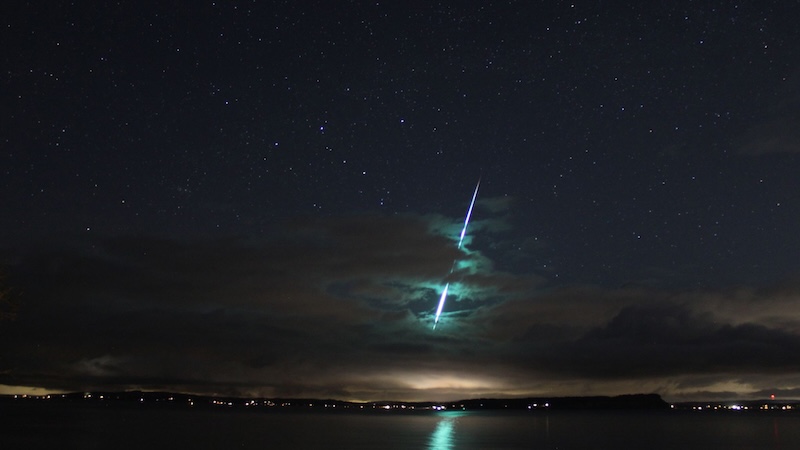
Few meteors – but fireballs!
We’re now in what some astronomers call the meteor drought time of year. The next major meteor shower won’t come until April, with the Lyrids. But – if you watch, and especially if you’re under dark skies – you might spot a fireball, or an especially bright meteor, from now through April. These are the legendary spring fireballs. In his Meteor Activity Outlook for early February, Robert Lunsford of the American Meteor Society (AMS) wrote:
… a bright fireball may light up the sky. February is the start of the evening fireball season, when an abundance of fireballs seems to occur, as seen from the Northern Hemisphere. This lasts well into April. Sporadic rates are near maximum for those viewing from the Southern Hemisphere.
NASA meteor expert William Cooke got us all hooked on spring fireballs, beginning in 2011, when he reported:
Spring is fireball season. For reasons we don’t fully understand, the rate of bright meteors climbs during the weeks around the vernal equinox.
Fireballs in past years
NASA said in 2011 that the appearance rate of fireballs can increase by 10-30 percent in the weeks around the March equinox. And indeed 2016 was a good year for spring fireballs, according to a March 9, 2016, article by Vincent Perlerin of the American Meteor Society. Perlerin reported on six major fireball events over the U.S. between March 2 and March 8, 2016.
In 2017, Robert Lunsford of the AMS told EarthSky that the time to watch for spring fireballs comes a month or so before the vernal equinox (around March 20-21 each year). He wrote:
[Spring fireballs] can be easily picked out from the list of events in our fireball table. I believe that there is no doubting the existence of these fireballs. They are the result of the antapex radiant being located at its highest point of the year in the the evening sky. I’m certain the same thing occurs in the Southern Hemisphere during the months of August through October. Unfortunately there are far fewer people to report them from down there. The overall results of the AMS fireball totals since 2005 display a spike in February, a month normally known for low meteor rates.
Why fireballs in spring?
So spring fireballs – from February to April in the Northern Hemisphere and perhaps also from August to October in the Southern Hemisphere – may be caused by the fact that the antapex radiant lies highest above the horizon this time of year during the evening hours at these times. What is the antapex radiant? You might have heard the term apex of the sun’s way to describe the direction our sun is moving through space, with respect to the stars.
Our sun and family of planets travel more or less toward the star Vega in the constellation Lyra; and that is the apex of the sun’s way. The antapex is the direction in space opposite the apex of the sun’s way; it’s the direction opposite our sun’s motion through space.

A NASA website suggested:
The reason [for spring fireballs] is still unknown, but one hypothesis is that more space debris litters this section of Earth’s orbit.
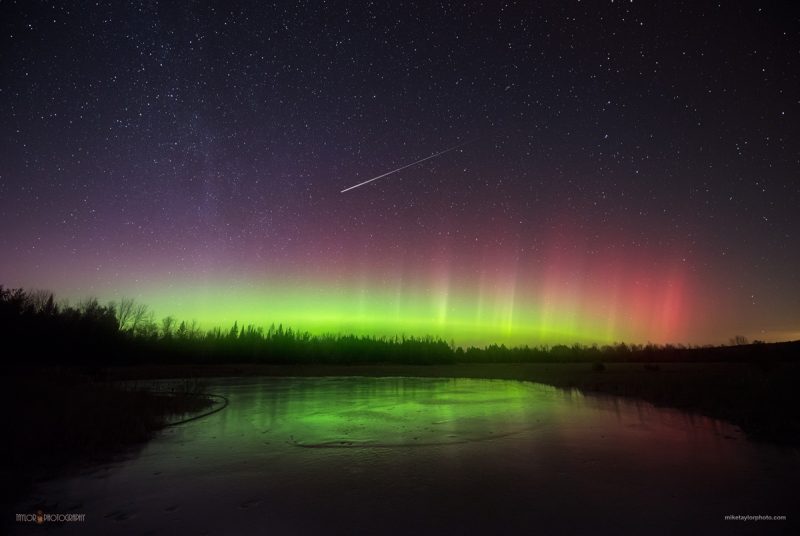
Viewing tips during spring fireball season
What to look for: Fireballs are meteors brighter than the planet Venus.
When to look: Shortly after sunset is prime time to watch for fireballs.
Location: Watch under dark, clear skies away from city lights.
Meteors are space debris
Meteors are mostly rocky debris from space. They typically range in size from a few feet (about a meter) to smaller than a grain of sand. As these objects enter Earth’s atmosphere, they vaporize due to friction with the air.
NASA scientists at one time set up a network of ground cameras in order to track and record video of meteors flaming overhead. The footage could be used to pinpoint a meteor’s orbit and origin. The video below – which is from 2011 – explains more:
Enjoying EarthSky so far? Sign up for our free daily newsletter today!
The meteor shower gap
Speaking of meteors, while spring might be the best time to see fireballs, major meteor showers – sometimes featuring a meteor or more every minute – take place throughout most of the year, with a break between the Quadrantids in early January and April’s Lyrid meteor shower.
The next regularly-occurring major meteor shower will be the Lyrids in April.
Bottom line: February to April is known as spring fireball season. Apparently, in some years, the rate of fireballs – or bright meteors – in the Northern Hemisphere seems to increase by as much as 30% from February through April. Will 2026 be one of those years?
EarthSky’s meteor shower guide
The post Spring fireball season is underway! Watch for them first appeared on EarthSky.










Related Posts
Stay Informed With the Latest & Most Important News
Previous Post
Next Post

Advertisement
-
 01Two Black Holes Observed Circling Each Other for the First Time
 -
 02From Polymerization-Enabled Folding and Assembly to Chemical Evolution: Key Processes for Emergence of Functional Polymers in the Origin of Life
 -
 03Astronomy 101: From the Sun and Moon to Wormholes and Warp Drive, Key Theories, Discoveries, and Facts about the Universe (The Adams 101 Series)
 -
 04True Anomaly hires former York Space executive as chief operating officer
 -
 05Φsat-2 begins science phase for AI Earth images
 -
 06Hurricane forecasters are losing 3 key satellites ahead of peak storm season − a meteorologist explains why it matters
 -
 07Binary star systems are complex astronomical objects − a new AI approach could pin down their properties quickly