
Now Reading: James Webb Space Telescope finds precursors to ‘building blocks of life’ in nearby galaxy
-
01
James Webb Space Telescope finds precursors to ‘building blocks of life’ in nearby galaxy

James Webb Space Telescope finds precursors to ‘building blocks of life’ in nearby galaxy

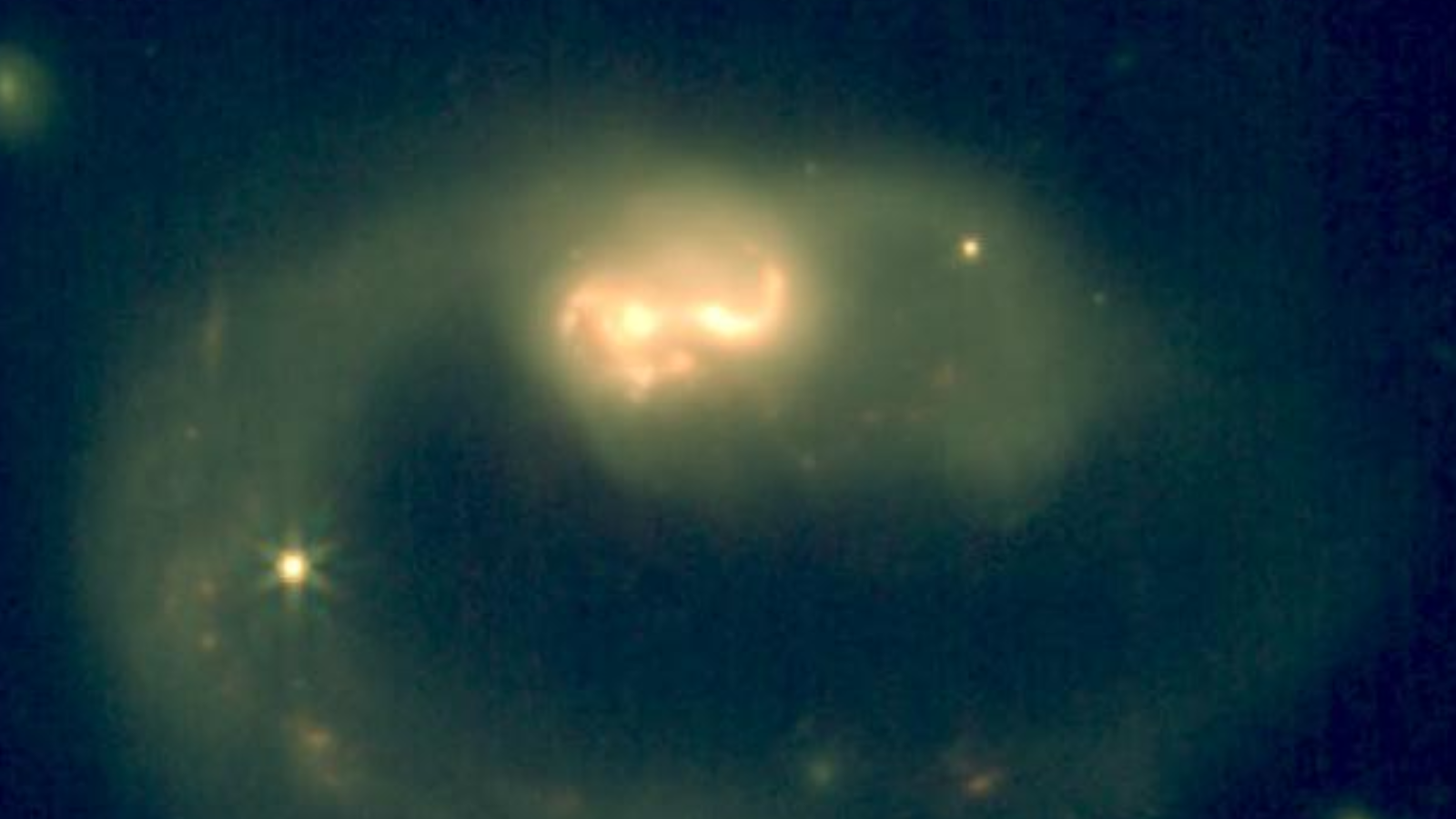
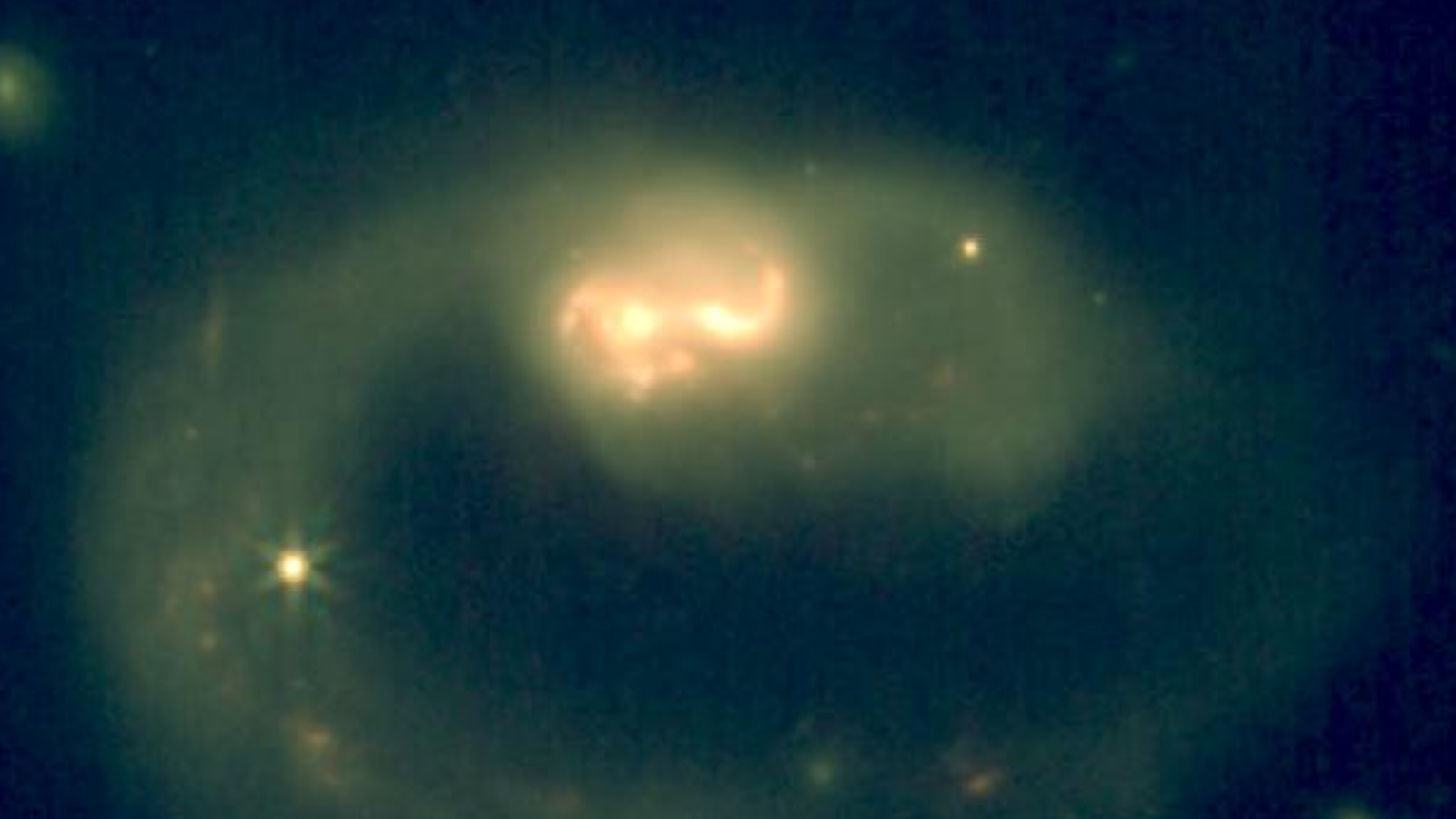
Using the James Webb Space Telescope (JWST), astronomers have discovered a wealth of molecules that could serve as the initial building blocks of life in a bright, relatively close galaxy. The discovery could deepen our understanding of how complex carbon-based molecules form in some of the most extreme regions of the galaxy.
The team behind this research used the JWST’s Near InfraRed Spectrograph (NIRSpec) and Mid-Infrared Instrument (MIRI) instruments to investigate IRAS 07251–0248, an ultra-luminous infrared galaxy whose dense galactic heart is obscured by immense amounts of dust and gas. This material absorbs many wavelengths of light, except infrared. And as the JWST studies the cosmos in infrared, that makes it the ideal instrument to dive into the heart of IRAS 07251–0248 — and what it discovered there surprised astronomers.
“We found an unexpected chemical complexity, with abundances far higher than predicted by current theoretical models,” team leader Ismael García Bernete, a researcher at the Center for Astrobiology (CAB), said in a statement. “This indicates that there must be a continuous source of carbon in these galactic nuclei fuelling this rich chemical network.”
Using data from MIRI and NIRSpec, the team was able to characterize the abundance and temperature of chemicals in gas, dust, and ices in IRAS 07251–0248, discovering a staggeringly rich inventory of small organic molecules, including benzene, methane, acetylene, diacetylene, triacetylene, and the highly reactive methyl radical, which has never been detected beyond the Milky Way before. The investigation also revealed solids, including grains of carbon-based material and water ice.
These molecules could serve as the building blocks of more complex organic molecules, which are vital in the development and sustaining of life.
“Although small organic molecules are not found in living cells, they could play a vital role in prebiotic chemistry, representing an important step towards the formation of amino acids and nucleotides,” team member Dimitra Rigopoulou of the University of Oxford said.
The chemistry seen by Rigopoulou and colleagues can’t be explained by extreme temperatures and the turbulent stirring of gas alone, leading the team to suggest that bombardment by high-energy particles called “cosmic rays” may have fragmented larger molecules like carbon-rich grains of dust. This would have released small organic molecules.
The findings suggest that the heavily obscured galactic nuclei of galaxies like IRAS 07251–0248 could act as a production line for organic molecules, thus chemically enhancing their home systems.
The team’s results, published on Friday (Feb. 6) in the journal Nature, could therefore lay down a roadmap to further investigate the formation and evolution of space-based organic molecules, also revealing the power of the JWST to study regions of space hitherto hidden from our gaze.










Related Posts



Stay Informed With the Latest & Most Important News
Previous Post
Next Post



Advertisement
-
 01Two Black Holes Observed Circling Each Other for the First Time
 -
 02From Polymerization-Enabled Folding and Assembly to Chemical Evolution: Key Processes for Emergence of Functional Polymers in the Origin of Life
 -
 03Astronomy 101: From the Sun and Moon to Wormholes and Warp Drive, Key Theories, Discoveries, and Facts about the Universe (The Adams 101 Series)
 -
 04True Anomaly hires former York Space executive as chief operating officer
 -
 05Φsat-2 begins science phase for AI Earth images
 -
 06Hurricane forecasters are losing 3 key satellites ahead of peak storm season − a meteorologist explains why it matters
 -
 07Binary star systems are complex astronomical objects − a new AI approach could pin down their properties quickly