
Now Reading: ‘Now it’s time to turn the baton over to others. I hope there’s somebody else to grab that baton.’
-
01
‘Now it’s time to turn the baton over to others. I hope there’s somebody else to grab that baton.’

‘Now it’s time to turn the baton over to others. I hope there’s somebody else to grab that baton.’

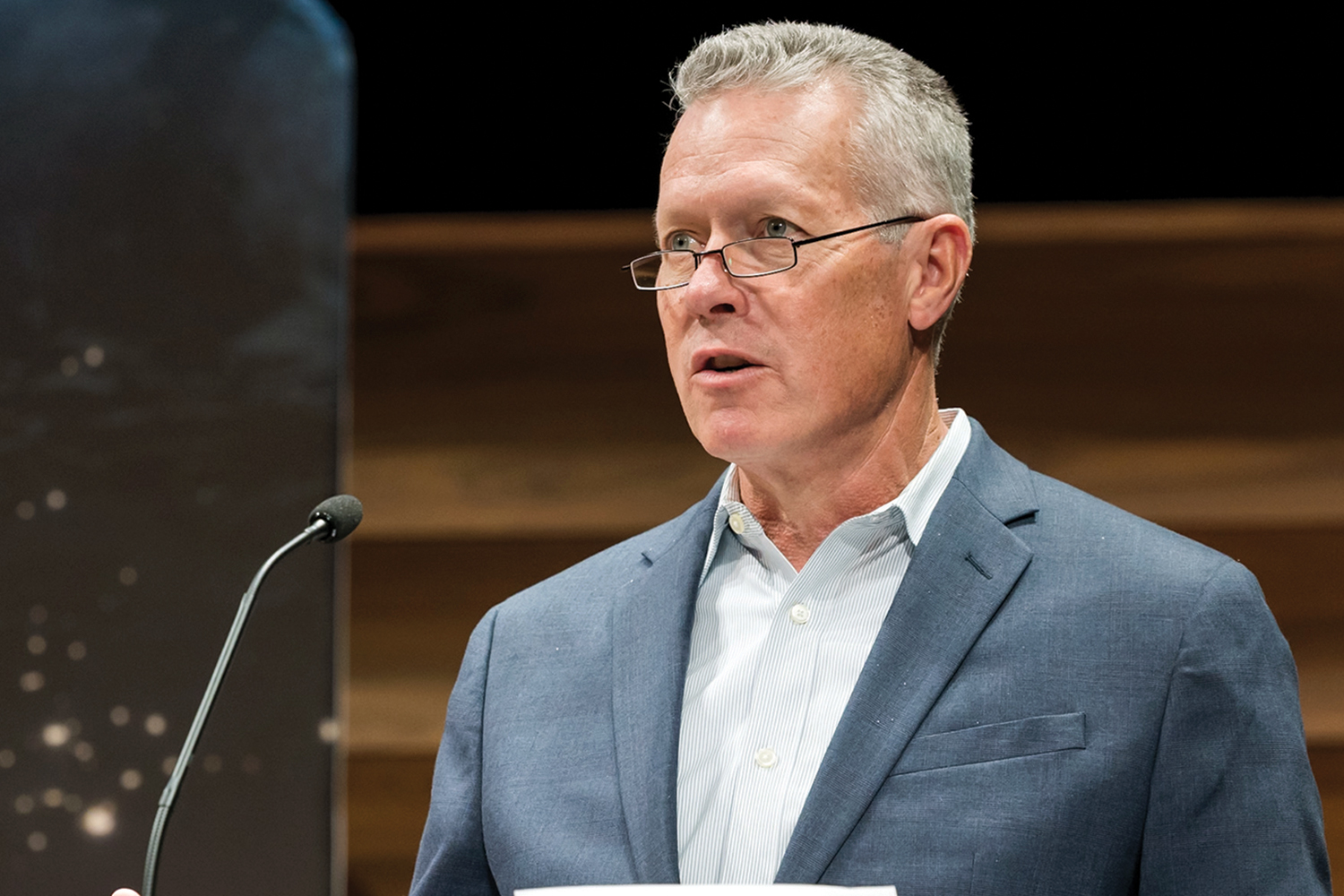

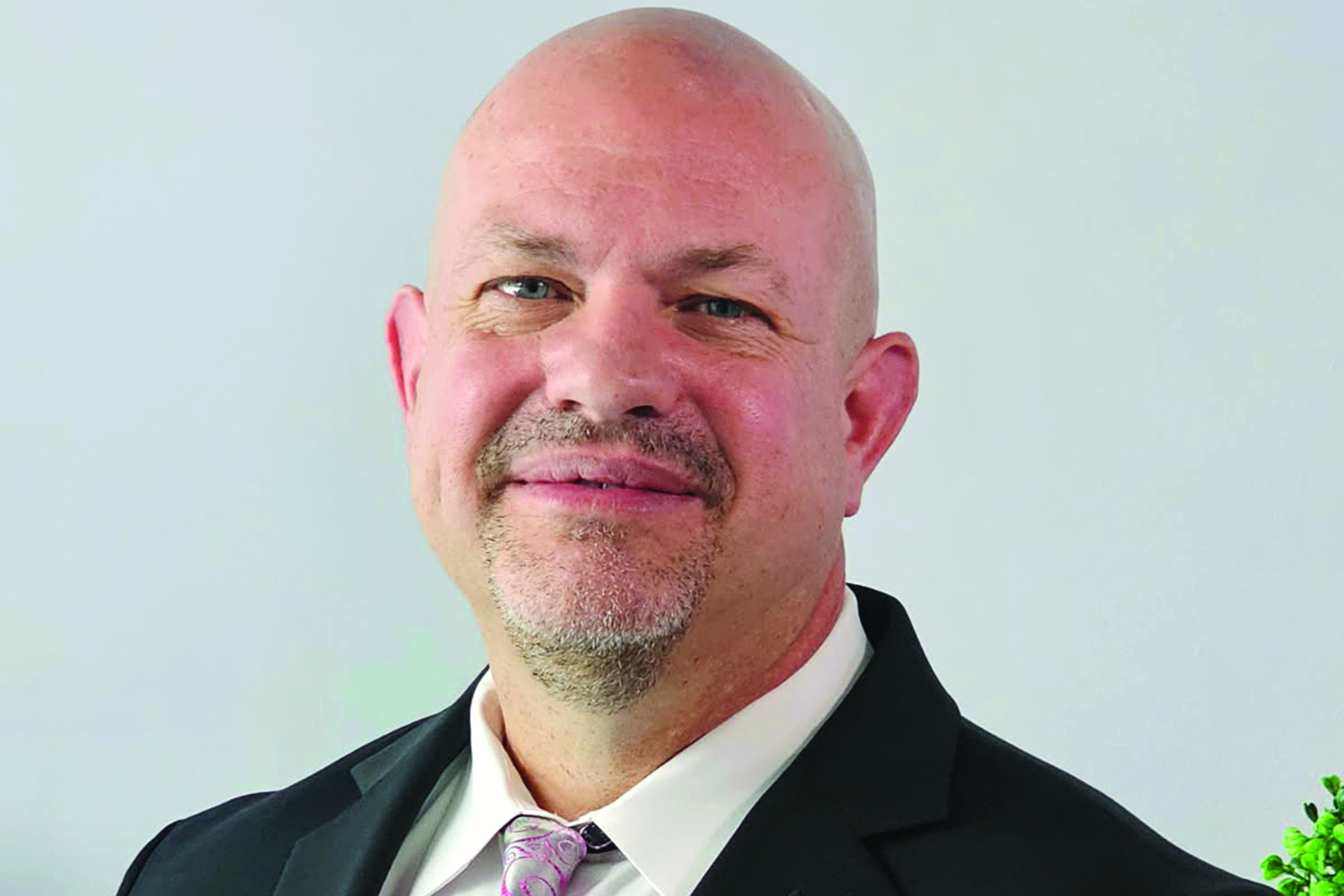
In 2025, more than 322,000 civil servants left jobs voluntarily or were dismissed out of a workforce of roughly 2.4 million. The 13% drop in staffing is the largest single-year decline since the end of World War II. In total, more than 5,000 people who were part of the federal space workforce left their positions. Senior executives with decades of experience retired alongside younger staffers whose posts were eliminated or who sought opportunities in the private sector or academia. This is one of eight conversations with some of the remarkable people who recently left the federal workforce.
Phil McAlister
Last position: NASA Senior Advisor
As a champion of public-private partnerships, Phil McAlister helped transform NASA’s approach to human spaceflight. Without his advocacy over the last two decades, it’s not clear whether NASA would have given up its traditional contracting approach to instead pay Northrop Grumman and SpaceX to deliver cargo to the International Space Station through the Commercial Orbital Transportation Services (COTS) or Boeing and SpaceX to transport astronauts through the Commercial Crew Program.
As director of NASA’s Commercial Spaceflight Division, McAlister also played a key role in establishing the Commercial Low-Earth Orbit Destinations (CLD) program, which provides funding and expertise to companies developing space stations NASA could tap into when the International Space Station is retired.
When McAlister joined NASA in 2005 after working at Analytical Services Inc., TRW and Futron Corp., the space agency was committed to returning humans to the moon through the Constellation program. That program was cancelled in 2010 after the Human Space Flight Plans Committee, better known as the Augustine Commission, determined it was over budget and behind schedule.
What drew you to NASA in the first place?
When I was a senior in high school, I saw a picture of the space shuttle landing on a runway on the front page of my hometown newspaper. I thought it was the coolest thing I had ever seen. That’s when I decided to pursue a career in space.
I started out in the private sector because the pay was so much better. But fast forward 20 years and I was looking for something different. Scott Pace was standing up a program analysis and evaluation office at NASA headquarters. I knew and respected Scott and believed in the mission, so I came aboard. I ended up staying 20 years.
What are some highlights of your career?
The first was the COTS demonstration mission in May of 2012. It was the first time a commercially built spacecraft successfully beirthed to and returned from the International Space Station. The mission lasted 10 days, and I did not relax until the Dragon dropped down on the deck of that recovery ship.
The second was the Crew Dragon demonstration mission in May of 2020 that returned human space flight to the United States. That was gratifying because I had to overcome so many hurdles to get there.
The third one was the summer of 2014 when I convinced my boss to select both SpaceX and Boeing for the Commercial Crew contract awards instead of just Boeing. It was probably the most consequential meeting of my career because otherwise we’d still be sending half a billion dollars to Russia for astronaut transportation to the ISS. And who knows if Crew Dragon would even exist today.
Were there many naysayers along the way calling your ideas for Commercial Crew crazy?
Yes, sometimes in not the nicest terms. We had some difficult things that we had to accomplish at NASA to enable Commercial Crew to happen. I passionately believed in what we were trying to do. I needed that passion because I kind of had to go to war and I wouldn’t have done that if I didn’t feel as strongly as I do about allowing private industry to do what it does best while leveraging what NASA does best as well. It was a challenging period, but I didn’t mind doing it because I felt so strongly about what we were trying to accomplish.
Who were you battling?
Everybody. There weren’t many supporters of Commercial Crew in the early days. We had some, and we needed every single one of them, but it was a multifaceted challenge. The traditional space industry was obviously strongly aligned against giving any money to this nascent commercial space industry and using fixed-price contracts and Space Act Agreements, which they didn’t want any part of. And still don’t today. Within NASA and the halls of Congress, it was tough sledding back then.
What were the greatest challenges you faced?
The biggest one was trying to change the culture of NASA to embrace the commercial space industry and leverage public-private partnerships. Unfortunately, that was a challenge I was not ultimately able to overcome.
Changing culture is very difficult. You need change agents within the agency. But you also need supporters in NASA senior leadership, in Congress and in the administration. Today, we don’t have that.
Why did you leave NASA?
Unfortunately, NASA has turned its back on commercial space. I left almost a year ago and NASA still has not backfilled my position because the agency doesn’t want a Commercial Space Division. Even with all the successes I mentioned earlier, it was clear I was not going to be able to change the culture at NASA. Having said that, NASA is still a very special place. But it could be so much better if it embraced the commercial space industry and leverage public-private partnerships. But it won’t, at least today, and that’s why I left.
Yet, NASA presentations often cite COTS and Commercial Crew as great successes.
Yes. They will probably keep trotting that out when they need to, but still not making the changes necessary to enable the next Commercial Crew and the next COTS.
I was overseeing the Commercial LEO Destinations program when I left. Another reason I left was because it was clear that I was not going to be able to do the CLD program like Commercial Crew and COTS. Little by little, NASA senior management kept stripping away the commercial aspects of that program. And as much as I tried, I could not do anything about it. It was very disappointing.
On LinkedIn, you wrote about the desire to keep funding ISS.
It’s overwhelming. People say they want ISS to be retired, but their actions tell a very different story. It was just too much to overcome. Boeing, NASA senior leadership and key politicians don’t want to retire the ISS. As much as I love the ISS, it is just holding us back. If and when the Chinese land on the moon first, one aspect of why we potentially will have lost that race is because we just wanted to keep the status quo. Everybody is comfortable with it.
We also keep putting money in Artemis. We’re not looking for innovative solutions. There was the extra money for NASA in the Big Beautiful Bill and, in my opinion, it all went to NASA’s most poorly performing programs. It’s so obvious what’s happening. You have got to take the blinders off and see it for what it is.
Why was your work at NASA important?
Oftentimes at NASA, I was asked to speak to young engineers and young administrators. I told them, “Don’t be satisfied with the successes of the past. Always try and make things better.” That’s what I felt throughout my career. As much as I love NASA, I felt like there were a lot of places where we could do better. I encouraged people to become change agents. Not change for change’s sake, but change for the better.
One of the things that I am most satisfied with is that I gave hope to those people; hope that we can make NASA or any organization better. It’s possible, it’s hard and you’ve got to take your licks. I have a lot of scars to show for what we did.
We saved NASA $20 billion to $30 billion through Commercial Crew over the program of record. I believe we returned human space flight to the U.S. much faster than the previous program would have done. And we have much safer transportation systems now because they leverage new and innovative practices. I’m super proud of all of that and disappointed that we couldn’t do more. But at the end of the day, that was way more than I thought I would accomplish when I joined NASA headquarters 20 years ago. Now it’s time to turn the baton over to others. I hope there’s somebody else to grab that baton.
How did your position as the executive director of the Augustine Commission inform your views?
I had always been an advocate for the commercial space industry. But on the Augustine Commission, I was in a privileged position to see NASA try to defend the program of record. I was hopeful at that time that they’d be able to convince everybody on that commission. But the arguments to continue the program of record were so weak. That was one of the reasons why the Augustine Commission came out with the report that it did. In the beginning, it was wide open. We could have been convinced of anything if the arguments had been there. But it was clear even in 2010, this nascent commercial space industry was something that NASA needed to give more support and potentially some contracts to.
What are you doing now?
As it says on LinkedIn, I am thankfully and blissfully retired. I moved down to an active community in Savannah, Georgia. I’m taking up golf again. I’m playing pickleball. I’m embracing the retired life. And I have a granddaughter.
I’m still writing my LinkedIn articles. Now that I’m retired, I’m free to say whatever the heck I want. I started the articles when I was still at NASA, and I had to be very careful about what I said. It was very constraining, because some of the things I wanted to say, people didn’t want to hear.
If somebody needs my expertise for something really interesting, I’m willing to maybe miss a golf game or two. And a couple of those have come up. I attended a conference last week. It was great to catch up with some of my old colleagues. While I have transitioned, I haven’t completely abandoned the space industry, and probably never will for the rest of my days.
An abridged version of this article first appeared in the February 2026 issue of SpaceNews Magazine.










Related Posts
Stay Informed With the Latest & Most Important News
Previous Post
Next Post


Advertisement
-
 01Two Black Holes Observed Circling Each Other for the First Time
 -
 02From Polymerization-Enabled Folding and Assembly to Chemical Evolution: Key Processes for Emergence of Functional Polymers in the Origin of Life
 -
 03Astronomy 101: From the Sun and Moon to Wormholes and Warp Drive, Key Theories, Discoveries, and Facts about the Universe (The Adams 101 Series)
 -
 04True Anomaly hires former York Space executive as chief operating officer
 -
 05Φsat-2 begins science phase for AI Earth images
 -
 06Hurricane forecasters are losing 3 key satellites ahead of peak storm season − a meteorologist explains why it matters
 -
 07Binary star systems are complex astronomical objects − a new AI approach could pin down their properties quickly