
Now Reading: Don’t miss the half-lit moon take to the winter sky tonight
-
01
Don’t miss the half-lit moon take to the winter sky tonight


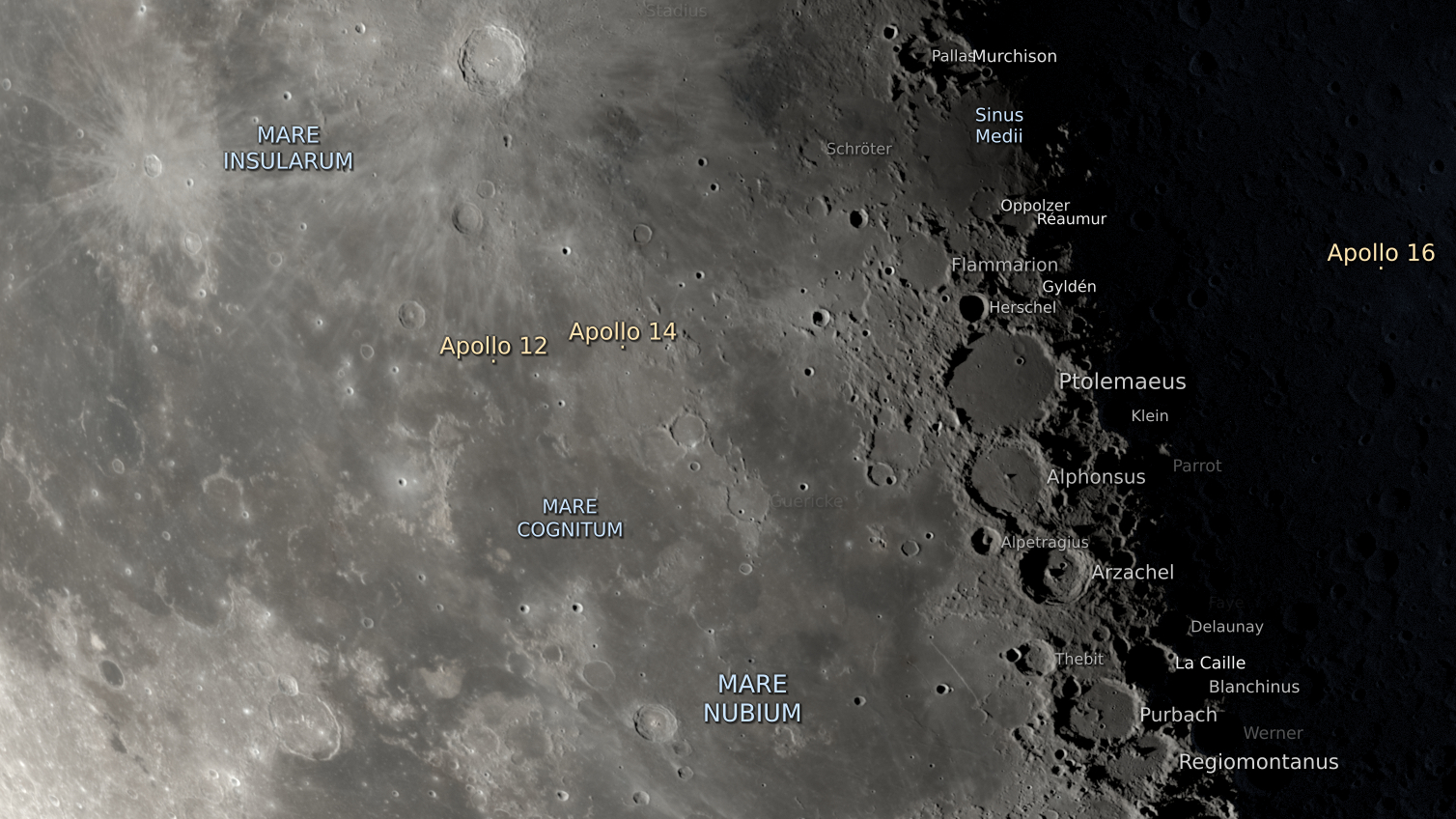
Turn your eyes to the southeast sky late on Feb. 9, into the early hours of Feb. 10 to see the last quarter moon rise among the stars of the constellation Libra, as vast lunar craters and sweeping mountain ranges are thrown into relief on its ancient surface.
February’s third quarter moon phase will occur at 10:48 a.m. EST (1548 GMT) — during the daylight hours for stargazers in North America — when the left side of the lunar disk will appear bathed in direct sunlight, while the right is hidden under a veil of impenetrable shadow.
The third quarter moon is the perfect time to grab your telescope and explore the rims and shadow-lined basins of ancient craters that lie close to the line separating night from day on the lunar disk, known as the terminator. The Herchel, Ptolemaeus, Alphonsus and Arzachel craters make for spectacular targets around this time, with the final two sporting a prominent central peak that can easily be spotted through a 9-inch telescope.
Sweep your scope to the left of Herschel Crater to find the approximate landing sites of the Apollo 12 and Apollo 14 missions above Mare Cognitum, the latter of which set down a little over 55 years ago on Feb. 5, 1971.
Read more: Apollo landing sites — An observer’s guide on how to spot them on the moon

Next, look roughly 20 degrees above the lunar equator at the terminator to witness the curve of Montes Appenninus arcing into the terminator. The 370-mile-long (600-kilometer) lunar mountain range is thought to have formed from the same violent asteroid strike that carved out the Imbrium impact basin, which later filled with molten lava before hardening to create a dark basaltic plain that is known today as the “Sea of Showers”.
Want to explore the peaks and depths of the lunar surface for yourself from the safety of your own backyard? Then be sure to check out our picks of the best telescopes and binoculars for exploring the night sky, along with our guide to observing the moon.
Editor’s Note: If you would like to share your lunar photos with Space.com’s readers, then please send your image(s), comments, name and the location of your shoot to spacephotos@space.com.










Related Posts


Stay Informed With the Latest & Most Important News
Previous Post
Next Post


Advertisement
-
 01Two Black Holes Observed Circling Each Other for the First Time
 -
 02From Polymerization-Enabled Folding and Assembly to Chemical Evolution: Key Processes for Emergence of Functional Polymers in the Origin of Life
 -
 03Astronomy 101: From the Sun and Moon to Wormholes and Warp Drive, Key Theories, Discoveries, and Facts about the Universe (The Adams 101 Series)
 -
 04True Anomaly hires former York Space executive as chief operating officer
 -
 05Φsat-2 begins science phase for AI Earth images
 -
 06Hurricane forecasters are losing 3 key satellites ahead of peak storm season − a meteorologist explains why it matters
 -
 07Binary star systems are complex astronomical objects − a new AI approach could pin down their properties quickly