
Now Reading: Why Only A Small Number Of Planets Are Suitable For Life
-
01
Why Only A Small Number Of Planets Are Suitable For Life


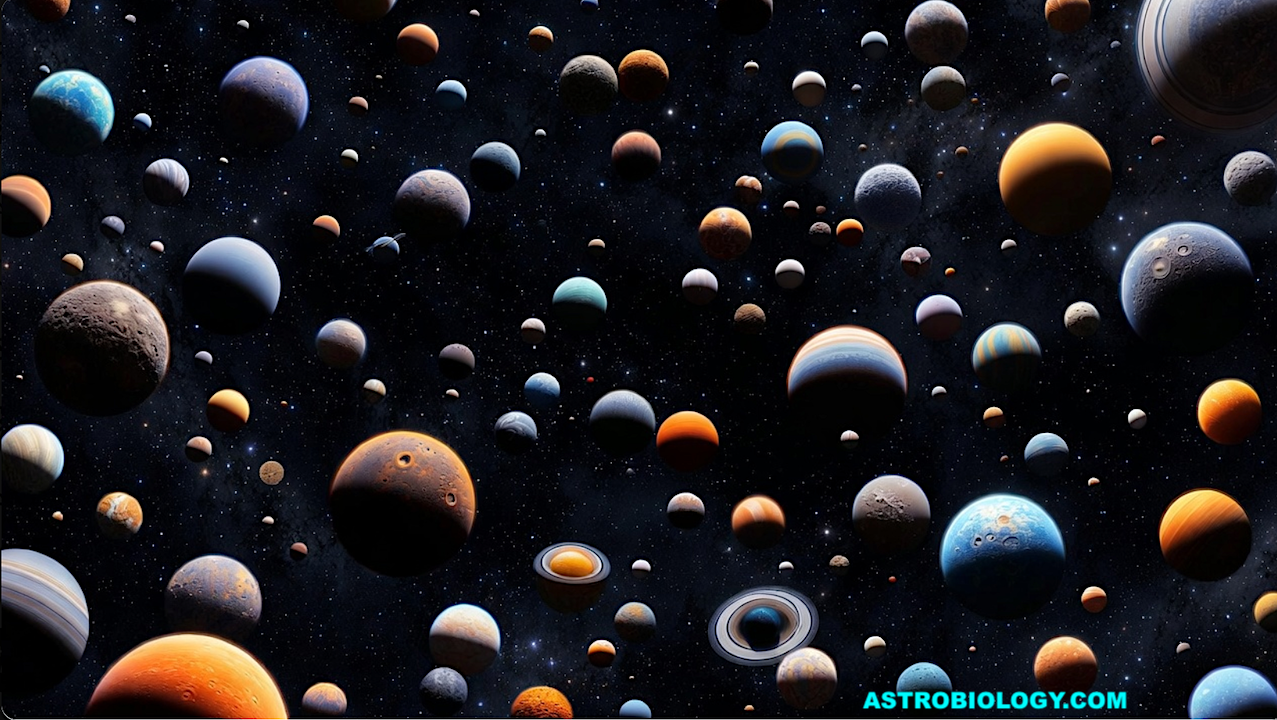
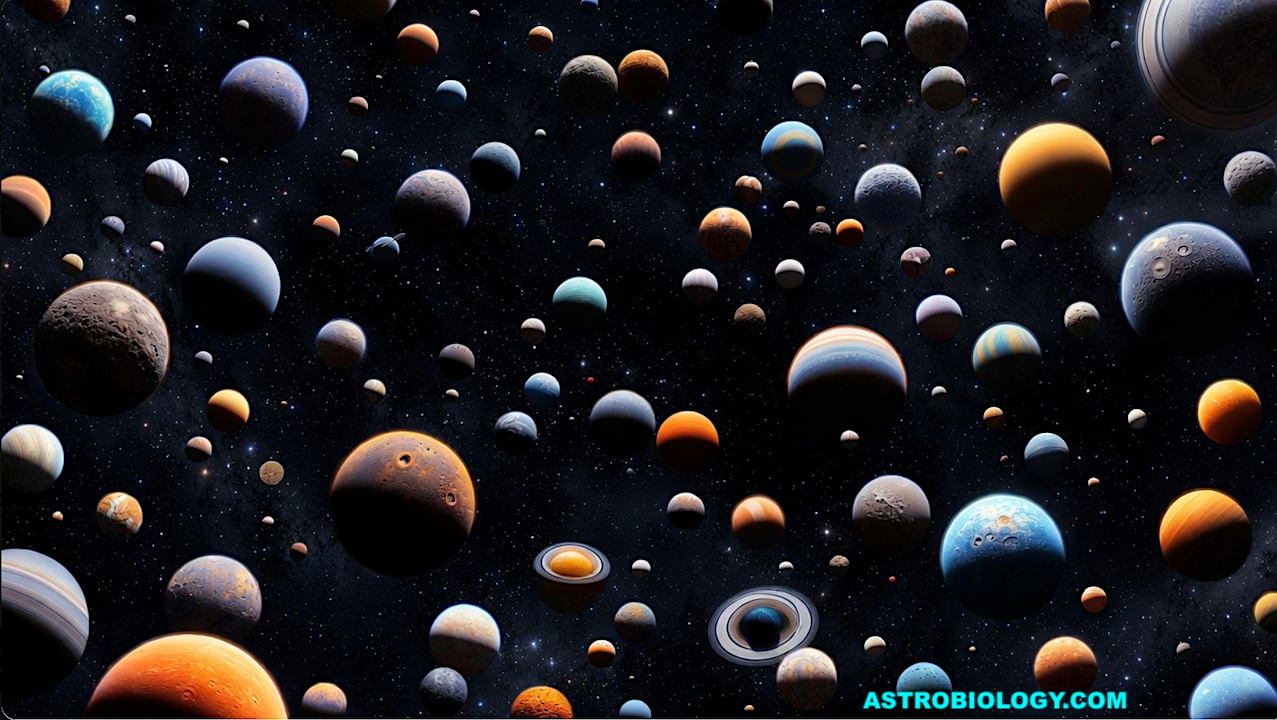
Different Flavors of Planets — Grok via Astrobiology.com
For life to develop on a planet, certain chemical elements are needed in sufficient quantities. Phosphorus and nitrogen are essential. Phosphorus is vital for the formation of DNA and RNA, which store and transmit genetic information, and for the energy balance of cells. Nitrogen is an essential component of proteins, which are needed for the formation, structure and function of cells. Without these two elements, no life can develop out of lifeless matter.
A study led by Craig Walton, postdoc at the Centre for Origin and Prevalence of Life at ETH Zurich, and ETH professor Maria Schönbächler has now shown that there must be sufficient phosphorus and nitrogen present when a planet’s core is formed. “During the formation of a planet’s core, there needs to be exactly the right amount of oxygen present so that phosphorus and nitrogen can remain on the surface of the planet,” explains Walton, lead author of the study. This was exactly the case with the Earth around 4.6 billion years ago – a stroke of chemical good fortune in the universe. This finding may affect how scientists search for life elsewhere in the universe.
Core formation as a form of cosmic roulette
When planets form, they initially develop out of molten rock. A sorting process occurs during this time: heavy metals such as iron sink down and form the core, while lighter metals form the mantel and, later, the crust.
If there is too little oxygen present during the formation of the core, phosphorus will fuse with heavy metals such as iron and move to the core. This element is then no longer available for the development of life. On the other hand, too much oxygen present during core formation leads to phosphorus remaining in the mantle and nitrogen being more likely to escape into the atmosphere, ultimately being lost.
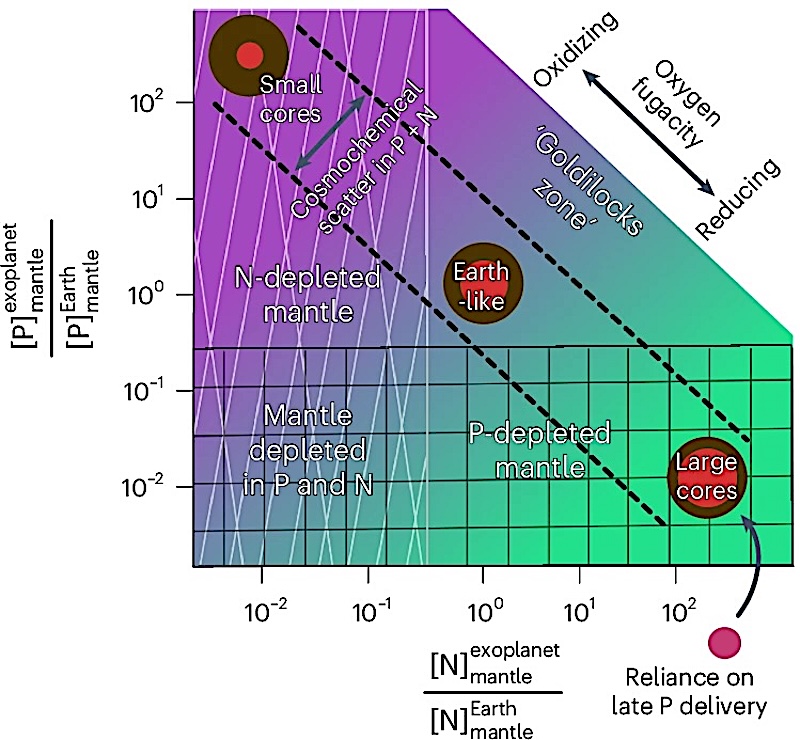
The nutrient profile of a planet is determined by a combination of inheritance from the bulk composition of the system in which it formed, modification of the bulk planetary composition relative to the wider system during the planet-formation process itself and internal partitioning of nutrients between core and mantle as a function of oxygen fugacity (schematic colour scale). Cosmochemical scatter refers to the rough local-scale variability that is observed in galactic abundances of P and N, bounded by the dashed lines. Cosmochemical scatter is illustrated to communicate the fact that not every star system forms from material with the same composition, that is, variation throughout the galaxy in the relative abundances of P and N compared with rock-forming elements. Regions of mantle P depletion relative to Earth are shown with a black hatched overlay, regions of N depletion are shown by a white hatched overlay and regions P–N codepletion are shown with both. — Nature
Chemical Goldilocks zone
Walton and his co-authors demonstrated through numerous modellings that only in an exceptionally narrow range of medium-level oxygen conditions – known as a chemical Goldilocks zone – will both phosphorus and nitrogen remain in the mantle in sufficient quantities.
“Our models clearly show that the Earth is precisely within this range. If we had had just a little more or a little less oxygen during core formation, there would not have been enough phosphorus or nitrogen for the development of life,” says Walton.
The researchers also demonstrate that, during the formation of other planets such as Mars, oxygen levels were outside this Goldilocks zone. On Mars, this had the result of there being more phosphorus in the mantle than on Earth, but less nitrogen, creating challenging conditions for life as we know it.*
New criteria for the search for life
The new findings could change how scientists look for life elsewhere in the universe. Until now, the focus was predominantly on whether a planet possessed water. According to Walton and Schönbächler, this falls some way short.
The amount of oxygen available during the formation of a planet can mean that many planets are chemically unsuitable for life from the very beginning, even if there is water present and they otherwise appear to have the right conditions for life.
The search for similar solar systems in the universe
These chemical prerequisites for life can be measured indirectly by astronomers by observing other solar systems using large telescopes. The amount of oxygen present in a solar system for the formation of planets depends on the chemical composition of the host star. The star’s chemical structure shapes the entire planetary system around it, as planets are primarily composed of the same material as their host star.
Solar systems that differ significantly from our own in terms of their chemical composition are therefore not good places to look for life elsewhere in the universe. “This makes searching for life on other planets a lot more specific. We should look for solar systems with stars that resemble our own Sun,” says Walton.
- There was a mistake in an earlier version. We incorrectly stated that, during the formation of other planets such as Mars, oxygen levels were outside this Goldilocks zone. This had the result of there not being enough phosphorus or nitrogen available in the planet’s mantle.
The chemical habitability of Earth and rocky planets prescribed by core formation, Nature (open access)
Astrobiology, exoplanet,










Related Posts
Stay Informed With the Latest & Most Important News
Previous Post
Next Post


Advertisement
-
 01Two Black Holes Observed Circling Each Other for the First Time
 -
 02From Polymerization-Enabled Folding and Assembly to Chemical Evolution: Key Processes for Emergence of Functional Polymers in the Origin of Life
 -
 03Astronomy 101: From the Sun and Moon to Wormholes and Warp Drive, Key Theories, Discoveries, and Facts about the Universe (The Adams 101 Series)
 -
 04True Anomaly hires former York Space executive as chief operating officer
 -
 05Φsat-2 begins science phase for AI Earth images
 -
 06Hurricane forecasters are losing 3 key satellites ahead of peak storm season − a meteorologist explains why it matters
 -
 07Binary star systems are complex astronomical objects − a new AI approach could pin down their properties quickly