
Now Reading: 10 best places to see the ‘blood moon’ total lunar eclipse on March 3
-
01
10 best places to see the ‘blood moon’ total lunar eclipse on March 3


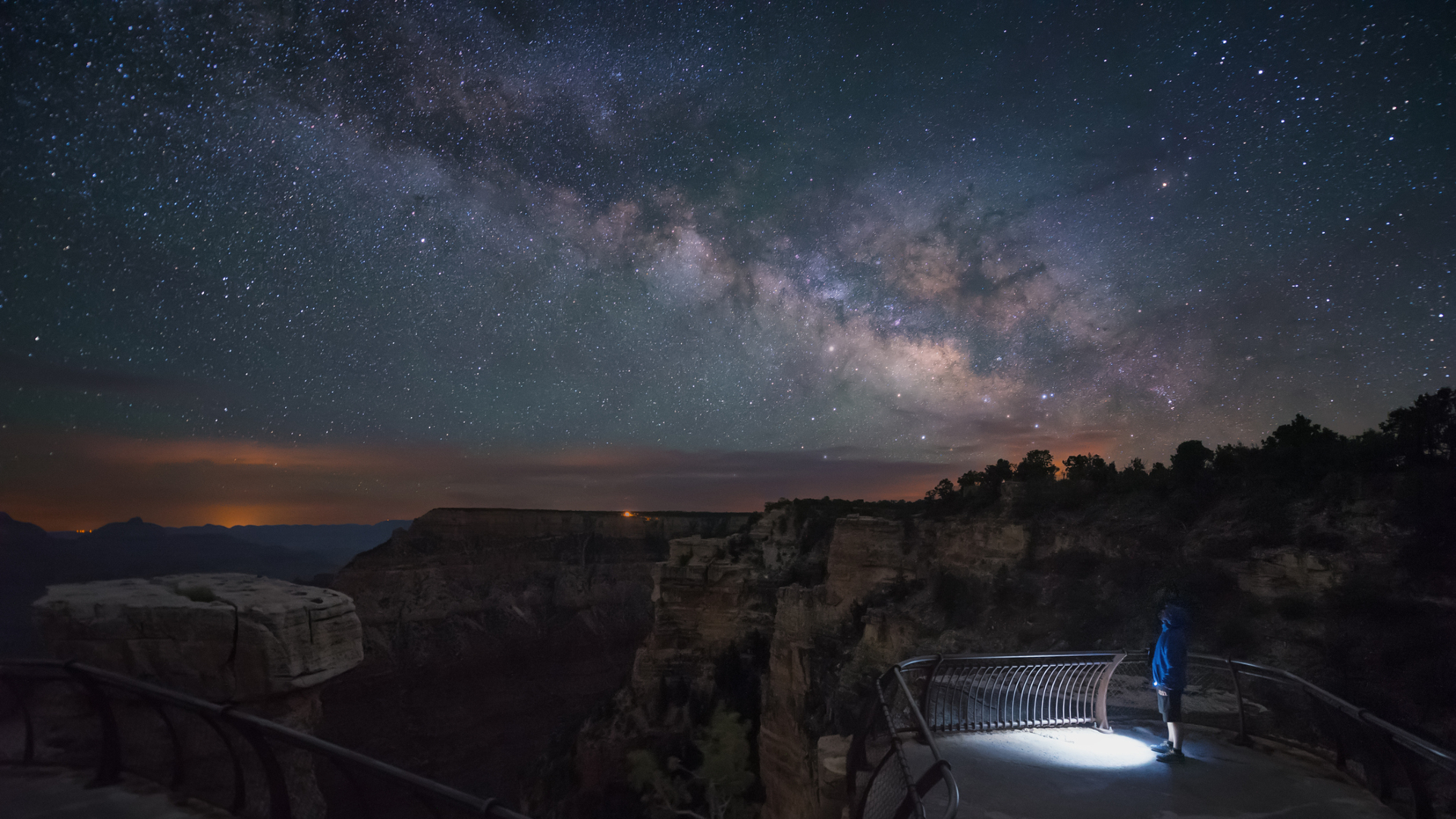
On March 3, 2026, a total lunar eclipse will be visible across the night side of Earth, with the best views from Australia, the Pacific, and the western half of North America. A total lunar eclipse occurs when the moon drifts into Earth’s shadow, with the only light reaching its surface filtered through Earth’s atmosphere, which turns it a reddish color that earns it the nickname “blood moon.”
A global event happening at the same time across the world, the epicentre is the Pacific, where the eclipse takes place overhead around midnight early on March 3. To the west (Australia), it occurs late on March 3, and to the east (North America), it occurs early on March 3.
You don’t need a dark sky to watch a total lunar eclipse — but it helps. The event stars as a full moon bleaching the night sky, making all but the brightest stars hard to see. However, by the time totality begins, the night sky will have darkened so much that it’s possible to see not just stars, but faint clusters and the Milky Way — just as you might experience during a new moon. So while using a light pollution map or the Dark Sky Place finder isn’t strictly necessary, it will bring an extra dimension to the experience.
The best places to watch the eclipse will be those with clear skies. Weather forecasts can only be relied upon about three days out, but you can stack the odds by studying a potential location’s historical climate data for average cloud cover. That’s what we’ve done here, using Eclipsophile.com — which specialises in global cloud cover data for solar and lunar eclipses — to select locations most likely to have a clear sky, which in March, may be a challenge. All times and cloud statistics come from Time and Date.
Here are 10 spectacular viewing locations for this rare celestial event, which won’t be repeated anywhere on Earth until New Year’s Eve 2028-2029.
1. Grand Canyon National Park, Arizona, U.S.

Time of totality: 04:04-05:02 MST on March 3, 2026.
Chance of clouds: 63% (historical average)
Grand Canyon National Park has been an International Dark Sky Park since 2015, when light fixtures in Grand Canyon Village on the South Rim were replaced to reduce light pollution. Great places to stargaze on the south rim include Grand Canyon Visitor Center (the most convenient), Mather Point, Hermit’s Rest and the many pullouts on the flat Rim Trail.
2. Horsetooth Mountain, Colorado, U.S.

Time of totality: 4:04-5:02 a.m. MST on March 3, 2026.
Chance of clouds: 60% (historical average)
This public stargazing event at Horsetooth Mountain Open Space, organised by the Northern Colorado Astronomical Society and publicised by NASA, will be held from 3:30-5:30 a.m. MST.
3. Arkaroola Wilderness Sanctuary

Time of totality: 21:34-22:32 ACDT on March 3, 2026.
Chance of clouds: 24% (historical average)
The remote area in the Flinders Ranges and Outback of South Australia has been protected since 2012, when it became a sanctuary for both wildlife and darkness. There are lodges and astronomy experiences.
4. Warrumbungle Dark Sky Park, Australia

Time of totality: 22:04-23:02 AEDT on March 3, 2026.
Chance of clouds: 45% (historical average)
Australia will get a fabulous view of this total lunar eclipse, but observers will have a much greater chance if they get inland. A good choice is Warrumbungle Dark Sky Park near Coonabarabran (aka ‘Australia’s Astronomy Capital’) in central western New South Wales, Australia’s first and only Dark Sky Park. It’s home to Australia’s famous Siding Spring Observatory, with Warrumbungle Observatory located in Coonabarabran.
5. Saguaro National Park, Arizona, U.S.

Although Tucson itself doesn’t fare too well on a light pollution map, it’s surrounded by glorious stargazing opportunities (check out the Tucson Astro Trail map) and world-class observatories at Kitt Peak, Mount Graham and Mount Lemmon. Just east of the city, in the Sonoran Desert, is Saguaro National Park, the world’s ninth Urban Night Sky Place. The park is open 24 hours.
6. Wairarapa Dark Sky Reserve, New Zealand

Time of totality: 00:04- 01:02 NZDT on March 4, 2026.
Chance of clouds: 64% (historical average)
Outdoor lighting is regulated throughout the Wairarapa Valley on the North Island of New Zealand, where lunar totality will occur just after midnight. Most of the dark-sky reserve is easily accessible for night-sky viewing.
7. Anza-Borrego Desert State Park, California, U.S.

Time of totality: 03:04-04:02 PST on March 3, 2026.
Chance of clouds: 40% (historical average)
The largest state park in California, Anza-Borrego Desert State Park in the Colorado Desert, has been a dark sky park since 2018, with Borrego a dark sky community.
8. Big Island, Hawaii, U.S.

Time of totality: 01:04-02:02 HST on March 3, 2026.
Chance of clouds: 37% (historical average)
With the eclipse overhead as seen from Hawaii, you will get a great view anywhere. If you’re after a dark sky, the best places to be on the Big Island are either on Maunakea (the destination of many stargazing tours) or on the darker south or northeast coasts.
9. Joshua Tree National Park, California, U.S.

Time of totality: 03:04-04:02 PST on March 3, 2026.
Chance of clouds: 43% (historical average)
Although there’s been a recent wildfire and some concerns about astrophotography workshops, independent travel to one of the most renowned stargazing destinations in California should still be possible if well planned. Make a camping reservation in advance on recreation.gov.
10. Death Valley National Park, Nevada, U.S.

Time of totality: 03:04-04:02 PST on March 3, 2026.
Chance of clouds: 47% (historical average)
With no closing time and a spectacularly dark sky, Death Valley National Park is worth considering for a great view of the total lunar eclipse. Zabriskie Point, Mesquite Flat Sand Dunes or Harmony Borax Works are recommended for astrophotographers.










Related Posts



Stay Informed With the Latest & Most Important News
Previous Post
Next Post
Advertisement
-
 01Two Black Holes Observed Circling Each Other for the First Time
 -
 02From Polymerization-Enabled Folding and Assembly to Chemical Evolution: Key Processes for Emergence of Functional Polymers in the Origin of Life
 -
 03Astronomy 101: From the Sun and Moon to Wormholes and Warp Drive, Key Theories, Discoveries, and Facts about the Universe (The Adams 101 Series)
 -
 04True Anomaly hires former York Space executive as chief operating officer
 -
 05Φsat-2 begins science phase for AI Earth images
 -
 06Hurricane forecasters are losing 3 key satellites ahead of peak storm season − a meteorologist explains why it matters
 -
 07Binary star systems are complex astronomical objects − a new AI approach could pin down their properties quickly