
Now Reading: FCC approves thousands more Amazon Leo satellites as Gen 1 deadline looms
-
01
FCC approves thousands more Amazon Leo satellites as Gen 1 deadline looms


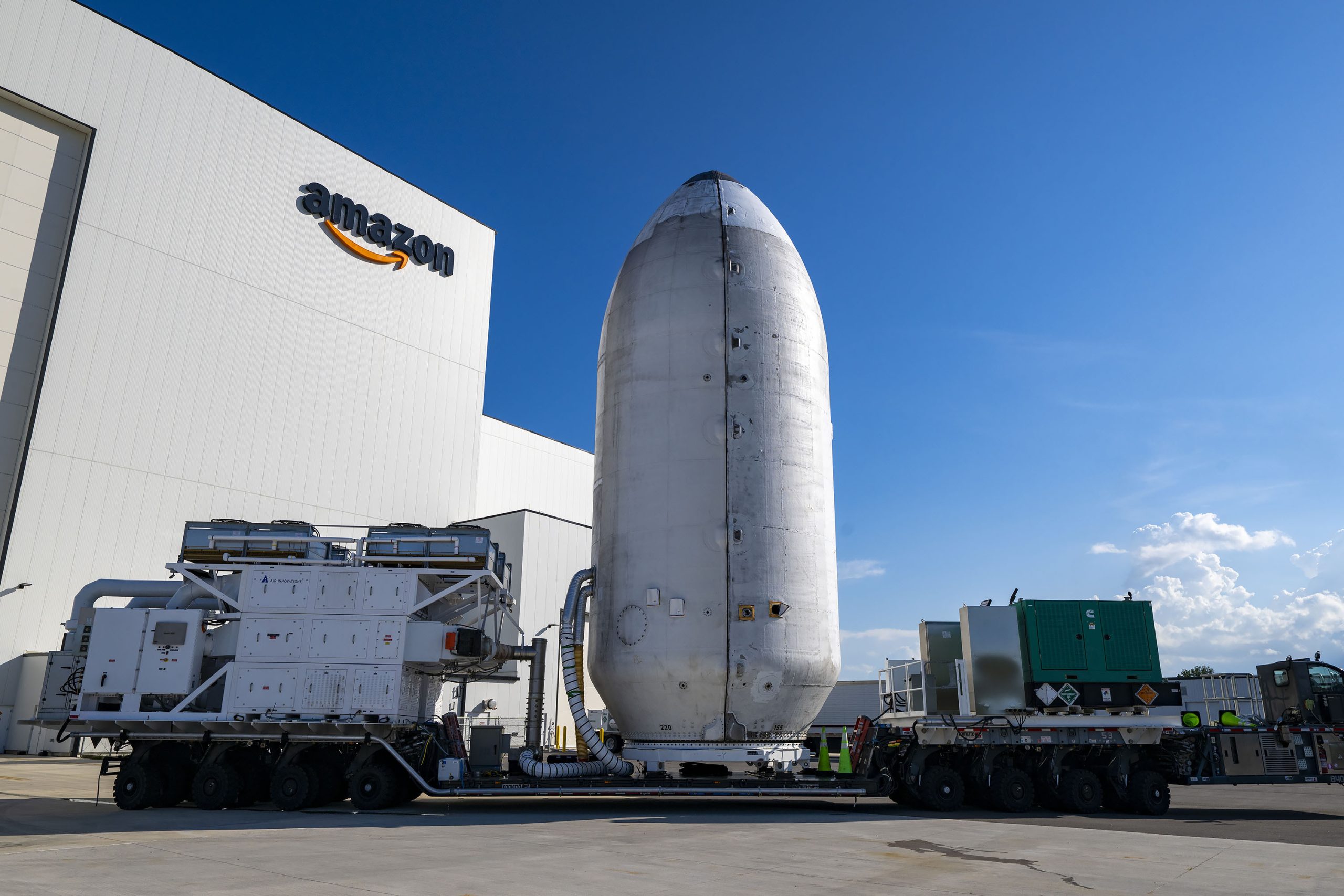

TAMPA, Fla. — Amazon received approval Feb. 10 to deploy thousands more broadband satellites, weeks after seeking relief from a July milestone for its first-generation network after reaching only about 11% of the required deployment.
The U.S. Federal Communications Commission authorized Amazon to deploy and operate 3,212 Gen 2 satellites between 590 kilometers and 630 kilometers above Earth, alongside 1,292 Polar spacecraft between 600 kilometers and 650 kilometers.
The two systems are in addition to the 3,232-satellite Gen 1 network operating at similar altitudes to Gen 2, enlarging the company’s total constellation to 7,736 satellites.
The FCC also authorized Gen 1 satellites to use higher-frequency V-band spectrum in addition to Ka-band, and allowed Amazon to exceed certain satellite power limits inside the United States, subject to conditions.
The Gen 2 and Polar satellites are approved to operate across Ku-, Ka- and V-band frequencies.
Rajeev Badyal, vice president of Amazon Leo, said in a LinkedIn post that the approval clears the way for more capacity, throughput and coverage, including over the poles.
This is “especially important for big enterprise/gov customers who want max performance to move large amounts of data through our network,” he said, adding that more details would be shared later.
More deadlines
The FCC approval requires Amazon to deploy half of the Gen 2 and Polar satellites by Feb. 10, 2032, and the remaining three years later. The authorization also requires coordination with federal users in several bands and semiannual reporting on orbital debris mitigation, including conjunction events and disposal performance.
Amazon currently has until July 30, 2026, to launch half of its planned 3,232 Gen 1 satellites, with the remainder required to be deployed by July 30, 2029.
Last month, the company asked the FCC to either extend the deadline for deploying 50% of Gen 1 or waive it entirely after launching only 180 satellites since kicking off deployments in April, citing limited launch capacity.
In the request, Amazon said it still expects to have the entire Gen 1 constellation in orbit by the 2029 deadline, following progress in satellite manufacturing and launch contracting.
The FCC said its latest approval is without prejudice to Amazon’s pending request to extend or waive the July 2026 milestone.
The next launch of Amazon Leo satellites is slated for Feb. 12, when Arianespace is set to fly 32 spacecraft on its first mission for the company and the first launch using Ariane 6’s heavy-lift Ariane 64 configuration.










Related Posts



Stay Informed With the Latest & Most Important News
Previous Post
Next Post





Advertisement
-
 01Two Black Holes Observed Circling Each Other for the First Time
 -
 02From Polymerization-Enabled Folding and Assembly to Chemical Evolution: Key Processes for Emergence of Functional Polymers in the Origin of Life
 -
 03Astronomy 101: From the Sun and Moon to Wormholes and Warp Drive, Key Theories, Discoveries, and Facts about the Universe (The Adams 101 Series)
 -
 04True Anomaly hires former York Space executive as chief operating officer
 -
 05Φsat-2 begins science phase for AI Earth images
 -
 06Hurricane forecasters are losing 3 key satellites ahead of peak storm season − a meteorologist explains why it matters
 -
 07Binary star systems are complex astronomical objects − a new AI approach could pin down their properties quickly