
Now Reading: Reusable launch vehicles will change everything in space, and on Earth
-
01
Reusable launch vehicles will change everything in space, and on Earth


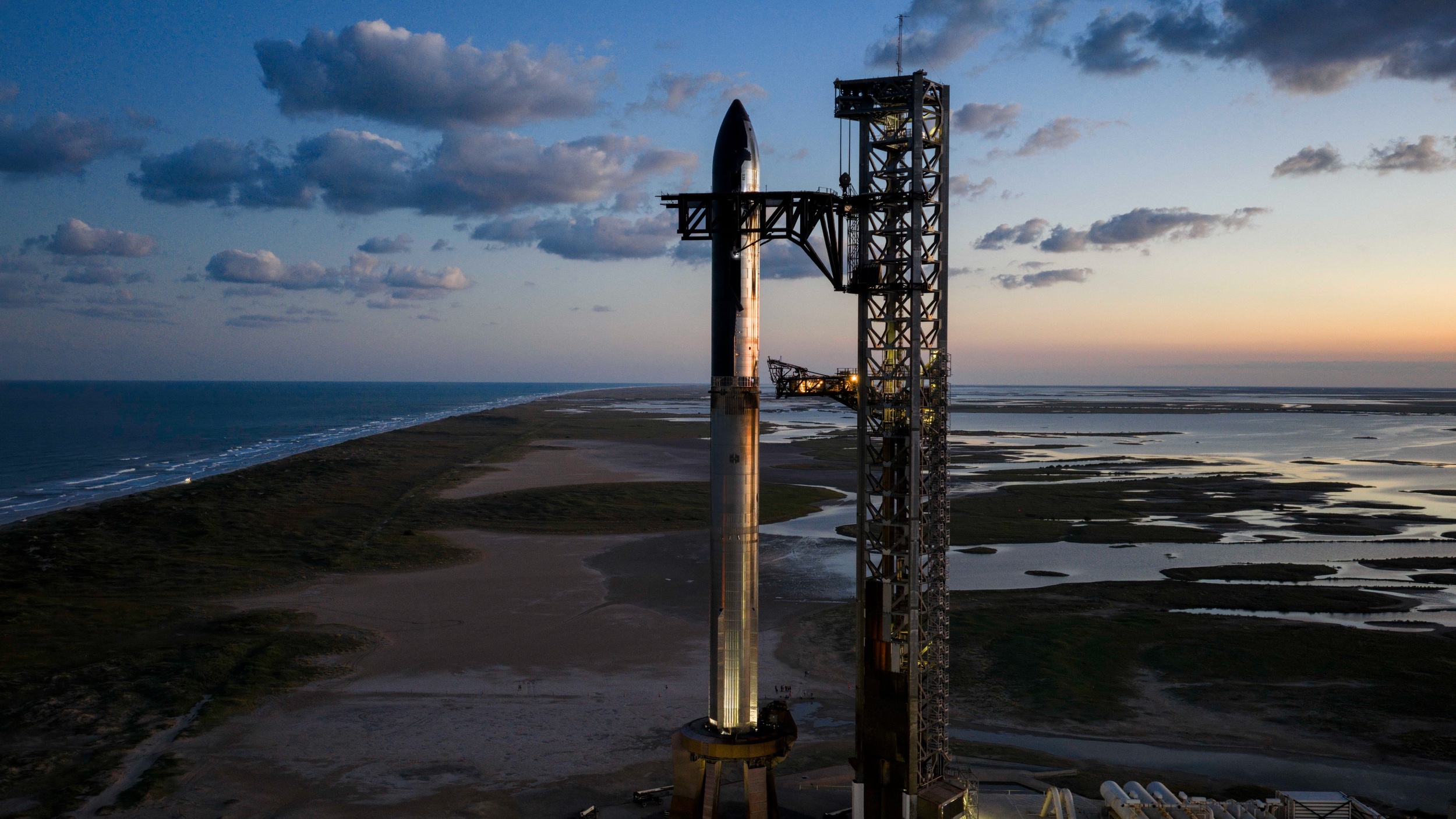

“When you have a fully reusable vehicle … you can send it anywhere … to the moon … past Mars”
—Jared Isaacman, NASA Administrator.
Imagine a future where thousands of people travel to space every year. Some stay a week. Some a month. Some never come back — they stay, build and live. Space is no longer the exclusive domain of government astronauts or a handful of billionaires, but a place where anyone with the means and the will to go can participate.
Now imagine that this future is led by American entrepreneurs, supported by smart public policy and scaled to tens of thousands and then millions of travelers. That future is no longer science fiction. It is now within reach.
Reusable launch vehicles — such as SpaceX’s Starship and Blue Origin’s New Glenn, Stoke Space’s Nova, Rocket Lab’s Neutron and Relativity Space’s Terran R — are revolutionizing the cost and frequency of space access. They represent a tipping point in the human breakout into space.
Within a decade, the cost of a multi-day orbital stay could fall to roughly $10 million per passenger. That is expensive — but not unrealistic. Tens of thousands of high-net-worth individuals already spend far more on yachts, rare art or private islands. For them, a low Earth orbit “cruise” — with private quarters, dining facilities and continuous views of Earth rising every 90 minutes — would be the ultimate travel experience.
If just 20 people fly each week, that represents 1,000 passengers a year creating a $10 billion annual market almost overnight. That represents only a fraction of the $2 trillion global luxury travel and experience economy, but it would be transformative for space. More importantly, it creates a virtuous cycle: higher flight rates reduce costs, which unlock larger markets, which drive more investment, scale and innovation.
We have seen this movie before.
In the early 1930s, flying boats pioneered the first global aviation routes, but it was extremely expensive and therefore exclusively for the very rich. By 1936 the Douglas DC-3 made commercial aviation economically viable for a broader demographic by dramatically lowering per-passenger costs while improving reliability, range and comfort. By 1958, the Boeing 707 made jet travel routine across oceans. By 1970, the 747 drove costs down further, enabling mass global mobility. In a matter of decades, what began as an elite novelty became a universal utility. Today, more than five billion passenger trips are taken by air each year.
Space is at the same inflection point. $10 million per seat may seem extreme, but many can and will pay. Their purchases fund the infrastructure, flight cadence and learning curves that eventually make access affordable for millions.
These first travelers will be more than tourists. Thousands, and eventually millions, will directly experience the “overview effect” — the profound cognitive shift that comes from seeing Earth as a single, fragile world. They will become ambassadors for Earth — returning with a renewed sense of planetary stewardship and inspiring new generations of scientists, engineers and explorers. Their journeys will drive investment, education and cultural engagement far beyond the launch pad.
And the impact will extend far beyond tourism.
The DC-3 became the military C-47, forming the backbone of Allied logistics in World War II and cementing U.S. dominance in aviation for decades. Commercial aviation did not just create airlines — it reshaped geopolitics, defense, global trade and human connection.
The same will be true for space. A steady cadence of human spaceflight will enable national security operations, advanced manufacturing, biomedical research, clean energy systems, very large space telescopes and rapid testing of new technologies in microgravity. It will create high-skill jobs in spacecraft operations, spaceport logistics, life-support systems, orbital construction and space medicine. It will attract capital to entire new industrial sectors.
Critics will argue that spaceflight for the wealthy is frivolous while problems persist on Earth. That is short-sighted. Throughout history, exploration and enterprise have been engines of progress. The technologies, industries and scientific breakthroughs created to open new frontiers consistently flow back to improve life on Earth. A thriving orbital economy is not a distraction from humanity’s challenges — it is part of how we solve them.
If we want to become a space-faring civilization, it begins by sending more people into orbit safely, routinely and affordably. A realistic national goal would be 1,000 people per year within a decade, 10,000 per year in the following decade and eventually millions.
The private passenger market is the seed crystal. It provides the early demand, revenue and flight cadence that makes everything else possible. The technology exists. The markets are forming. And the returns — economic, scientific and cultural — will benefit everyone on Earth.
We are on the cusp of a new era. The rockets are being built. The ships are boarding. The only question is who will lead — and who will be aboard — when the space age truly begins.
In conclusion, Jared Isaacman, our new NASA Administrator said it well last September on “The Shawn Ryan Show”:
“Where does it get to the point where everyday anyone can go and do it … you know it is as affordable as a really expensive vacation … that is when you don’t throw any of the rocket away and everything is reusable just like you are taking your family to Disneyland … that is your 737 Southwest now-boarding-next-flight-to-orbit type thing. Now because it is entirely reusable … 5 to 10 years away you are going to see lots and lots of spacecraft going up and down, it is going to be a light switch moment for humankind really.”
We agree. Full-and-rapid-reusability is a “light switch moment for humankind.” It will change everything on Earth, and in space. It will drive orders-of-magnitude reductions in the cost of human access to space, it will “crack the code” on LEO economy and it will enable the large-scale economic development and human settlement of the moon and Mars.
This is just the beginning of an amazing future in space. For everybody.
Jason Andrews is a successful serial space entrepreneur having started companies including LeoStella, BlackSky Global, and Orbite, an astronaut training company. Charles Miller is Co-founder and former CEO of Lynk Global, Inc., and recently led the NASA landing team for the Trump-Vance transition. Combined, they have over 60 years of experience in space technology, reusable launch vehicles and building commercial space ventures.
SpaceNews is committed to publishing our community’s diverse perspectives. Whether you’re an academic, executive, engineer or even just a concerned citizen of the cosmos, send your arguments and viewpoints to opinion (at) spacenews.com to be considered for publication online or in our next magazine. If you have something to submit, read some of our recent opinion articles and our submission guidelines to get a sense of what we’re looking for. The perspectives shared in these opinion articles are solely those of the authors and do not necessarily represent their employers or professional affiliations.










Related Posts

Stay Informed With the Latest & Most Important News
Previous Post
Next Post

Advertisement
-
 01Two Black Holes Observed Circling Each Other for the First Time
 -
 02From Polymerization-Enabled Folding and Assembly to Chemical Evolution: Key Processes for Emergence of Functional Polymers in the Origin of Life
 -
 03Astronomy 101: From the Sun and Moon to Wormholes and Warp Drive, Key Theories, Discoveries, and Facts about the Universe (The Adams 101 Series)
 -
 04True Anomaly hires former York Space executive as chief operating officer
 -
 05Φsat-2 begins science phase for AI Earth images
 -
 06Hurricane forecasters are losing 3 key satellites ahead of peak storm season − a meteorologist explains why it matters
 -
 07Binary star systems are complex astronomical objects − a new AI approach could pin down their properties quickly