
Now Reading: It is time to take astronomy off Earth
-
01
It is time to take astronomy off Earth


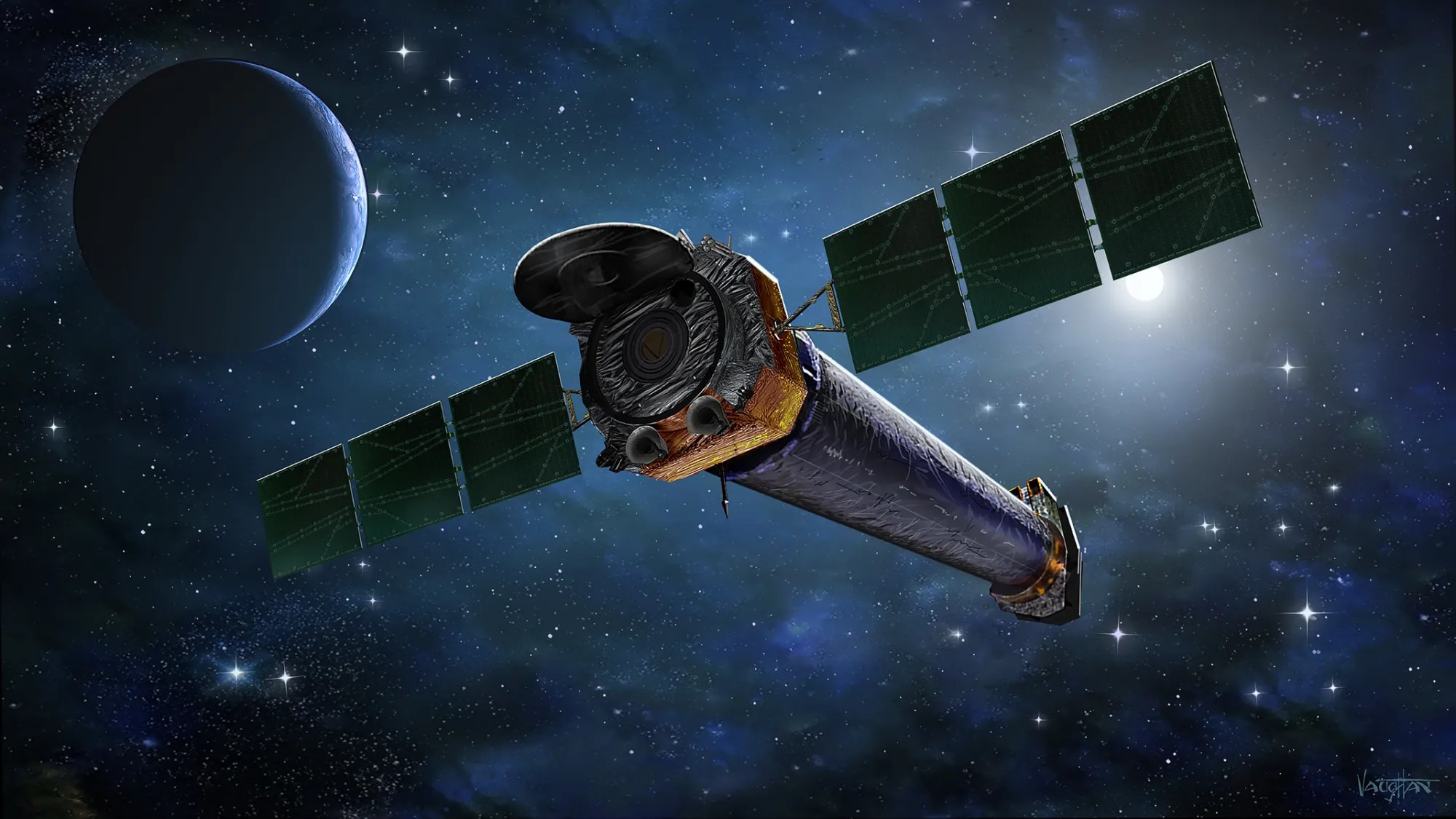

Astronomy and commercial space are often portrayed as being on a collision course, yet their futures are deeply intertwined. As satellite constellations expand, astronomers raise concerns about trails across images, interference with radio telescopes and the loss of dark skies. At the same time, commercial operators point to the enormous economic, scientific and national security benefits enabled by space-based infrastructure. Both activities represent valuable and worthwhile human endeavors, each contributing in different ways to scientific progress, economic development and societal benefit.
This debate is no longer abstract. After initial efforts failed to secure consensus, the agenda of Dark and Quiet Skies, efforts to limit optical brightness and radio emissions from satellites in order to reduce interference with ground-based astronomical observations, has now been taken up at the United Nations Committee on the Peaceful Uses of Outer Space through a newly established agenda item on dark and quiet skies, astronomy and large constellations. This represents an important step in elevating the issue within international forums. In contrast, a parallel effort in the United States Congress, the Dark and Quiet Skies Act, did not advance. Taken together, these outcomes point to a deeper challenge. Astronomy has not yet consistently articulated a forward-looking vision that aligns near-term mitigation efforts with the rapidly expanding space economy and the longer-term trajectory of human activity beyond Earth.
Recent budget debates underscore this uncertainty. White House proposals included substantial reductions to NASA science programs, including proposed cuts to Hubble and the potential elimination of Chandra. Congress ultimately rejected the most severe of these proposals, but the episode nonetheless introduced disruption and uncertainty for the scientific community, even as the James Webb Space Telescope continues to demonstrate the transformative value of space-based observatories. At the same time, Artemis is moving forward toward a return to the moon, but its current architecture remains focused on short-duration missions rather than sustained infrastructure. Decisions about how humanity explores, uses and inhabits space are being made now, and astronomy has an opportunity to play a more active role in shaping them.
The National Space Society believes the path forward lies not in opposition, but in collaboration. Rather than framing astronomy and commercial space as competing interests, we should pursue a shared long-term roadmap that enables both to thrive. This perspective was articulated in the NSS policy paper A Long-Term Strategy for Space-Based Astronomy and Lunar Surface Observatories, released in November 2024. Our position, and that of the National Space Society is straightforward: The best place to study space is in space.
Why ground-based arguments fall short
For decades, astronomers have made the case for preserving dark skies by appealing to the unknown, and the potential for future discoveries. They have also invoked the inspiration and nostalgia of a child with a telescope. Both arguments have genuine value. However, they can be difficult for policymakers to weigh against the tangible economic and societal benefits emerging from commercial space activity, and they may overlook new ways that space-based systems can inspire students, educators and amateur astronomers in a globally connected digital era.
Under current technological conditions, where astronomy is conducted has become as important as how it is conducted. Ground-based observatories face limits that cannot be regulated away, including atmospheric distortion, increasing light pollution and growing radio interference. At the same time, space-based systems accessible through networked platforms offer new opportunities to broaden participation, expand discovery and reimagine public engagement with astronomy.
The discussion around lost observing time also benefits from a more nuanced framing. A streaked image is not automatically a useless one, and many observations remain scientifically valuable despite such artifacts. What ultimately matters is whether the science can still be done effectively, and where it can best be done.
The need for clear metrics
If astronomy is to engage more effectively with policymakers, industry partners and the public, it would benefit from a shared effort to describe its impact in clear and relatable terms. Metrics are not intended to narrow discovery or diminish fundamental research. Rather, they provide a way to communicate why astronomy matters, how it contributes to society and where different observational approaches are most effective.
One constructive path forward is to focus on scientific output and societal reach. Factors that help frame this discussion include how many new phenomena are discovered in an observing campaign, how reliably exoplanet transits can be measured, how successful surveys are in identifying faint objects and how many students have access to high-quality astronomical observations.
Used this way, metrics become a tool for alignment rather than exclusion. They help show where ground-based facilities continue to deliver strong results, where space-based systems offer clear advantages and how platforms can complement one another. In the context of Artemis, such metrics can also inform decisions about long-term infrastructure by clarifying the value of investments in power, communications, mobility and data return that support sustained scientific activity.
A roadmap for off-planet astronomy
This is why the National Space Society is calling for a new approach. Commercial space and astronomy should collaborate on a shared long-term roadmap that enables both to thrive. Moving observatories into space and onto the lunar surface is a logical extension of decades of scientific progress. Off-planet observatories eliminate problems faced by terrestrial observatories including atmospheric distortion, interference and discontinuous observation. They also provide access to the full electromagnetic spectrum.
Recent reporting on privately funded and commercially enabled space telescopes reinforces this direction. Growing interest from philanthropic and private sector actors suggests that new models for space-based astronomy are already emerging beyond traditional government programs. These developments align closely with the NSS strategy articulated in 2024, which emphasized the importance of space-based observatories of many sizes made feasible by lower launch costs and a more capable commercial ecosystem.
This roadmap should include a range of architectures, from distributed small instruments to larger modular and serviceable platforms. Advances in satellite manufacturing and economies of scale suggest that scientific instruments can benefit from iteration and redundancy, allowing observatory scale to evolve alongside infrastructure maturity. Near-term voluntary mitigation efforts remain important, but they should be understood as complementary to a longer-term transition that reduces conflict at its source.
Linking astronomy to Artemis
The timing is critical. Artemis is advancing, but its focus remains on short-duration missions. Astronomy can help strengthen the case for a more durable presence off-world. Observatories require power, communications, servicing capability and protected operational environments, all of which align closely with the infrastructure needed for sustainable lunar exploration.
By advocating for space-based and lunar observatories, astronomy can move from being a passive beneficiary of exploration to an active driver of infrastructure development and human expansion beyond Earth.
A call to action
The past year has shown what does not work. Process alone, whether legislative or diplomatic, focused on hearings, resolutions, and agenda-setting, is not a substitute for a long-term strategy that defines how astronomy adapts to and helps shape an increasingly active space environment. The path forward requires measurable impact, a shared vision and constructive engagement across science, industry and exploration.
Astronomy has the opportunity to be more than a victim of growth. It can be a driver of infrastructure, education and long-term exploration. By articulating its needs clearly and aligning with the broader space ecosystem, astronomy can help ensure that Artemis evolves from early missions toward lasting presence.
The sky above Earth may grow brighter and noisier, but the universe beyond is vast and waiting. It is time we reach for it together.
Fredrick Jenet is a board member of the National Space Society and Vice Chair of its International Committee, where he leads engagement with the United Nations Committee on the Peaceful Uses of Outer Space. He is an astrophysicist and founder of Expanding Frontiers, a nonprofit organization focused on advancing space science, technology and entrepreneurship through international collaboration and workforce development.
Teviet Creighton is a professor of physics and astronomy at University of Texas Rio Grande Valley, whose work has contributed to the development of gravitational wave astronomy and was recognized with the Breakthrough Prize in Fundamental Physics. He is engaged in discussions on the future of space-based observatories and the long-term role of science within an expanding commercial space environment.
Hoyt Davidson is the Executive Vice President of the National Space Society and a managing partner at Near Earth LLC, where he focuses on space sector strategy and finance. He has advised government agencies, commercial space companies, and nonprofit organizations on long-term space development.
Grant Hendrickson is the chair of the National Space Society’s policy committee where he focuses on space governance, sustainability and the intersection of science and commercial space activity. His work emphasizes long-term strategies for space infrastructure and human expansion beyond Earth.
Alma Miller is a member of the National Space Society’s International Committee and a co-founder of Expanding Frontiers, where she works at the intersection of space science, education and entrepreneurship. Her efforts focus on building inclusive pathways that connect scientific research, commercial innovation and international collaboration.
Volker Quetschke is a professor of physics and astronomy at University of Texas Rio Grande Valley, specializing in precision measurement and gravitational wave detection, and is a recipient of the Breakthrough Prize in Fundamental Physics. His work spans ground, space, moon based approaches to observe gravitational waves and informs broader discussions on the evolution of astronomical infrastructure.
Dale Skran is the National Space Society’s chief operating officer and senior vice president. He was awarded the DMTS title at Bell Labs and later held executive positions at Ascend Communications, Sonus Networks and CMware Inc.
Paul Wunderl is a member of the National Space Society’s International Committee, where he supports the leadership’s engagement with the United Nations Committee on the Peaceful Uses of Outer Space. He is a lawyer with a diverse international background, focusing on international space law and policy.
SpaceNews is committed to publishing our community’s diverse perspectives. Whether you’re an academic, executive, engineer or even just a concerned citizen of the cosmos, send your arguments and viewpoints to opinion (at) spacenews.com to be considered for publication online or in our next magazine. If you have something to submit, read some of our recent opinion articles and our submission guidelines to get a sense of what we’re looking for. The perspectives shared in these opinion articles are solely those of the authors and do not necessarily represent their employers or professional affiliations.










Related Posts

Stay Informed With the Latest & Most Important News
Previous Post
Next Post

Advertisement
-
 01Two Black Holes Observed Circling Each Other for the First Time
 -
 02From Polymerization-Enabled Folding and Assembly to Chemical Evolution: Key Processes for Emergence of Functional Polymers in the Origin of Life
 -
 03Astronomy 101: From the Sun and Moon to Wormholes and Warp Drive, Key Theories, Discoveries, and Facts about the Universe (The Adams 101 Series)
 -
 04True Anomaly hires former York Space executive as chief operating officer
 -
 05Φsat-2 begins science phase for AI Earth images
 -
 06Hurricane forecasters are losing 3 key satellites ahead of peak storm season − a meteorologist explains why it matters
 -
 07Binary star systems are complex astronomical objects − a new AI approach could pin down their properties quickly