
Now Reading: Studying Bacteria That Live Inside A Damaged Radioactive Nuclear Power Station
-
01
Studying Bacteria That Live Inside A Damaged Radioactive Nuclear Power Station


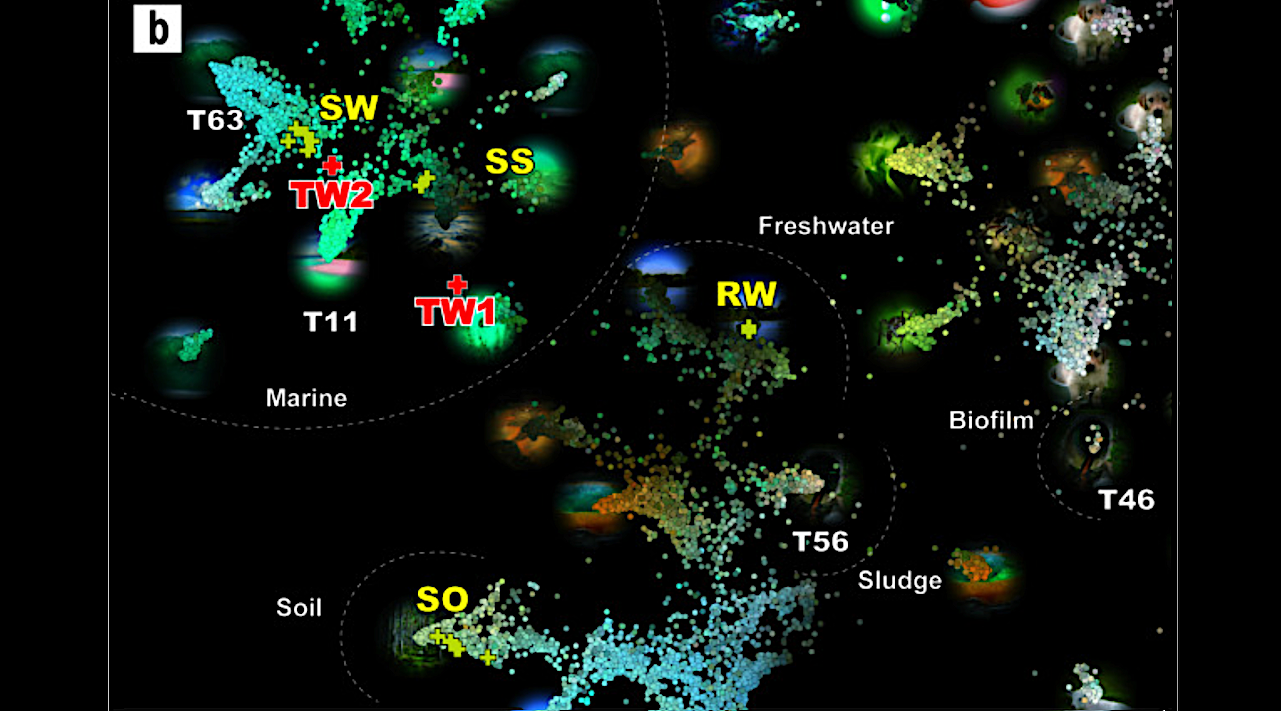
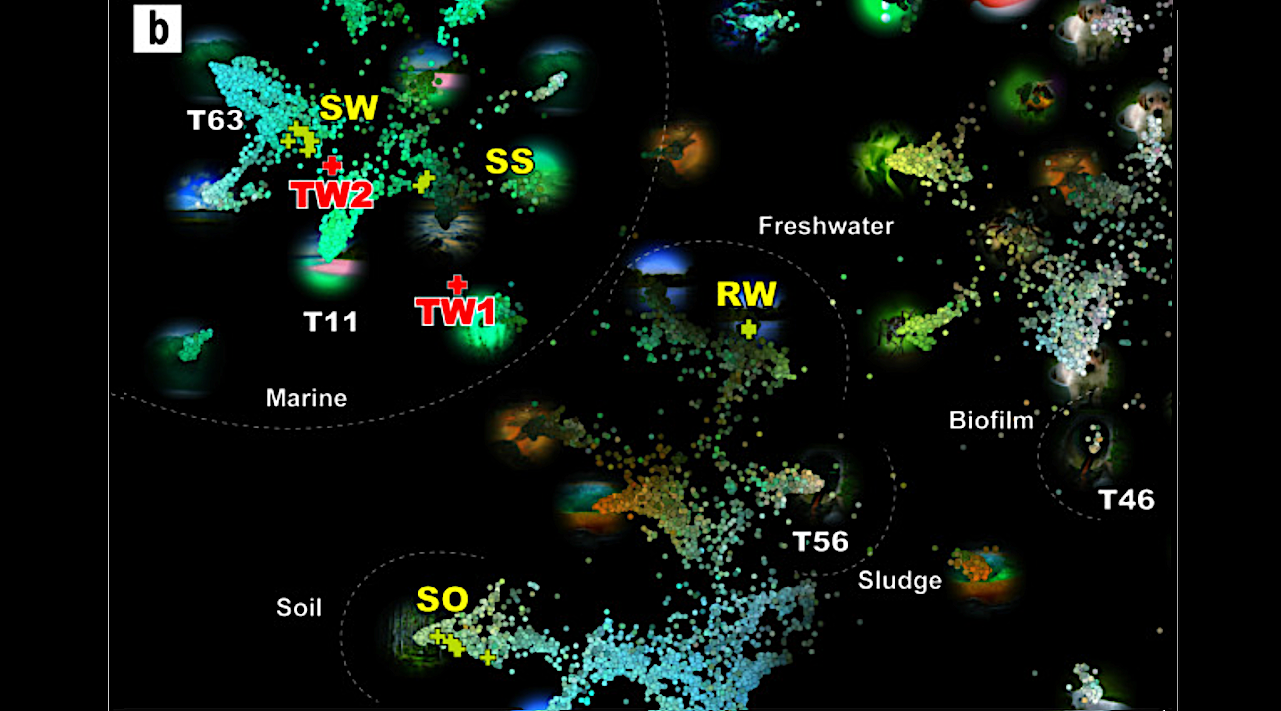
LEA of microbial communities from torus room waters and other environmental samples. Symbol “+” indicates the positions of the samples analyzed in this study, together with the sample names (TW1, TW2, SW, SS, RW, and SO). — Environmental Microbiology
A major incident occurred at the Fukushima Daiichi Nuclear Power Station following the tsunami triggered by the Tohoku–Pacific Ocean Earthquake in March 2011, whereby seawater entered the torus room in the basement of the reactor building.
Here, we identify and analyze the bacterial communities in the torus room water and several environmental samples. Samples of the torus room water (1 × 10⁹ Bq137Cs/L) were collected by the Tokyo Electric Power Company Holdings from two sampling points between 30 cm and 1 m from the bottom of the room (TW1) and the bottom layer (TW2).
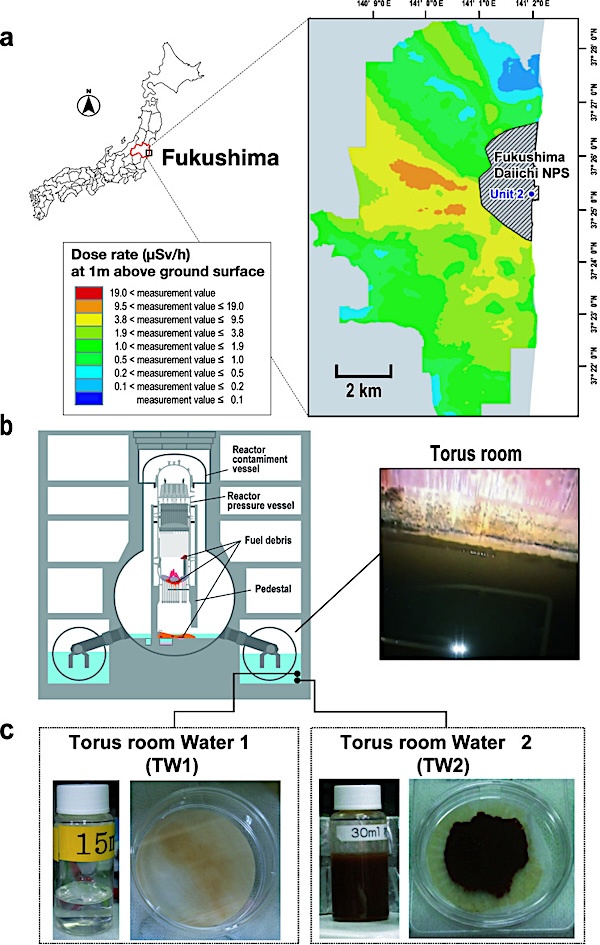
Summary of waters obtained from the torus room of the unit 2 reactor at the Fukushima Daiichi Nuclear Power Station (NPS). (a) Location of Fukushima Prefecture (surrounded by a red line) in Japan and the location of Fukushima Daiichi NPS on an enlarged map of Fukushima Prefecture. Results of a radiation survey conducted by the Regulatory Agency in 2019 by a manned helicopter and an unmanned helicopter (JAEA, Database for Radioactive Substance Monitoring Data, https://emdb.jaea.go.jp/emdb/top) were used as the background figure. Background map is copyrighted by ESRI Japan. (b) Cross-section of the unit 2 reactor building and a photograph of the torus room waters (provided by the Tokyo Electric Power Company Holdings, Inc). (c) Photographs of each vial containing torus room water 1 (TW1) or 2 (TW2) and of each filter (0.45-µm pore size) used to filter the water samples. TW1 was collected from the upper and middle parts of the torus room, and TW2 was collected from the lowest part, which contained abundant residue (brown color).— Environmental Microbiology via PubMed
A structural analysis of the bacterial communities based on 16S rRNA amplicon sequencing revealed that the predominant bacterial genera in TW1 and TW2 were similar. TW1 primarily contained the genus Limnobacter, a thiosulfate-oxidizing bacterium. γ-Irradiation tests on Limnobacter thiooxidans, the most closely related phylogenetically found in TW1, indicated that its radiation resistance was similar to ordinary bacteria.
TW2 predominantly contained the genus Brevirhabdus, a manganese-oxidizing bacterium. Although bacterial diversity in the torus room water was lower than seawater near Fukushima, ~70% of identified genera were associated with metal corrosion. Latent environment allocation—an analytical technique that estimates habitat distributions and co-detection analyses—revealed that the microbial communities in the torus room water originated from a distinct blend of natural marine microbial and artificial bacterial communities typical of biofilms, sludge, and wastewater. Understanding the specific bacteria linked to metal corrosion in damaged plants is important for advancing decommissioning efforts.
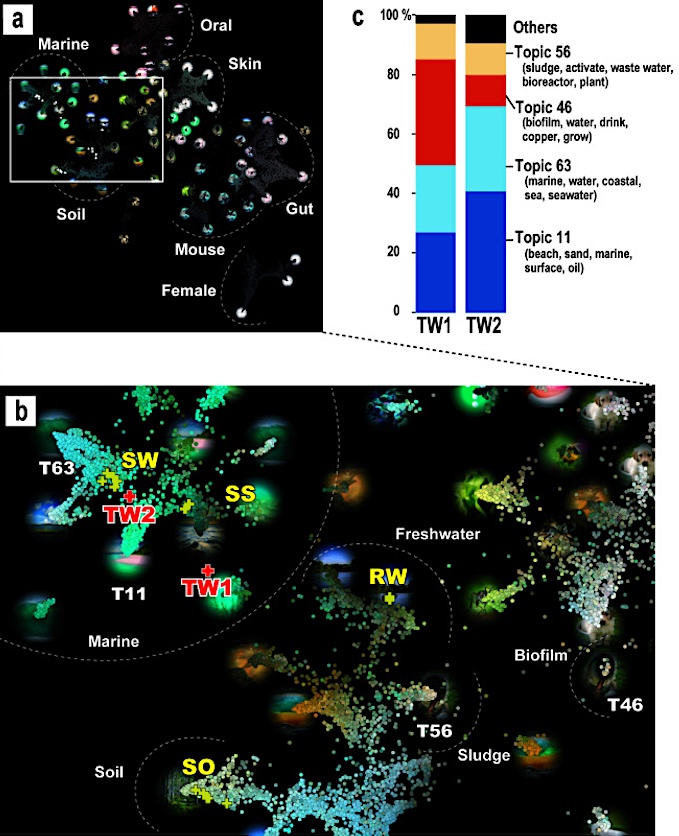
LEA of microbial communities from torus room waters and other environmental samples. (a) Each environmental sample was mapped onto the LEA Global Map. Overall picture of the LEA Global Map. Environments in which microorganisms were collected are indicated, such as marine, soil, oral, and skin. The circled images indicate each environmental topic, and the small dots indicate the locations of the environmental samples in the public database. The area in which the environmental samples were mapped in this study is indicated by the white box. (b) Expanded image of the white box region in panel a. Symbol “+” indicates the positions of the samples analyzed in this study, together with the sample names (TW1, TW2, SW, SS, RW, and SO). See Table S7 for details of each environmental topic (T11, T46, T56, and T63). (c) Proportion of each environmental topic estimated from the microbiota in torus room water samples TW1 and TW2.— Environmental Microbiology
via PubMed
Astrobiology, extremophile,










Related Posts

Stay Informed With the Latest & Most Important News

Advertisement
-
 01Two Black Holes Observed Circling Each Other for the First Time
 -
 02From Polymerization-Enabled Folding and Assembly to Chemical Evolution: Key Processes for Emergence of Functional Polymers in the Origin of Life
 -
 03Astronomy 101: From the Sun and Moon to Wormholes and Warp Drive, Key Theories, Discoveries, and Facts about the Universe (The Adams 101 Series)
 -
 04True Anomaly hires former York Space executive as chief operating officer
 -
 05Φsat-2 begins science phase for AI Earth images
 -
 06Hurricane forecasters are losing 3 key satellites ahead of peak storm season − a meteorologist explains why it matters
 -
 07Binary star systems are complex astronomical objects − a new AI approach could pin down their properties quickly