
Now Reading: Portions of the Pentagon’s LEO constellation on hold as acquisition reviews proceed
-
01
Portions of the Pentagon’s LEO constellation on hold as acquisition reviews proceed


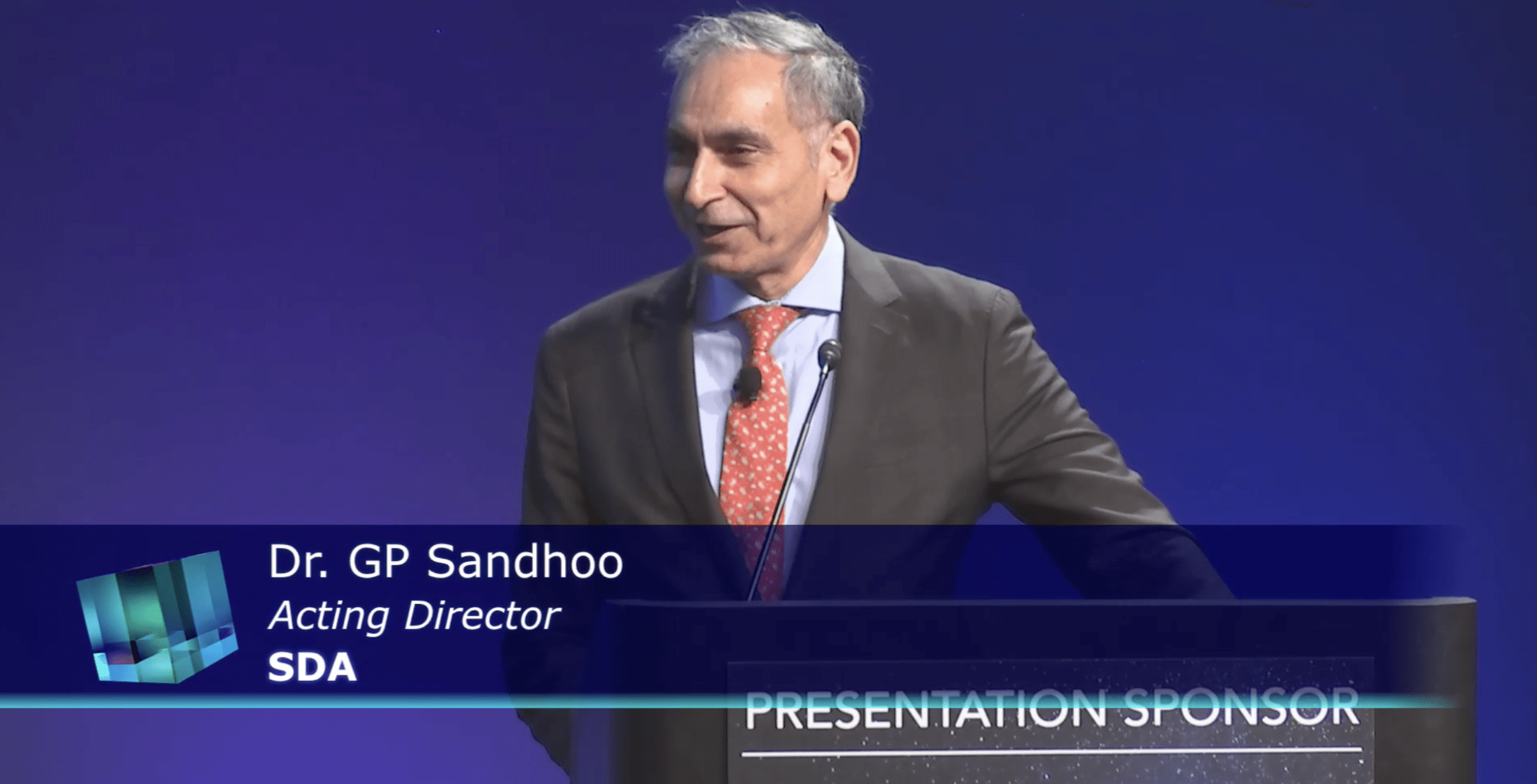

WASHINGTON — Procurements of certain elements of the U.S. military’s low Earth orbit satellite constellation known as the Proliferated Warfighter Space Architecture (PWSA) are on hold as the Pentagon reviews acquisition options and shifts responsibility for parts of the program outside the Space Development Agency (SDA).
SDA, a U.S. Space Force organization created in 2019, was tasked with fielding a large constellation of low Earth orbit satellites using rapid, iterative procurement cycles. The architecture is intended to support missile warning, tracking, communications and other military missions through multiple “layers” of satellites launched in two-year tranches.
GP Sandhoo, acting director of SDA, said a planned procurement of satellites for the next increment of the PWSA’s data transport layer remains paused, along with the acquisition of a separate “custody layer” designed to maintain continuous tracking of mobile targets on Earth’s surface.
“Custody is still getting shaken out,” Sandhoo said last week at the SmallSat Symposium in Mountain View, California. “It’s just been interesting times,” he said, referring to potential realignments in the procurement of the PWSA.
The pause marks a shift from SDA’s previous cadence, under which contracts for new tranches of satellites were awarded roughly every other year across different layers of the architecture.
Sandhoo said procurement of the tracking layer — satellites equipped with infrared sensors to detect missile launches and follow them through flight — is moving forward. The custody layer, which would provide persistent tracking of maneuvering targets and maintain a continuous track file over time, is going to be acquired under a different organization.
“The solution may not come for SDA,” Sandhoo said, noting that the custody layer likely will be the responsibility of a new Space Force portfolio acquisition executive focused on space-based sensing and targeting. “So there’s a lot of swirl,” Sandhoo said, “but the fact remains that these capabilities are needed by the joint force, and somebody’s gonna be doing this stuff.”
He said the sensing and targeting office is expected to release a request for industry information for Air Moving Target Indicator, or AMTI, satellites. AMTI sensors are designed to detect, track and characterize airborne moving objects across wide areas, enabling continuous custody of a target throughout its flight.
Transport layer under review
Plans for Tranche 3 of the transport layer also are uncertain. “On the transport side of things, that is still up in the air,” Sandhoo said.
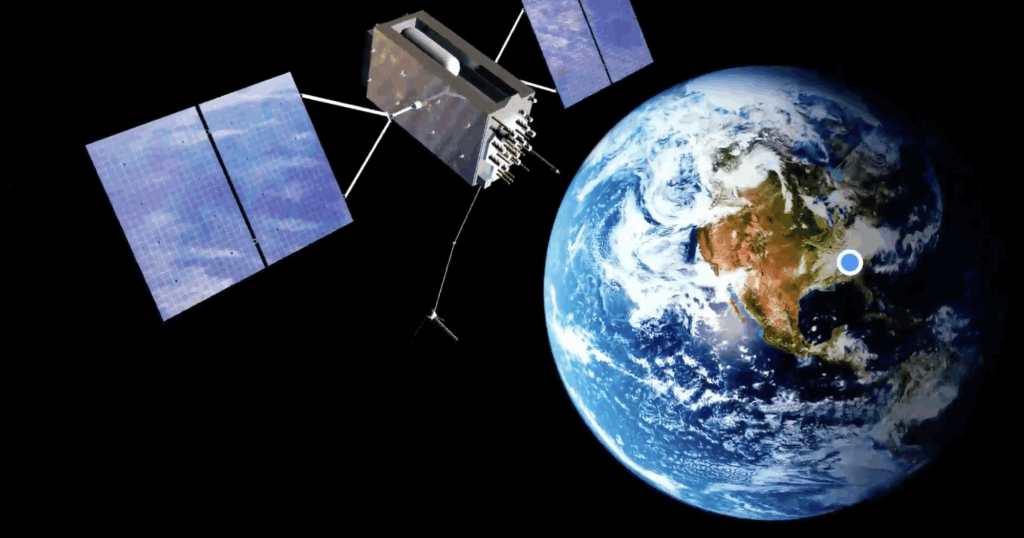
The transport layer functions as the data backbone of the PWSA. It is designed as a mesh network of satellites equipped with Link 16 tactical data terminals and optical intersatellite links, which use laser communications to move large volumes of data between spacecraft. The layer is intended to relay missile warning and tracking data across the constellation, route it to ground stations for processing, or transmit it directly to users such as ships and aircraft.
Under SDA’s original plan, Tranches 1 and 2 would provide limited regional capability, while Tranche 3 would expand coverage globally.
Part of the reassessment is driven by the administration’s increased focus on homeland defense, Sandhoo said. “But again, the ability to be able to detect and track these threats, to move the information out to users to do something about it is not going to go away,” he said. “So that will get shaken out at some point, hopefully sometime soon.”
The transport layer is being absorbed into a broader Space Force-led space data transport initiative. The Space Warfighting Analysis Center (SWAC) is leading architecture studies to determine how future military satellite communications and data relay capabilities should be structured and integrated across classified and unclassified systems.
One option under review would replace future tranches of SDA’s transport satellites with SpaceX’s Starshield spacecraft, a military variant of the company’s commercial Starlink broadband constellation. The potential shift has drawn scrutiny from lawmakers, who have argued that replacing SDA’s multi-vendor tranche model with a single-provider solution could weaken competition and reduce industrial base diversity.
“So there’s a force design that has to happen at some point,” Sandhoo said. “Space Force has been focused on providing backward compatibility to everything out there. At some point in the future, they have to have a force design that defines the architecture,” he added. “We are working closely with the SWAC.”
It remains unclear how the changes will affect SDA’s role in setting contracting strategies and pacing tranche procurements, as the Space Force reasserts more centralized control over portions of the architecture.
Supply chain issues persist
For tranches already under contract — Tranche 0, Tranche 1 and Tranche 2 — Sandhoo said supply chain constraints continue to affect the program. The most significant bottlenecks involve optical communications terminals, which enable laser crosslinks between satellites, and encryption devices used to secure data.
He also cited industry challenges with satellite checkout, the post-launch process of verifying that spacecraft subsystems and payloads are functioning properly before entering operational service.
“On the checkout side, there’s many,” Sandhoo said of bottlenecks. “I don’t think a lot of the industry is geared to do checkout.” He noted that traditional military satellite programs typically require checkout for only one or two spacecraft. “Trying to do this on 40 to 50 satellites is a little different,” he said. “So I think there’s some challenges there on the industry side, both from throughput perspective, testing perspective, and also on orbit checkout perspective.”
Lessons from Tranche 0 and the first Tranche 1 launch are being applied to future buys, he said. Tranche 0 consisted of 23 satellites built by four different manufacturers.
“We probably should have done some more robust testing on the ground” before launching Tranche 0, Sandhoo said. “I think the biggest challenge we had with Tranche 0 was the buses, which were supposed to be a commodity, and none of them were. They all had challenges. Every single one of them.”
In some cases, guidance, navigation and control systems and thermal control systems did not perform as expected, he said. “These issues are supposed to be easy,” Sandhoo said. “So we are trying to do a little more rigor on the buses with tranche 1 … The checkout has been slower than we expected. That was supposed to be easy stuff.”










Related Posts

Stay Informed With the Latest & Most Important News
Previous Post
Next Post





Advertisement
-
 01Two Black Holes Observed Circling Each Other for the First Time
 -
 02From Polymerization-Enabled Folding and Assembly to Chemical Evolution: Key Processes for Emergence of Functional Polymers in the Origin of Life
 -
 03Astronomy 101: From the Sun and Moon to Wormholes and Warp Drive, Key Theories, Discoveries, and Facts about the Universe (The Adams 101 Series)
 -
 04True Anomaly hires former York Space executive as chief operating officer
 -
 05Φsat-2 begins science phase for AI Earth images
 -
 06Hurricane forecasters are losing 3 key satellites ahead of peak storm season − a meteorologist explains why it matters
 -
 07Binary star systems are complex astronomical objects − a new AI approach could pin down their properties quickly