
Now Reading: SpaceX unveils space traffic management system
-
01
SpaceX unveils space traffic management system



WASHINGTON — A new SpaceX initiative to provide space traffic coordination services has attracted attention and praise in part because of the conditions it places on users of it.
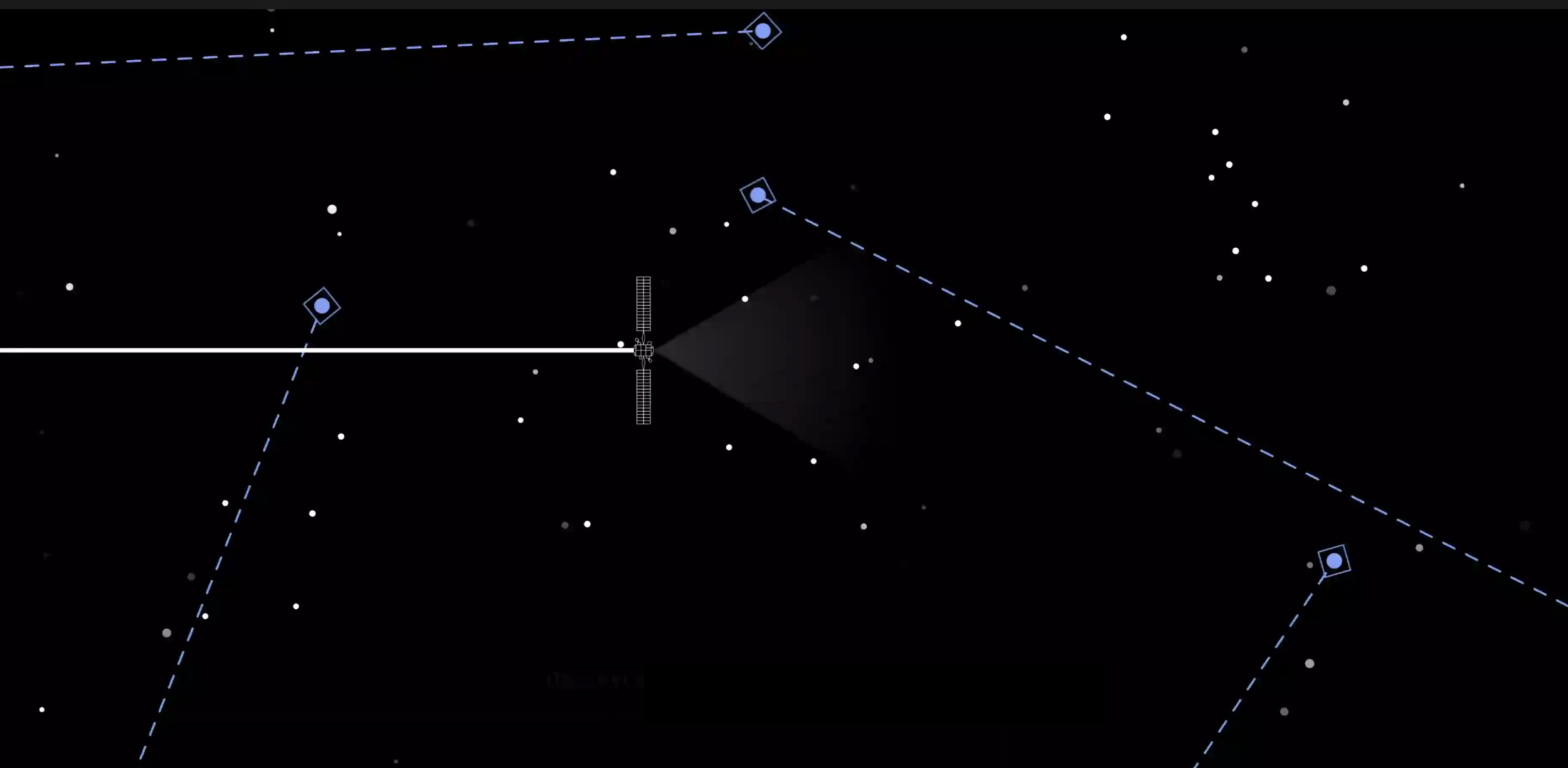
SpaceX announced in late January Stargaze, a space situational awareness (SSA) system. Stargaze uses images from star tracker cameras on its nearly 10,000 Starlink satellites to identify other objects in orbit and plot their orbits.
SpaceX says that Stargaze collects nearly 30 million observations of objects each day, which are used to calculate their orbits “in near real-time.” SpaceX then uses that information to calculate potential close approaches and issue conjunction data messages, or CDMs, that provide details on those close approaches.
More than a dozen companies are participating in a beta test of SpaceX’s space traffic management platform using Stargaze data. SpaceX says it will open the system to all satellite operators in the spring at no charge.
While there are few details about the quality or accuracy of Stargaze, the scale of the system and its backing by SpaceX have generated a positive reaction from industry.
“There are other SSA providers that provide a free service,” said Ruth Stilwell, executive director of Aerospace Policy Solutions, during a SpaceCom Expo panel Jan. 30, “but I think when it comes from such a dominant player in the space industry as SpaceX, it does get a different level of attention.”
“I think the Stargaze announcement is a very positive one for our industry,” said Marco Concha, flight dynamics engineering manager at Amazon Leo, another large satellite constellation. He noted on the panel his company has “a great relationship” with Starlink as thet coordinate their satellite activities.
He said he’s heard claims that Stargaze is able to observe an individual space object 1,000 times each day. “If you know anything about SSA, that’s extraordinary,” he said. “If that’s true, this is a game changer.”
In its announcement of Stargaze, the company cited one example of how the high frequency of observations prevented a potential collision. In December 2025, SpaceX had identified a close approach between a Starlink satellite and an unidentified spacecraft with a miss distance of 9,000 meters, which SpaceX considered a safe distance. However, five hours before the close approach the other spacecraft maneuvered, reducing the approach distance to just 60 meters.
“Stargaze quickly detected this maneuver and published an updated trajectory to the screening platform,” the company stated, and the Starlink satellite maneuvered to eliminate any risk of a collision.
“With so little time to react, this would not have been possible by relying on legacy radar systems or high-latency conjunction screening processes,” SpaceX stated. “If observations of the third-party satellite were less frequent, conjunction screening took longer, or the reaction required human approval, such an event might not have been successfully mitigated.”
That is a reason why SpaceX has made participation in its space traffic management platform contingent on operators providing ephemeris data, or information about their satellites and planned maneuvers.
“While Stargaze can detect maneuvers more quickly than any other system in use today, the most definitive source of satellite trajectories should be provided by operators themselves, allowing deconfliction and minimizing collision avoidance maneuvers,” the company stated, noting it updates its Starlink ephemeris hourly.
“We’re all in favor of what they announced,” said Ed Lu, co-founder and chief technology officer of LeoLabs, which operates ground-based radars for tracking space objects, during a panel at the SmallSat Symposium Feb. 10.
“We need as many incentives as possible for companies to share their ephemerides,” he said. “No measurement can tell you what somebody’s future plan of maneuvering is going to be. You know your future maneuvering plan, you know where you think you’re going to be, and that information is something that should be shared by operators across the board.”
Others on the panel said operators should share more than just ephemeris data. “Your ability to maneuver is valuable: what propellant reserve you have in your tank,” said Brad King, chief executive of Orbion Space Technology, a satellite propulsion company. That could help determine which spacecraft should maneuver in the event two maneuverable spacecraft are facing a potential junction.
The emergence of Stargaze and SpaceX’s space traffic management platform comes as the Office of Space Commerce is working on its own system, the Traffic Coordination System for Space or TraCSS, mandated by Space Policy Directive 3 in 2018.
The office is preparing to roll out the first production version of TraCSS after extensive testing by satellite operators, said Gabriel Swiney, director of the policy, international, and advocacy division of the office, at SpaceCom Expo. That effort was slowed down by the six-week government shutdown last fall, with the production release expected in the next month or so.
Stargaze is a “super-clever technical implementation of existing tools,” he said, but having more data can raise other issues. Various SSA providers, he noted, “do not provide the same or even necessarily close predictions oftentimes.”
That can be a challenge for satellite operators. “If you’re an operator, you’re going to be getting either confusing information if you subscribe to multiple SSA services or you might not know what others are getting if you’re using just one.”
He added that the Office of Space Commerce also has a mandate to help the SSA industry grow. “I will be keeping my eye on the impacts this and similar free services will have on smaller companies that have paid-data models.”
The future of TraCSS itself has been uncertain in the last year after the White House’s fiscal year 2026 budget proposal sought to cancel the program, although Congress restored some funding for it. A provision in a White House executive order on space policy in December removed a section of Space Policy Directive 3 that required TraCSS to provide free data, suggesting to some in industry that the system might charge user fees in the future.
“We do need to think a little more deeply about the role of government,” said Diane Howard, principal at sur l’espace and former director of commercial space policy on the National Space Council. “Not all data is created equally and the idea of having a neutral or governmental ability to evaluate the data and vet it from an outside perspective can help.”
She noted at SpaceCom Expo that having the government be able to certify SSA data in some way could be helpful to operators.
“These are good things. We want that,” she said of Stargaze. “But it points out the fact that it’s coordination that we’re really talking about right now. We have more data to coordinate.”










Related Posts
Stay Informed With the Latest & Most Important News
Previous Post
Next Post

Advertisement
-
 01Two Black Holes Observed Circling Each Other for the First Time
 -
 02From Polymerization-Enabled Folding and Assembly to Chemical Evolution: Key Processes for Emergence of Functional Polymers in the Origin of Life
 -
 03Astronomy 101: From the Sun and Moon to Wormholes and Warp Drive, Key Theories, Discoveries, and Facts about the Universe (The Adams 101 Series)
 -
 04True Anomaly hires former York Space executive as chief operating officer
 -
 05Φsat-2 begins science phase for AI Earth images
 -
 06Hurricane forecasters are losing 3 key satellites ahead of peak storm season − a meteorologist explains why it matters
 -
 07Binary star systems are complex astronomical objects − a new AI approach could pin down their properties quickly