
Now Reading: Starliner investigation identifies flawed NASA decision making
-
01
Starliner investigation identifies flawed NASA decision making


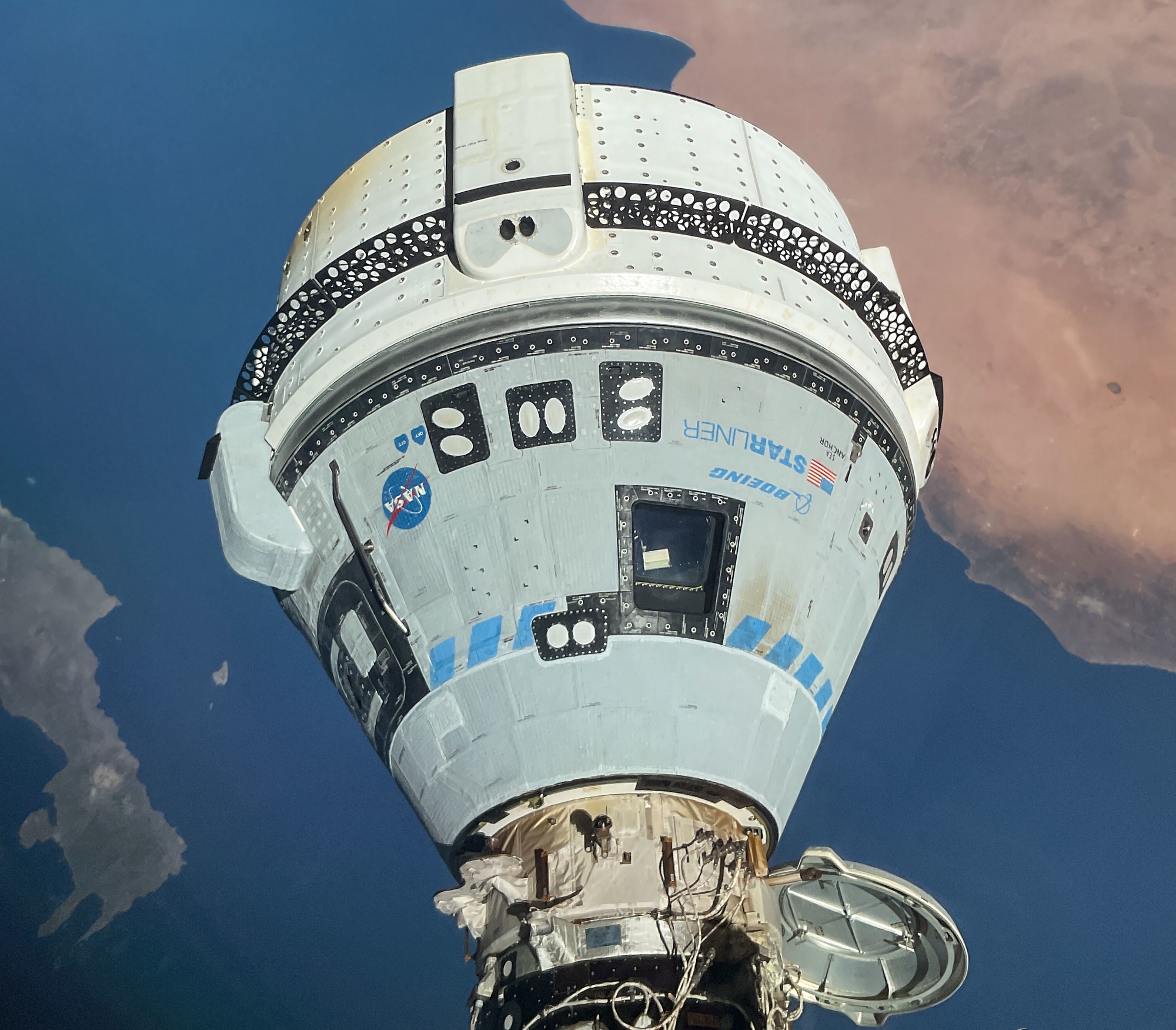
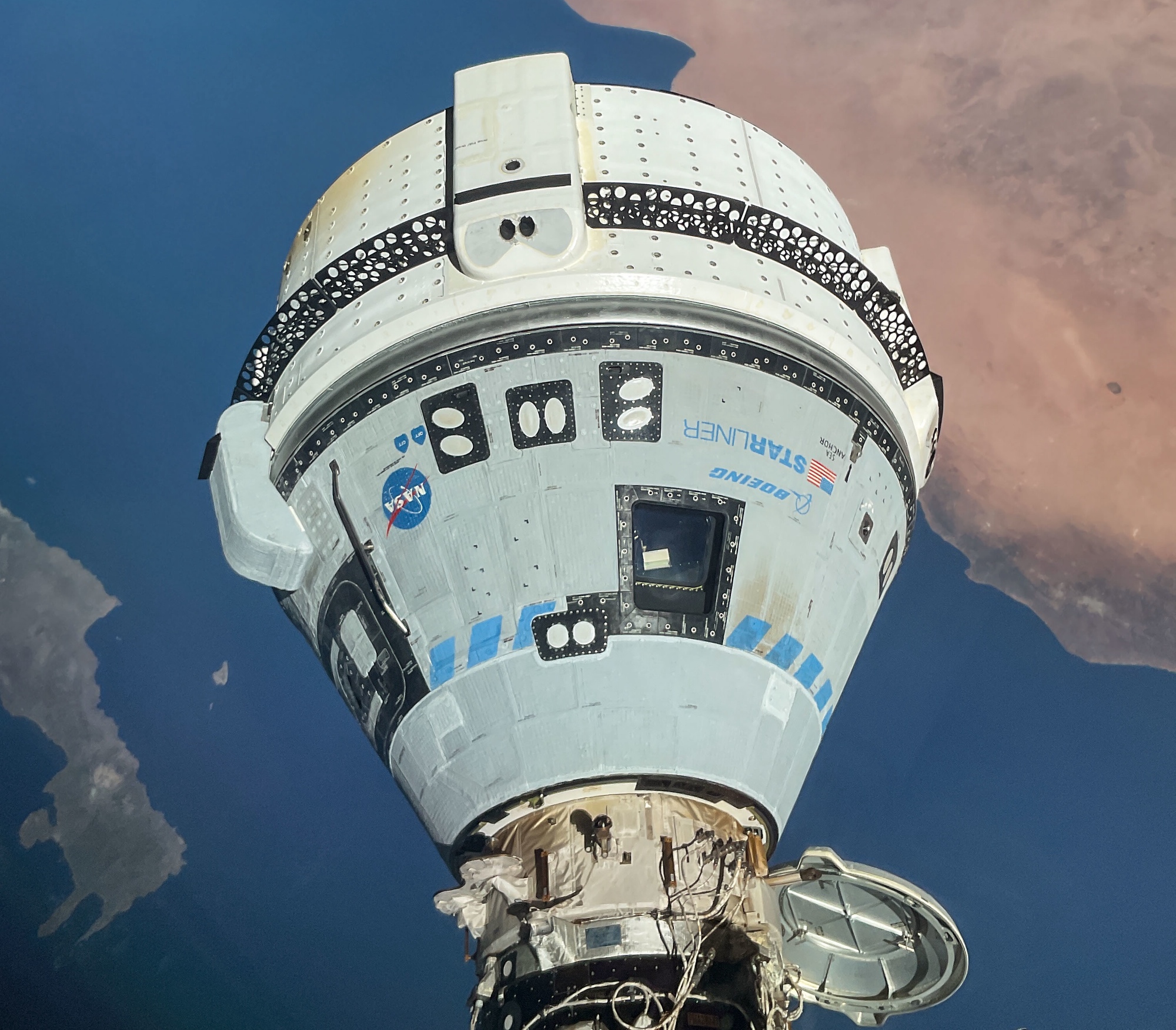
WASHINGTON — NASA has classified the flawed Starliner crewed test flight in 2024 as its most serious level of mishap, with the agency’s leadership citing shortfalls in how officials oversaw the program.
NASA released Feb. 19 an independent report into the Boeing CST-100 Starliner Crew Flight Test (CFT) mission, which suffered thruster failures during the spacecraft’s approach to the International Space Station. The incident led NASA to return the spacecraft uncrewed, with the two astronauts who launched on Starliner remaining on the ISS for more than eight months before coming home on a Crew Dragon.
The report recommended that NASA classify the incident as a “Type A” mishap, citing both the technical issues with the flight as well as organizational problems.
“Starliner has design and engineering deficiencies that must be corrected, but the most troubling failure revealed by this investigation is not hardware,” NASA Administrator Jared Isaacman said at a press conference to discuss the report’s findings. “It’s decision-making and leadership that, if left unchecked, could create a culture incompatible with human spaceflight.”
That decision-making and leadership, he said, allowed a spacecraft with thruster problems that occurred on previous uncrewed test flights to launch again with astronauts on board. That included the second uncrewed flight, OFT-2 in 2022, that suffered several thruster failures.
“The investigations often stopped short of the proximate or the direct cause, treated it with a fix, or accepted the issue as an unexplained anomaly,” he said of reviews after OFT-2. “In some cases, the proximate cause diagnosis itself was incorrect due to insufficient rigor in following the data to its logical conclusion.”
There was also poor decision-making after the thruster failures on the CFT mission. The spacecraft was able to safely dock with the station but NASA then spent weeks studying the problem. “The astronauts did remain safely aboard the International Space Station while they were advocating for data, for more testing and for leadership engagement necessary to complete their mission safely,” Isaacman said.
“Now on orbit, disagreements over crew return options deteriorated into unprofessional conduct” among program officials, he said, describing “an environment where advocacy tied to the Starliner program viability persisted alongside insufficient senior NASA leadership engagement to refocus teams on safety and mission outcomes.”
That persisted after the safe return of the Starliner astronauts, Suni Williams and Butch Wilmore, with NASA’s initial decision not to declare the mission a mishap. “Concern for the Starliner program’s reputation influenced that decision,” Isaacman said. “The record is now being corrected. Today, we formally designate this event a Type A mishap to ensure lessons are fully captured for future missions.”
A Type A mishap requires an independent investigation, although the agency concluded that the investigation already commissioned served that purpose. Such a mishap is defined as one with a cost of more than $2 million. The losses of the shuttles Challenger and Columbia are defined as Type A mishaps, but Isaacman noted that a recent hard landing by a NASA WB-57 aircraft because of a landing gear failure, which did not injure the pilots on board, also is classified as a Type A mishap.
Lessons for Starliner and Artemis
Before the release of the report and the classification of the CFT mission as a Type A mishap, NASA had been working towards an uncrewed launch of Starliner to the ISS as soon as this April. If successful, a crewed mission would follow as soon as late this year. NASA officials confirmed those plans at a Feb. 9 briefing.
Isaacman indicated there are no immediate changes to those plans, although engineers have yet to reach a technical root cause for the thruster failures.
“Right now, our focus here at NASA is working alongside Boeing again to understand the technical challenges that have caused these service module and crew module thruster issues,” he said, then implement fixes and other recommendations from the report.
“Now, if that happens to line up in April, then so be it. And if we can follow that on with crewed missions, that’s fantastic as well,” he said. “But we are not going to fly again, crew or uncrewed, until it’s ready.”
He said there would be changes within NASA as well. “Programmatic advocacy exceeded reasonable bounds and placed the mission, the crew and America’s space program at risk in ways that were not fully understood at the time decisions were being contemplate,” he stated.
“This created a culture of mistrust that can never happen again, and there will be leadership accountability,” he added, but declined to specify if personnel would be fired or reassigned.
That “programmatic advocacy” was linked to concerns by some within the agency that the overall commercial crew program could only be successful if there were two providers. Isaacman said he still believed Starliner could operate and meet what he described as “near endless demand” for cargo and crew access to low Earth orbit that will continue even after the ISS is retired.
“We are committed to helping Boeing work through this problem, to remediate the technical challenges,” he said, noting that he had no indication Boeing would cancel Starliner. “I fully anticipate Boeing will be there.”
Boeing reiterated its commitment to Starliner in a brief statement. “In the 18 months since our test flight, Boeing has made substantial progress on corrective actions for technical challenges we encountered and driven significant cultural changes across the team that directly align with the findings in the report,” the company stated. “We’re working closely with NASA to ensure readiness for future Starliner missions and remain committed to NASA’s vision for two commercial crew providers.”
The briefing took place while NASA was performing a second wet dress rehearsal for the Artemis 2 mission, whose Space Launch System has Boeing as the prime contractor. Isaacman said he was not concerned any technical or organizational problems with Starliner would affect SLS.
“These are two very different contracting approaches,” he said, noting SLS follows a more conventional approach with much greater NASA oversight and control than the commercial crew program, which uses a services contract.
“This is now the most important human spaceflight mission in more than a half-century,” he said of Artemis 2. He noted he has sent “second and third and fourth sets of eyes” to review mission preparations.
The timing of the release of the report with the Artemis 2 countdown test was a coincidence, he said, but is a valuable reminder.
“It is to make sure we are we are sending the right message within the workforce of NASA that we have to make the right decisions in this circumstance. Leadership has to be appropriately applied, because the situation we found ourselves in with Starliner with CFT could happen anywhere across the organization,” he said. “The approach we took is not compatible with human spaceflight, and we cannot permit it to continue.”










Related Posts
Stay Informed With the Latest & Most Important News
Previous Post
Next Post




Advertisement
-
 01Two Black Holes Observed Circling Each Other for the First Time
 -
 02From Polymerization-Enabled Folding and Assembly to Chemical Evolution: Key Processes for Emergence of Functional Polymers in the Origin of Life
 -
 03Astronomy 101: From the Sun and Moon to Wormholes and Warp Drive, Key Theories, Discoveries, and Facts about the Universe (The Adams 101 Series)
 -
 04True Anomaly hires former York Space executive as chief operating officer
 -
 05Φsat-2 begins science phase for AI Earth images
 -
 06Hurricane forecasters are losing 3 key satellites ahead of peak storm season − a meteorologist explains why it matters
 -
 07Binary star systems are complex astronomical objects − a new AI approach could pin down their properties quickly