
Now Reading: In space traffic coordination, the biggest challenge may be coordination
-
01
In space traffic coordination, the biggest challenge may be coordination


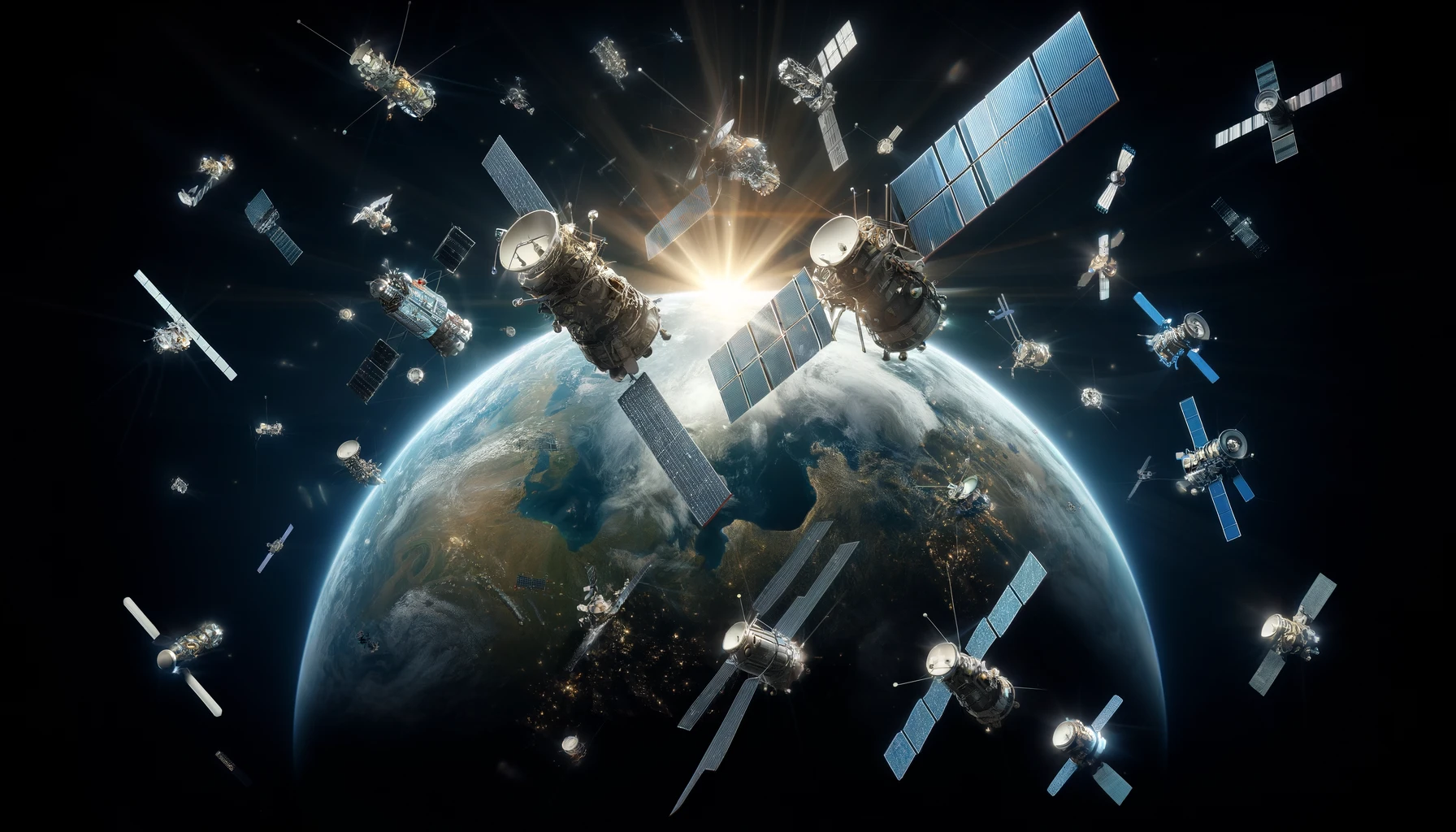

WASHINGTON — As the number of satellites in orbit grows, one emerging challenge is the difficulty some satellite operators have contacting counterparts to avoid potential collisions.
The difficulty in coordinating maneuvers between satellite operators to reduce the risk of a collision has become so severe than the United Nations has been called in to assist on at least two occasions.
“In the last 14 months, my office has been called on twice to help avoid potentially devastating incidents,” said Aarti Holla-Maini, director of the United Nations Office of Outer Space Affairs (UNOOSA), in a prerecorded speech at the 12th Annual Space Traffic Conference last week.
The first incident, she said, involved a conjunction between American and Chinese satellites. The American operator, who she did not identify, contacted UNOOSA after the Chinese operator did not respond to repeated messages. “It wasn’t easy, but it worked, and the Chinese operator moved their satellite,” she said.
The second incident took place last June just before the meeting of the Committee on the Peaceful Uses of Outer Space (COPUOS). The Malaysian government contacted UNOOSA after being informed a close approach between a non-maneuverable Malaysian satellite and one from North Korea, formally known as Democratic People’s Republic of Korea (DPRK).
“UNOOSA communicated as best we could with DPRK, and we can’t be sure if they moved thanks to our communication or maybe because they have their own capabilities, or maybe because they received warnings from elsewhere,” she said. “But, at least they did move.”
Those anecdotes highlighted a growing frustration among satellite operators who say it can be difficult to figure out who to contact when notified of a potential close approach with another spacecraft. While major government and commercial satellite operators regularly interact with one another, smaller operators, or those in countries like China and North Korea, can be more difficult to reach.
At the International Astronautical Congress in Sydney last September, both American and Chinese satellite operators said they have no contact information for operators of many of the satellites that pass through the orbits of their systems, which they said raised space safety concerns. They suggested a potential role for the International Telecommunication Union, whose primary responsibility is spectrum coordination.
The issue came up frequently during the two-day Space Traffic Conference, organized by the International Academy of Astronautics and the University of Texas at Austin.
“All this speaks to the need for a global coordination mechanism that is born of a trusted, member state-driven process,” Holla-Maini said.
For now, her office’s role has been to educate member states about the need for such coordination and helping establish an expert group on space situational awareness at COPUOS.
She suggested, though, that UNOOSA itself might not be able to handle that coordination, citing broader UN financial problems that have caused the office’s staff to shrink from 25 to 21 employees.
The Office of Space Commerce’s Traffic Coordination System for Space, or TraCSS, does include contact information for satellite owner-operators as part of the non-public portion of the system, available to other satellite operators, said Mariel Borowitz, director of international SSA engagement at the office.
That information is provided by the operators when they sign up to use TraCSS. “The challenge, of course, is that you potentially don’t have information for entities that are not signed up for the system,” she said, adding that the COPUOS expert group on SSA is discussing the need for exchanging contact information.
“There has to be some element of international coordination to get that information and keep it up to date,” she said, noting the challenge was less a technical one that one of relationships among operators.
The difficulty of contacting satellite operators played out during the conference itself. Mark Skinner of The Aerospace Corporation said on the conference’s second day Feb. 19 that he had been forwarded a message from an Italian satellite operator about a potential conjunction with an Aerospace cubesat, AeroCube 7. That cubesat, launched a decade ago, could no longer maneuver.
He said the Italian operator, unable to find contact information for AeroCube 7, contacted Aerospace’s United Kingdom office, which forwarded it to organization’s Washington office, and then on to him at the conference, even though he is not the operator of the spacecraft.
“We’re seeing the inability to contact directly,” he said, as other operators have experienced. “We’re trying to get this thing figured out in real time.” He said later they were able to resolve the issue and determine there was no collision risk.
Those problems suggest to some that the solution ultimately needs to be automated coordination among operators. “Humans cannot be in the loop of space operations any more, especially in LEO,” said Araz Feyzi, co-founder of Kayhan Space, a company developing automated spaceflight safety solutions.
“We really need to change the conversation from phone numbers and email addresses to, what is your API endpoint for coordination for your constellation,” he said.










Related Posts

Stay Informed With the Latest & Most Important News
Previous Post
Next Post


Advertisement
-
 01Two Black Holes Observed Circling Each Other for the First Time
 -
 02From Polymerization-Enabled Folding and Assembly to Chemical Evolution: Key Processes for Emergence of Functional Polymers in the Origin of Life
 -
 03Astronomy 101: From the Sun and Moon to Wormholes and Warp Drive, Key Theories, Discoveries, and Facts about the Universe (The Adams 101 Series)
 -
 04True Anomaly hires former York Space executive as chief operating officer
 -
 05Φsat-2 begins science phase for AI Earth images
 -
 06Hurricane forecasters are losing 3 key satellites ahead of peak storm season − a meteorologist explains why it matters
 -
 07Binary star systems are complex astronomical objects − a new AI approach could pin down their properties quickly