
Now Reading: SLS rocket hauled back to VAB for repairs
-
01
SLS rocket hauled back to VAB for repairs


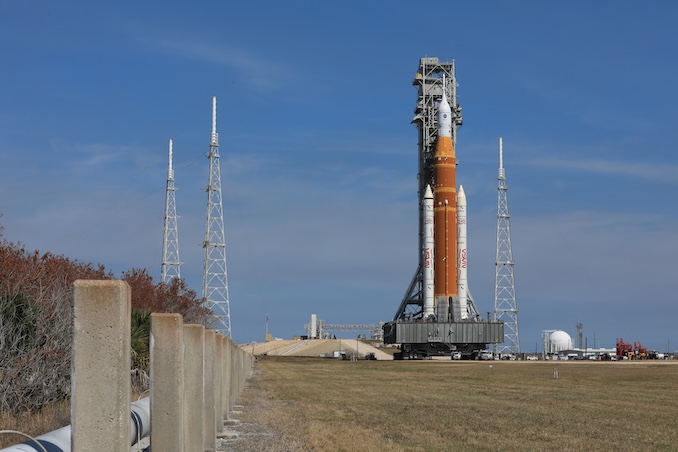
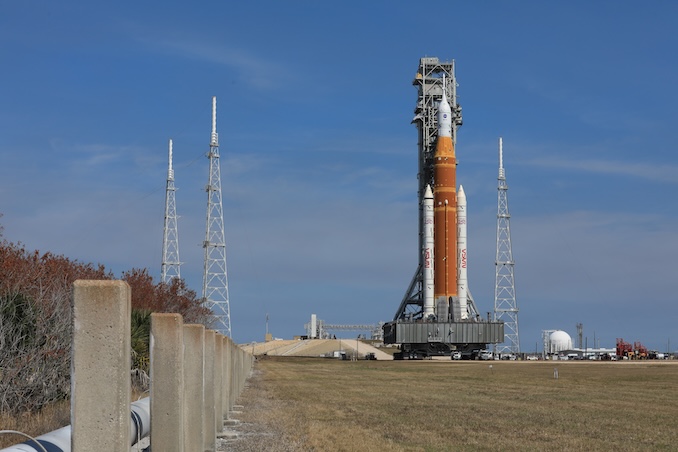
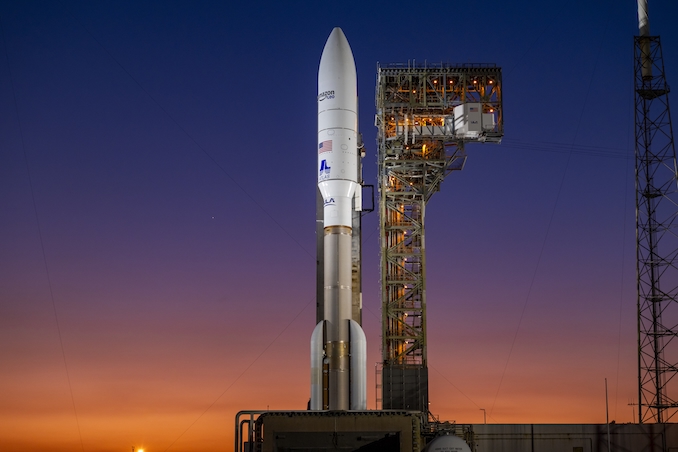
NASA hauled its Artemis 2 moon rocket off its seaside pad Wednesday for a slow trip back to a processing facility to track down and fix a helium pressurization problem that has delayed launch of four astronauts on a flight around the moon from this month to at least April 1.
A 6.6-million-pound Apollo-era crawler-transporter rolled up the ramp to pad 38B on Tuesday and was positioned directly under the 3.5-million-pound Space Launch System rocket and its 11.3-million-pound mobile launch platform.
After a check of the weather to make sure winds would be within safety limits, engineers used the crawler’s hydraulic system to lift the SLS rocket and its launch platform off support pedestals and then began inching back toward the Kennedy Space Center’s cavernous Vehicle Assembly Building at 9:38 a.m. EST.
The 4-mile trip of the crawler and its towering load, tipping the scales at a combined 23.6 million pounds, was expected to take 10 to 12 hours to complete with several stops and starts expected along the way.
Once inside the VAB, engineers plan to deploy service platforms to gain access to the rocket’s upper stage, known as the Interim Cryogenic Propulsion Stage, or ICPS.
Following a successful fueling test last week, engineers were unable to repressurize the upper stage’s helium system.
Pressurized helium is used in push propellants to the ICPS engine, to dry out and drain tanks and propellant lines and to “purge” other cavities with the inert gas to minimize the risk of fire. During two fueling tests of the Artemis II SLS rocket, the system worked normally. The problem was found after the second “wet dress” rehearsal countdown was over.
A similar problem cropped up with the Artemis 1 mission in 2022 when a helium valve failed to operate properly. NASA Administrator Jared Isaacman said the valve could be the culprit this time around “though corrective actions were taken to minimize reoccurrence on Artemis 2.”
Other possible causes include trouble with a filter in an umbilical connected to the ICPS or problems with a quick-disconnect fitting.
The rollback to the VAB was ordered because engineers do not have access to the ICPS and its gantry connections at the launch pad. In the assembly building, multiple platforms can be deployed around the SLS to provide access to virtually the entire 322-foot-tall vehicle.
Along with repairing the helium pressurization system, engineers also plan to replace limited-life batteries in the SLS’s self-destruct system and to replace other batteries in the ICPS.
NASA rolled the Artemis 2 rocket to the launch pad in mid January, originally targeting launch of commander Reid Wiseman, Victor Glover, Christina Koch and Canadian astronaut Jeremy Hansen around Feb. 6.
But during the initial wet dress countdown needed to clear the way for launch, hydrogen leaks were detected, requiring replacement of suspect seals in an umbilical where fuel lines are attached to the base of the rocket. The replacement seals worked normally during a second fueling test last week and no problems were found.
NASA then tentatively targeted launch for March 6 only to discover the helium pressurization problem, which has pushed the launch out of the March window to no earlier than April 1.
Only a handful of launch opportunities are available each month due to trajectory constraints based on the ever changing positions of the Earth and moon, lighting conditions and other mission-specific variables.










Related Posts
Stay Informed With the Latest & Most Important News
Previous Post
Next Post



Advertisement
-
 01Two Black Holes Observed Circling Each Other for the First Time
 -
 02From Polymerization-Enabled Folding and Assembly to Chemical Evolution: Key Processes for Emergence of Functional Polymers in the Origin of Life
 -
 03Astronomy 101: From the Sun and Moon to Wormholes and Warp Drive, Key Theories, Discoveries, and Facts about the Universe (The Adams 101 Series)
 -
 04True Anomaly hires former York Space executive as chief operating officer
 -
 05Φsat-2 begins science phase for AI Earth images
 -
 06Hurricane forecasters are losing 3 key satellites ahead of peak storm season − a meteorologist explains why it matters
 -
 07Binary star systems are complex astronomical objects − a new AI approach could pin down their properties quickly