
Now Reading: Best optics that you will use long after the total lunar eclipse
-
01
Best optics that you will use long after the total lunar eclipse


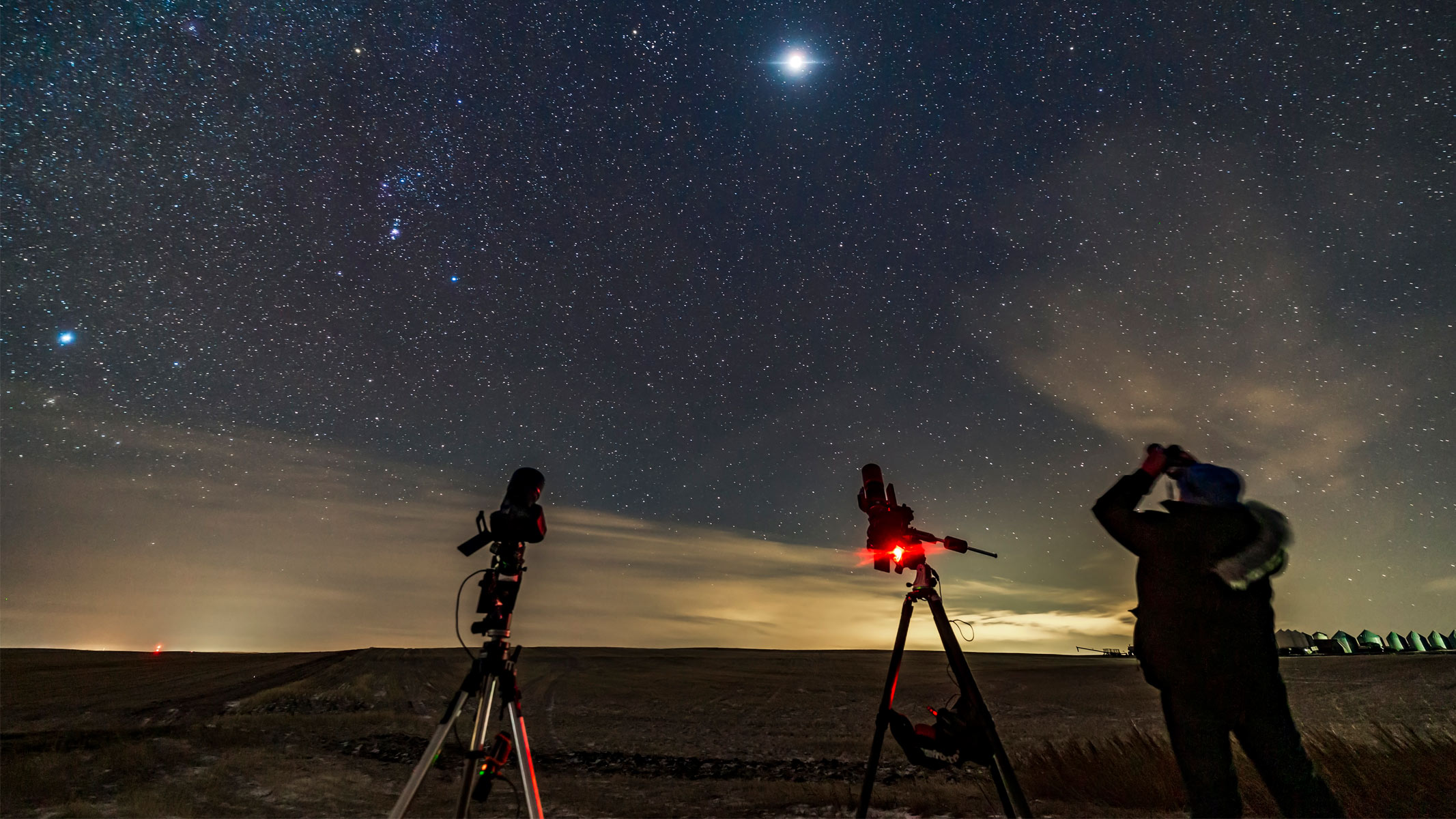
On March 3, 2026, the full Worm Moon will turn a deep copper-red for 58 minutes in the last total lunar eclipse visible from North America until 2029. While it’s a naked-eye event, the right optics will dramatically enhance the view — and continue to serve you for deep-sky stargazing long after the eclipse.
Through binoculars, you’ll see the curve of Earth’s shadow as it slowly swallows the full moon. During totality, a close-up will reveal the moon’s maria darken as the entire lunar surface takes on rusty, crimson and pinkish tones. A telescope goes further still, revealing mountain ranges, crater rims and ray systems that look flat to the unaided eye. To easily preserve the moment, modern smart telescopes and camera-friendly setups will capture the totally eclipsed moon in remarkable detail — and with minimal effort.
However, you’ll want to choose optics that won’t gather dust once the moon exits Earth’s shadow and the night sky returns to normal. The best binoculars, monoculars and telescopes for eclipse night will also be superb for planetary observing, deep-sky exploration, wildlife watching and travel. Invest wisely, and March 3 can become just the beginning — not the highlight — of years of rewarding stargazing.
Binoculars for the total lunar eclipse and beyond

Ideal for travel and dark-sky trips, binoculars are the best first upgrade for beginner stargazers. They will dramatically enhance the total lunar eclipse, but also some planets, star clusters and more, all year — and they come without the learning curve of a telescope.
Monoculars for the total lunar eclipse and beyond

Even more compact than binoculars, pocket-sized monoculars are ideal for eclipse watchers who want to travel light or head outside quickly before dawn. They provide a meaningful boost in magnification over the naked eye while remaining simple, portable and versatile for daytime and night-sky use.
Telescopes for the total lunar eclipse and beyond

If you want to turn the total lunar eclipse into a truly astronomical experience, a telescope will deliver detail that handheld optics won’t match. Beyond eclipse night, these instruments will immerse you in the night sky in close-up if you get planets, double stars and deep-sky objects in the crosshairs.
Smart telescopes for the total lunar eclipse and beyond

If you want to capture the “blood moon” with minimal setup and zero guesswork, a smart telescope does the hard work for you. Controlled from your phone or tablet, these fully automated systems find, track and image targets. Long after the eclipse, they’ll keep delivering stacked images of galaxies, nebulae and solar views at the tap of a screen — and they work so well in light-polluted cities and suburbs.










Related Posts


Stay Informed With the Latest & Most Important News


Advertisement
-
 01Two Black Holes Observed Circling Each Other for the First Time
 -
 02From Polymerization-Enabled Folding and Assembly to Chemical Evolution: Key Processes for Emergence of Functional Polymers in the Origin of Life
 -
 03Astronomy 101: From the Sun and Moon to Wormholes and Warp Drive, Key Theories, Discoveries, and Facts about the Universe (The Adams 101 Series)
 -
 04True Anomaly hires former York Space executive as chief operating officer
 -
 05Φsat-2 begins science phase for AI Earth images
 -
 06Hurricane forecasters are losing 3 key satellites ahead of peak storm season − a meteorologist explains why it matters
 -
 07Binary star systems are complex astronomical objects − a new AI approach could pin down their properties quickly